Microneedling aftercare makes a real difference in how your skin heals, and one of the biggest questions people have is when to wash their face after microneedling.
The goal behind any microneedling aftercare routine is simple.
You want to calm the skin, protect the barrier, and avoid irritation or infection while it recovers.
Getting the first wash right sets the tone for the rest of your healing, so it’s worth taking that first day slow.
What to Do in the First 24 Hours?
The first day after microneedling sets the tone for how well your skin heals.
Your face will likely feel tight, warm, and a little sensitive, similar to a mild sunburn.
Keep Skin Clean and Untouched
Resist the urge to touch, rub, or pick at your skin.
Your face is more vulnerable to bacteria right now, so keep your hands away and avoid anything that isn’t part of your aftercare routine.
When to Wash Face After Microneedling?
This is one of the most common questions people have.
Most providers suggest waiting six to eight hours before washing your face, and some recommend holding off until the following morning.
When do you wash? Use lukewarm water and your fingertips only; no washcloths or scrubbing.
Microneedling Aftercare Day by Day
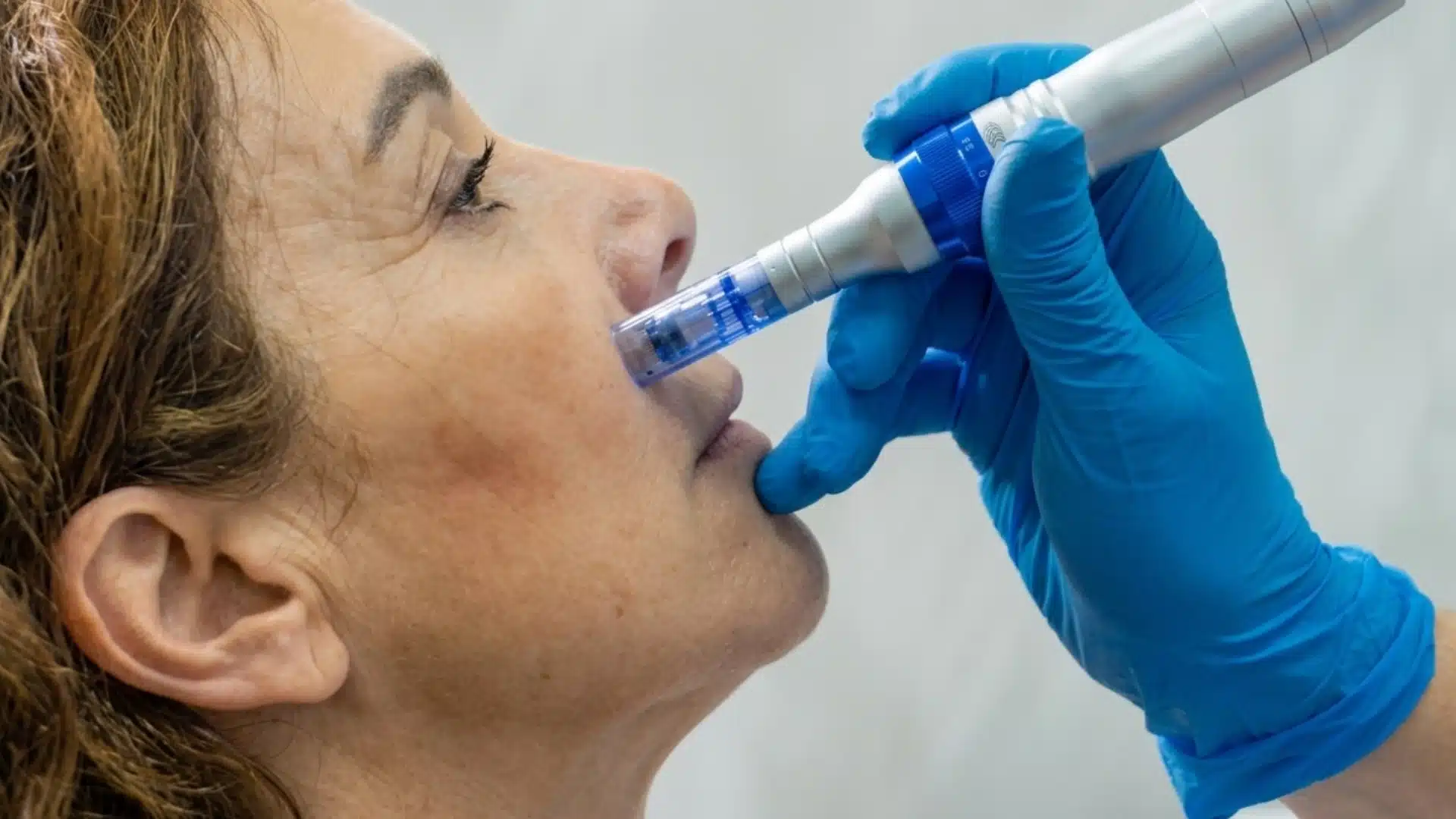
Your skin moves through a few clear stages after treatment. Knowing what’s normal at each point makes the whole process feel a lot less stressful.
Day 1: Redness and Sensitivity
Your skin might feel warm, tight, or a little sunburned.
That’s completely normal, since the tiny needle punctures are still fresh.
Keep things simple today and skip anything that could further stress the skin. Use a gentle moisturizer, and nothing else.
Skip makeup completely & avoid heat, sweat, and anything physically active.
Day 2 to 3: Dryness and Tightness
Redness usually starts easing up around now, and you might notice light dryness or rough patches as the skin repairs itself underneath.
Stick with gentle hydration during this stage, and don’t skip sunscreen.
If you’re heading outside, be sure to use sunscreen.
Day 4 to 7: Peeling and Skin Renewal
Some mild flaking is normal at this stage, and it can feel tempting to help it along. Resist the urge, and let the skin do its own thing.
Keep moisturizing and applying sunscreen daily. Ease back into your normal routine only once skin feels calm.
Don’t scrub or pick at flaking skin.
After 1 Week: Returning to Normal Skincare
By now, most people are ready to bring back a few normal products, but it helps to go slow.
Retinol, exfoliating acids, and stronger serums can usually wait until the skin barrier feels fully back to normal.
Some clinics recommend holding off on retinoids and exfoliators for about a week, so it’s worth checking with your provider before reintroducing anything active.
Things to Avoid After Microneedling
Certain products and activities can slow healing or irritate your skin while it’s repairing itself.
Giving your skin a break from anything strong or harsh for about a week makes a real difference.
Products to Skip for Now:
- Retinol and Vitamin C: Both are great for skin long term, but too active for freshly treated skin. Wait until your skin fully heals before bringing them back.
- Exfoliating Acids and Scrubs: AHAs, bHAs, and physical scrubs can irritate healing skin and slow recovery. Save these for once your skin feels normal again.
- Fragranced or Harsh Products: Skip anything with added fragrance, alcohol, or strong actives. Your skin barrier is already working hard and doesn’t need extra stress.
Activities to Hold Off On:
- Exercise and heavy sweating: Sweat can irritate freshly treated skin and raise the risk of breakouts. Take a day or two off from intense workouts.
- Hot Showers, Saunas, and Swimming: Heat and steam can worsen redness and swelling, while pools and hot tubs carry infection risk. Stick to lukewarm showers for the first few days.
- Makeup and Direct Sun Exposure: Avoid makeup for at least 24 hours to reduce the risk of clogged pores. Sun exposure can also cause pigmentation issues, so stay covered or indoors when possible.
Normal Side Effects and Warning Signs
Most people experience mild, short-lived side effects, but it helps to know what’s expected and what’s not.
Redness, dryness, and mild swelling are all common and usually fade within a few days. Keeping your skin hydrated and protected helps speed things along.
Reach out to your treatment provider if you notice increasing pain, pus, spreading redness, or a fever.
These can be signs of infection and shouldn’t be ignored.
To Wrap Up
Getting microneedling aftercare right comes down to a few simple habits:
Wait 12 to 24 hours before you wash your face after microneedling, keep your skincare gentle, and protect your skin from the sun while it heals.
Skip strong products until things settle, and give your skin the time it needs.
A little patience now goes a long way toward smoother results later.
Frequently Asked Questions (FAQs)
1. Is it Normal to Break Out After Microneedling?
A few small bumps can appear in the days after treatment, usually from trapped oil, and they typically resolve within a few days.
2. Can I Sleep On My Side After Microneedling?
Yes, but use a clean pillowcase and avoid pressing your face directly into it for the first night or two.
3. Does Aftercare Get Easier With More Microneedling Sessions?
Yes, most people find recovery feels shorter and milder after a few sessions as their skin adjusts.