Three years ago, my days ran on autopilot: wake, rush, skip meals, and collapse. It was exhausting.
Sunday evenings felt heavy. Poor sleep and weekly headaches became normal. Then one day, something had to change.
Small shifts followed. Fewer commitments. Better boundaries. More rest.
That’s when living a simple life stopped feeling like a dream. Life felt lighter and more meaningful.
If you’re feeling stretched thin, you’re not alone.
What Living a Simple Life Means to Me
Simple living isn’t about owning nothing or cutting out everything you enjoy.
For a long time, that’s what I thought it meant. So I ignored it.
But the real idea is different. It’s about removing what doesn’t add value and making room for what does. Less chasing. More appreciative.
That includes food, too. Eating nutritious, simple meals instead of complicated ones made a real difference in my daily energy and focus.
The core stays simple. Strip away the excess and focus on what actually matters to you.
Foundation of my Simple Life: Key Principles

- Intentionality: Making conscious choices instead of living on autopilot.
- Contentment: Finding satisfaction in what’s already here.
- Quality over quantity: Choosing fewer but better things.
- Present focus: Spending time on today, not yesterday’s regrets or tomorrow’s worries.
- Personal values: Letting beliefs guide decisions, not society’s expectations.
These principles work together. They create a framework that helps you say no to distractions.
The hardest one for me was contentment. I was always chasing the next thing: a better job, a bigger goal, more stuff.
It took me a while to realise that enough was already sitting right in front of me.
And once that clicked, everything else started falling into place.
Benefits of Living Simply
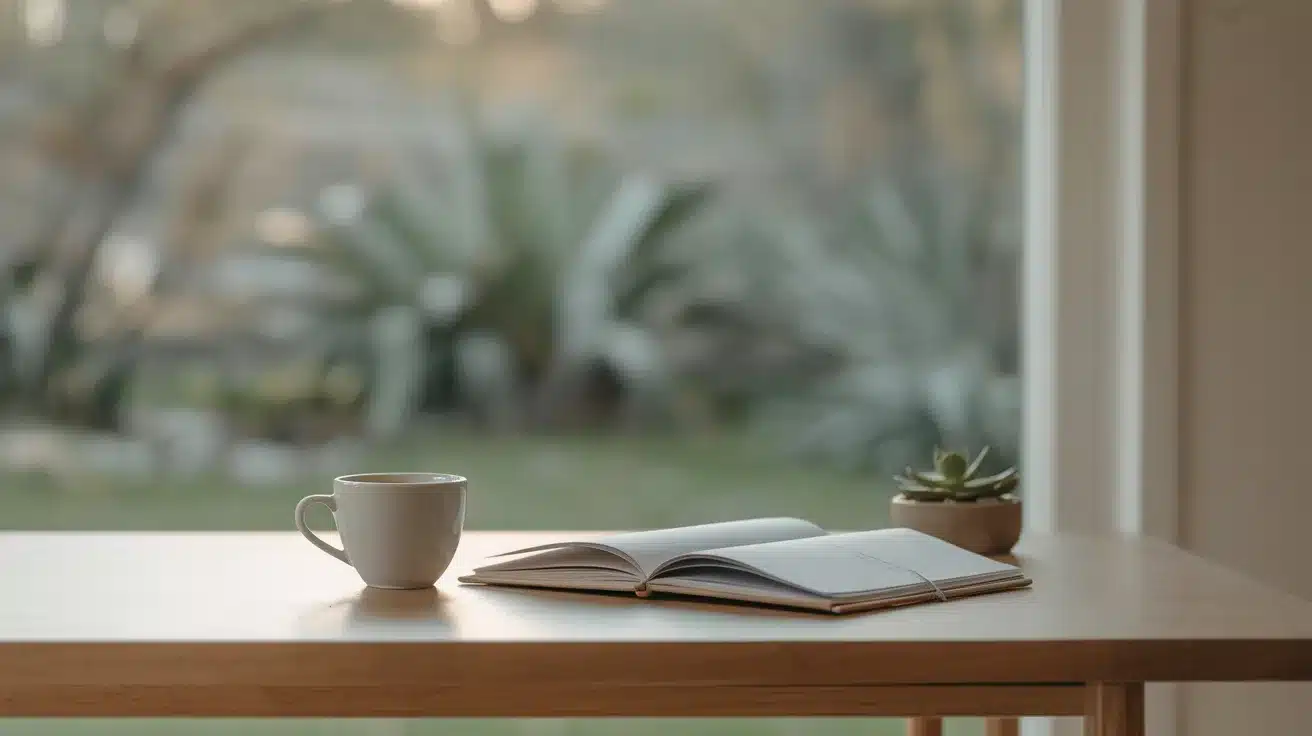
Choosing simplicity pays off in ways you might not expect.
Less Stress, More Peace
Fewer possessions mean less to clean and organize. Your mind gets a break from constant decisions. Mental health improves, which opens up to creativity and provides rest.
Financial Freedom
I spend way less now that I buy only what I need. Saving becomes easier. My savings account actually grows each month, not shrinks.
Many people work less or retire earlier because they need less money to feel content.
Better Health
Simple living leads to better sleep and lower anxiety. You have time to cook real food and exercise.
Mental clarity improves when your environment isn’t chaotic.
Stronger Connections
Fewer distractions mean more time for relationships in my life.
Family dinners happen often. Friends get my full attention now, not half my focus while scrolling through feeds.
“The ability to simplify means to eliminate the unnecessary so that the necessary may speak.” – Hans Hofmann
These benefits build on each other. Financial freedom reduces stress. Less stress improves health. Better health gives energy for relationships.
Practical Ways to Simplify Life in The Modern World

Modern life throws complexity at you from every angle. But you can fight back with small, deliberate changes that add up over time.
1. Declutter Your Place
I started with one junk drawer. Removed things I hadn’t touched in a year. That clear drawer gave me unexpected peace.
2. Limit Social Media Use
Set specific times to check your feeds. Turn off notifications. Unfollow accounts that make you feel bad. Try one digital detox day per week.
The reclaimed time will genuinely surprise you.
3. Stop Comparing Your Life to Others
Comparison complicates everything. I used to constantly scroll and question my pace, my progress, and my choices.
Once I focused on my own values instead of others’ highlights, contentment finally felt possible.
A healthy lifestyle genuinely thrives when comparison fades from your daily thinking.
4. Create a Capsule Wardrobe
Keep clothes that fit well. Donate the rest. A smaller wardrobe means faster mornings and less laundry.
5. Set Boundaries with Technology
My phone now charges in the living room, not in my bedroom. That one change improved my sleep instantly.
“Do not disturb” stays on during meals and family time. Apps that wasted time without adding anything useful got deleted.
Technology should serve you, not the other way around.
6. Prioritize Time for Self-Care
Schedule breaks like you schedule meetings. Take walks, read, or just sit quietly for a few minutes.
Even 15 minutes daily makes a real difference.
Without proper rest, simplicity becomes just another thing on your list that you’re falling behind on.
7. Simplify Your Meals
My family plans a weekly menu every Sunday. Batch cooking saves weeknight stress.
Simple, fresh meals beat complicated ones every time.
8. Focus on Relationships
Not every friendship needs to stay.
I started spending time with people who actually added something positive to my life.
Real conversations replaced quick catch-ups. Quality time replaced expensive outings. Strong relationships don’t need much. Just presence and honesty.
9. Simplify Your Daily Schedule
I used to pack my calendar until there was no breathing room at all. Now I leave intentional gaps between tasks.
A simple schedule means you stop racing the clock and start feeling more in control of your own day.
10. Stop Multitasking and Do One Thing at A Time
Jumping between tasks left me drained by noon. So I stopped. One task at a time changed everything.
Focusing fully on one thing at a time made everything feel more manageable.
Tasks got done faster, and the day felt calmer overall.
11. Reduce Decision Fatigue
Too many small daily choices wear you down before the day even starts. I set up simple routines for breakfast, sleep time, and weekly errands.
Less deciding means less mental clutter and a calmer start every morning.
12. Learn to Let Go of Perfection
This one was genuinely hard for me.
Every task had to be perfect; the house, work, even relationships. That pressure was exhausting and constant.
Simple living taught me to focus on progress instead. Life got lighter the moment I stopped trying to control every single outcome.
13. Simplify Your Goals and Focus on One Priority at A Time
I used to chase multiple goals at once. I was worn out constantly. Now I pick one major goal per season.
14. Simplify Your Morning Routine
I used to wake up and check my phone first thing. That alone set a rushed tone. Now mornings are predictable.
Wake up. Stretch. Drink water. Sit quietly.
Fewer steps mean fewer decisions and calmer days.
15. Practice Saying “No” Without Explaining Everything
Not every request needs a yes. I started by simply responding, “I can’t commit to that right now.” Boundaries remove resentment.
When you say yes less often, your yes becomes far more meaningful to everyone around you.
16. Reduce Noise in Your Environment
I stopped the TV running in the background. Stopped podcasts during every task. Silence became something to be appreciated rather than avoided.
Mental clarity improved almost immediately after that one small shift in my daily habits at home.
17. Keep a Short To-Do List
My old lists had twenty tasks. I’d finish five and feel like I failed. Now, three priorities per day are enough.
If those get done, the day counts as productive. Simplicity in planning builds momentum rather than guilt every evening.
18. Unsubscribe From Unnecessary Emails
Marketing emails flooded my inbox daily. I spent one afternoon unsubscribing from dozens of lists.
A cleaner inbox reduces daily stress more than you expect.
19. Limit News Consumption
Staying informed is important. Being constantly hit by headlines doesn’t. I now check the news once a day instead of throughout the day.
Less exposure to negativity made my mental state more stable, more focused, and noticeably calmer within just a few weeks.
20. Simplify Your Social Commitments
I stopped attending events out of obligation.
Now I ask myself one question before saying yes: Will this add real value to my life? Quality interactions replaced crowded schedules.
Fewer gatherings meant better conversations and more energy left for people who truly matter to me.
21. Create Small Daily Rituals
Simple rituals anchor your day. For me, it’s evening tea without screens. Just quiet reflection.
Rituals create rhythm, and rhythm creates steadiness.
22. Keep One Ongoing Declutter Rule
Instead of massive clean-outs, I follow one simple rule: when something new comes in, something old goes out. This prevents buildup before it starts.
Maintenance is always easier than a full overhaul when things pile up over time.
23. Streamline Your Finances
Cancel unused subscriptions. This one change freed up $200 monthly for me. Set up automatic bill payments. Track spending with a simple app or notebook.
Financial simplicity reduces stress and helps you see where money actually goes every month.
Minimalism vs. Simple Living
People often use these two terms as if they mean the same thing. They don’t. Here’s a quick breakdown:
| Point | Minimalism | Simple Living |
|---|---|---|
| Main Focus | Owning fewer things | Living with less stress |
| Goal | Cut down possessions and clutter | Cut down life’s overall complexity |
| Lifestyle Scope | Mostly physical belongings | Covers time, habits, money, and mindset |
| Approach | Often follows strict personal rules | More flexible and personal |
| Success Looks Like | Less stuff at home | More peace in daily life |
| Home Style | Clean, bare, very little decor | Can feel simple even with meaningful items |
| Spending Style | Buy only the bare essentials | Spend with intention and avoid waste |
| Daily Life | Organised, decluttered routine | Slower pace with fewer commitments |
| Biggest Benefit | Less clutter, more freedom | Less pressure, more balance |
| Best For | People buried in belongings | People are burned out by life |
Simple living is the bigger idea. Minimalism can sit inside it, but it doesn’t have to.
You don’t need to own items to live simply. The real point is the same for both: fewer distractions and more room for what actually matters.
As Leo Babauta says, “Simplicity boils down to two steps: Identify the essential. Eliminate the rest.”
Challenges with Living a Simple Life
Simple living sounds great in theory. Practice brings real obstacles.
Social Pressure: A friend once said, “You can afford more, so why don’t you?”
People questioned my choices often. Staying true to my values while keeping those relationships wasn’t always easy.
Consumer Culture: Ads hit you from every direction. Sales create urgency.
Society quietly links success to owning more. Resisting that message takes real daily effort.
Initial Effort: Decluttering took me three months. One weekend, I nearly filled those donation bags back up. Old habits felt safer.
Pushing through that moment was hard but worth it.
Fear of Missing Out: What if you need that item later? What if others move forward and you don’t? These thoughts crept in earlier than I expected.
Almost Going Back: Six months in, a stressful work period hit.
Late-night online shopping crept back in. I caught it early and stepped back. That moment reminded me exactly why I started.
Conclusion: Appreciate a Simple Life
Living a simple life isn’t a destination you reach someday. It’s the choices that we make every single day.
Start small with one area that causes the most stress. Your closet, your schedule, or your spending. That’s what worked for me.
Simple living gives you something priceless: time and energy for what truly counts.
My mornings now are quiet, slow, and calm. Three years ago, that felt impossible. Today it feels normal. That shift made everything worth it.
So, start living a healthy life with us.
Frequently Asked Questions (FAQs)
1. What is the Happiest Age in Life?
For younger adulthood (around 20s/30s) and especially in older age (around 70).
2. At What Age is Life Most Stressful?
Younger generations (Gen Z and Millennials) report peak stress around age 25.
3. Why is Simplicity so Powerful?
Simplicity allows you to direct all your energy and power toward one thing.
4. What is an Example of a Simple Life?
The examples include writing, reading/learning, walking, and other activities such as eating simple food and meditating.