A few years ago, I noticed my skin wasn’t as firm as it used to be. My jawline looked softer. My cheeks felt less plump. It bugged me every time I stood in front of the mirror.
I didn’t want expensive treatments or invasive procedures. So I started researching.
I tried facial exercises, oils, and home remedies. What I found: the methods aren’t complicated. Sticking to them is.
Below, I cover why skin loses firmness and which habits actually make a difference.
What a Consistent Routine Actually Looks Like
I do facial exercises for five minutes every morning while I brush my teeth. That’s it — no dedicated session, no equipment.
Sleeping on my back took about a month to get used to, but my skin is noticeably less creased in the morning now.
Massaging the face with oil three times a week shows results. The difference is subtle but real.
The honest answer about how to tighten face skin naturally at home: patience is non-negotiable. Results don’t happen overnight. But small daily habits add up.
Don’t judge any method before eight weeks.
What are the Causes of Loose Skin on The Face?
Before you fix a problem, it helps to understand what caused it.
Several factors work together to reduce elasticity over time.
Aging and Collagen Loss
The body produces less collagen as people age (Decreased collagen production). Collagen keeps skin firm and plump. After age 25, production drops by about 1% each year.
This gradual decline makes skin thinner and less supportive. Fine lines appear first. Then deeper wrinkles form.
The face begins to sag because there’s insufficient structural support beneath it.
Sun Damage and UV Exposure
UV rays break down collagen and elastin fibers in the skin. This happens faster than normal aging.
People who spend years in the sun without protection often develop loose, leathery skin.
The damage accumulates silently. By the time sagging becomes visible, notable harm has already occurred.
Weight Loss and Skin Elasticity
Rapid or major weight loss stretches skin beyond its ability to bounce back.
When fat disappears quickly, skin doesn’t have time to adjust. Younger skin recovers more quickly because it has greater elasticity. Older skin struggles to shrink back.
Gradual weight loss gives skin a better chance to adapt.
Lifestyle Habits That Affect Skin Firmness
Smoking, chronic stress, poor sleep, and high sugar intake damage collagen, preventing proper cell repair.
Dehydration makes the skin look dull and sallow.
Even sleeping position matters like pressing your face into a pillow night after night creates creases that eventually stick.
Natural Ingredients to use for Face Skin Tightening
| Ingredient | Benefits | How to Use |
|---|---|---|
| Egg White | Creates a temporary tightening effect, reduces pores | Apply as a mask, leave for 15 minutes, rinse with cool water |
| Aloe Vera Gel | Hydrates, improves elasticity, soothes skin | Apply directly, massage gently, leave overnight |
| Honey | Moisturizes, supports collagen, and tightens pores | Mix with lemon juice, apply for 20 minutes, rinse |
| Rosehip Oil | Rich in vitamin A, it boosts cell turnover | Massage into skin at night, 3 times weekly |
| Cucumber | Reduces puffiness, refreshes, and hydrates | Place slices on face or blend into paste |
| Coffee Grounds | Exfoliates, stimulates circulation, firms skin | Mix with oil, scrub gently in circular motions |
How to Tighten Face Skin Naturally at Home?
None of these are quick fixes. But used regularly, they work.
1. Facial Exercises for Firmer Skin

alt text: A woman performing facial exercises while looking at her reflection in the mirror.
Facial exercises strengthen the muscles beneath the skin.
Regular practice can lift sagging areas and improve contours. Simple moves like chin lifts, cheek presses, and forehead smooths target specific zones. Do it for 10-15 minutes daily.
Results typically appear after several weeks of consistent effort.
2. Face Massage Techniques
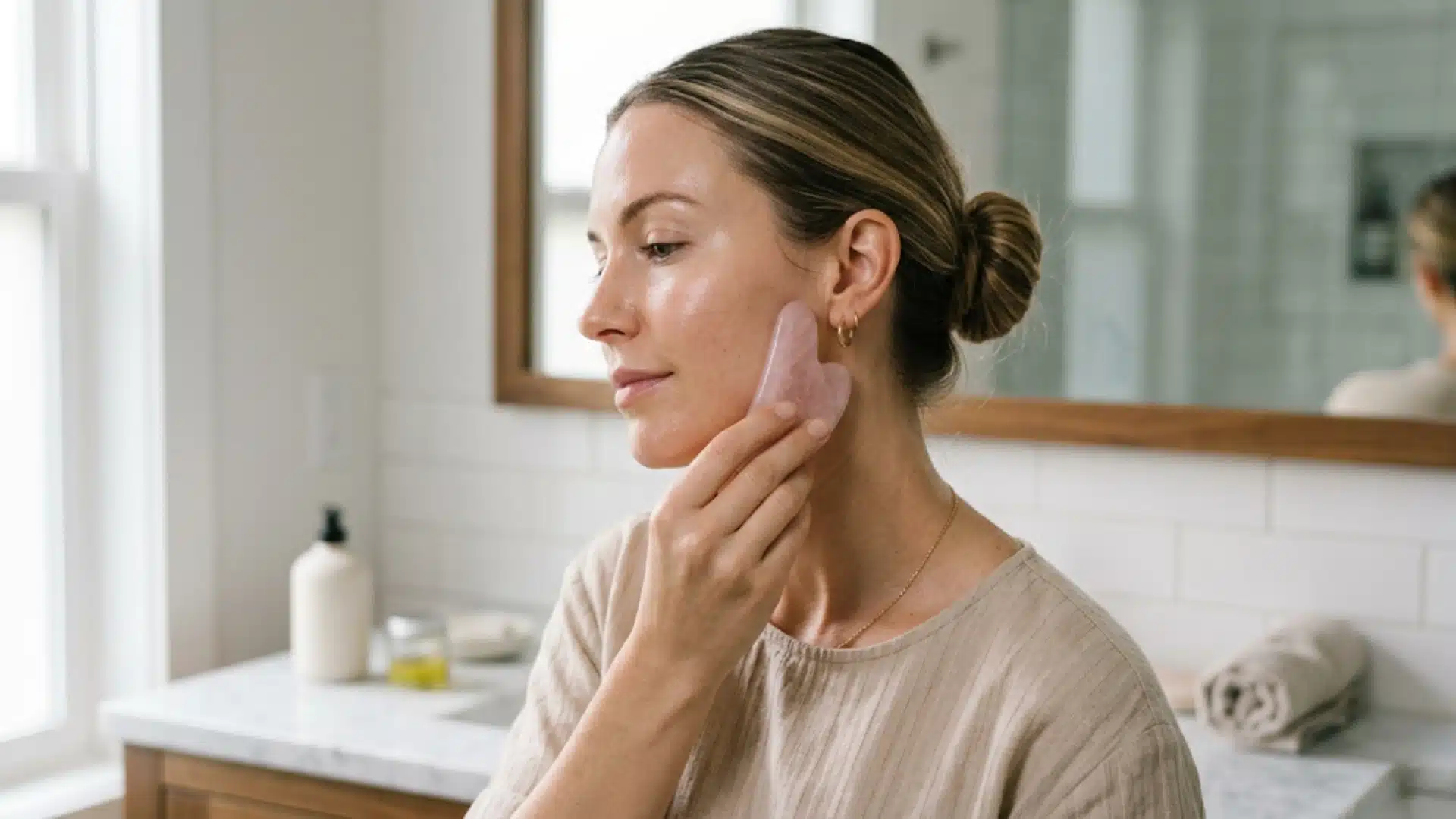
alt text: A woman uses a gua sha tool to massage her face, enhancing her skincare routine.
Massage boosts blood circulation and lymphatic drainage. It reduces puffiness and encourages collagen production.
Using upward strokes prevents further sagging. Gua sha tools and jade rollers improve the massage effect.
Five minutes each morning can make skin look fresher and tighter.
Tip: Always apply a facial oil or serum before massaging — dragging dry skin pulls and damages it.
3. Home Remedies for Skin Tightening

alt text: A woman in a bathrobe applies a facial mask, focusing on firming her skin while enjoying a self-care moment.
Several kitchen ingredients help with how to tighten skin on the face.
- Egg whites create a temporary tightening effect when applied as a mask.
- Aloe vera gel hydrates and firms skin naturally.
- Honey mixed with lemon juice brightens while tightening pores.
- Cucumber slices reduce inflammation and refresh tired skin.
Tip: Patch-test any new home remedy on your wrist first to avoid an allergic reaction.
4. Best Oils for Improving Skin Elasticity

alt text: A woman gently applies facial oil to her skin, showing how to tighten face skin naturally at home.
- Rosehip oil contains vitamin A, which supports cell turnover.
- Argan oil delivers essential fatty acids that nourish and firm the skin.
- Jojoba oil mimics skin’s natural sebum and absorbs easily.
- Coconut oil hydrates deeply but may clog pores on some skin types.
Apply these oils at night for best absorption. They work slowly but improve texture over time.
How to Tighten Face Skin for Different Ages?
Skin changes with age. What works in your twenties won’t be enough in your forties. How to approach skin tightening at different life stages.
In Your 20s: Focus on prevention. Use sunscreen daily. Start a basic skincare routine with cleanser and moisturizer.
Avoid smoking and excessive sun exposure. Build healthy habits now to maintain firmness later.
In your 30s: Collagen production begins to slow. Add vitamin C serums to your routine.
Start facial exercises and regular massage. Use retinol products. Stay hydrated and consistently get enough sleep.
In Your 40s: Skin loses elasticity faster now. Incorporate antioxidant-rich foods into your diet.
Use heavier moisturizers with peptides. Consider professional treatments like microneedling. Facial exercises become more important for muscle tone.
In Your 50s and Beyond: Hormonal changes significantly affect skin firmness. Use rich, nourishing oils daily.
A gentle facial massage helps with circulation. Focus on hydration from inside and out. Consider consulting a dermatologist for targeted treatments.
How to Tighten Face Skin After Weight Loss?
Weight loss often leaves skin loose because it has stretched during weight gain.
The face shows this effect clearly, especially around the jawline and cheeks.
Start with facial exercises to rebuild the underlying muscle tone.
Use oils rich in vitamins A and E to improve elasticity. Stay hydrated and eat protein-rich foods. Your body needs building blocks to repair skin. Be patient, skin takes months to adjust after weight loss.
For severe sagging, a dermatologist can suggest professional options.
Give natural methods a chance for at least three months first.
Diet and Lifestyle Tips for Tighter Facial Skin
What goes into the body directly affects how skin looks. Simple daily choices make a real difference.
Foods That Boost Collagen Production

alt text: A basket filled with fresh fruits and vegetables sits on a kitchen counter.
Vitamin C-rich foods like oranges, strawberries, and bell peppers help the body produce collagen.
Bone broth offers collagen. Salmon supplies omega-3s for skin. Leafy greens have antioxidants that protect collagen. Nuts and seeds give zinc and copper, minerals needed for collagen creation.
Learning how to tighten skin on the face starts with feeding your body the right nutrients.
Hydration and Skin Elasticity

alt text: A woman sips water from a glass, highlighting the importance of hydration for maintaining firm facial skin.
Drinking enough water keeps skin plump and supple. Dehydrated skin looks saggy and shows wrinkles more prominently. Aim for eight glasses daily.
Eating water-rich foods like watermelon and cucumbers helps too.
Well-hydrated skin bounces back better and maintains its shape longer.
Tip: Drink a glass of water first thing in the morning to rehydrate after hours of sleep.
Sleep and Stress Management

alt text: A woman peacefully sleeping in bed, promoting sleep management as a way to tighten the face skin naturally at home.
During deep sleep, the body repairs damaged skin cells and produces new collagen.
Seven to nine hours of sleep is ideal. Meditation, yoga, and deep breathing lower stress hormones.
Quality sleep and stress control work together to keep skin firm and youthful.
Tip: Keep your bedroom cool and dark to promote deeper, more restorative sleep, which supports better skin repair.
Habits to Avoid for Sagging Skin

alt text: A woman gazes at her reflection in the mirror, gently touching her face, her expression thoughtful.
Anyone wondering how to tighten face skin naturally at home without seeing a dermatologist should first eliminate these damaging habits. Prevention matters as much as treatment.
- Smoking starves skin of oxygen and damages collagen fibers.
- Excessive alcohol dehydrates and inflames skin tissue.
- Too much sugar promotes glycation, making collagen stiffer and more brittle.
- Skipping sunscreen allows UV damage to continue, destroying skin structure daily.
Does Doing Face Yoga Really Work?
Face yoga does work, but results take time and consistency.
A Northwestern University study found that 20 weeks of regular facial exercises made participants look about three years younger on average. The key is doing them correctly and daily.
Face yoga works best for mild sagging and prevention. It won’t replace professional treatments for severe cases.
Five to ten minutes daily for at least 8 weeks is enough to show any difference.
Many people notice firmer cheeks and a more defined jawline after consistent practice.
Professional Treatments to Tighten Your Face Skin
Laser Therapy: Uses focused light to heat deep layers of the skin. This stimulates collagen production.
Results appear gradually over several months with minimal downtime.
Dermal Fillers: Injectable substances that add volume beneath the skin. They lift sagging areas instantly and can last for 6 months to 2 years.
Radiofrequency Treatment: Heats skin tissue without surgery.
Tightens existing collagen and encourages new growth. Multiple sessions needed for best results.
Microneedling: Tiny needles create controlled injuries in the skin.
This triggers natural healing and collagen production. Improves texture and firmness over time.
Ultherapy: Uses ultrasound energy to lift and tighten skin. It targets deeper layers without damaging the surface. Results develop slowly over two to three months.
Professional Treatment vs Natural Methods
| Aspect | Professional Treatments | Natural Methods |
| Cost | High (hundreds to thousands of dollars) | Low (mostly free or under $50) |
| Result | Visible within weeks or months | Takes 2-3 months of consistent use |
| Effectiveness | Works for moderate to severe sagging | Best for mild sagging and prevention |
| Duration | Results last from 6 months to several years | Requires ongoing maintenance |
| Risk | Possible side effects, downtime needed | Minimal to no side effects |
| Examples | Laser therapy, fillers, radiofrequency, microneedling | Facial exercises, oils, massage, and home remedies |
| Convenience | Requires appointments and recovery time | Can be done at home anytime |
When to Consult a Dermatologist
Consult a dermatologist if natural methods don’t show results after three months.
Sudden or severe skin sagging needs professional evaluation. It could signal underlying health issues.
A dermatologist can recommend treatments based on your skin type and concerns. They’ll assess whether you need medical procedures or if prescription products might help.
Don’t wait if sagging affects your confidence or is accompanied by other symptoms, such as rashes or discoloration.
Wrapping Up
Now that you know everything about how to tighten face skin naturally at home.
Tightening facial skin at home isn’t magic. It’s about showing up every day with small, deliberate actions. Some mornings I skip my routine. Life gets busy. But I always come back to it because the results motivate me.
Your skin won’t change overnight. But after a few months, people will notice something is different — even if they can’t say exactly what.
You’re not trying to look 20 again. You’re just helping your skin be its healthiest version right now.
Frequently Asked Questions (FAQ’s)
1. How Can I Tighten my Face Skin Naturally?
Facial exercises, oil massage, proper hydration, collagen-rich foods, and daily sun protection all help tighten skin naturally over time.
2. Which Exercises Tighten Face Skin?
Chin lifts, cheek presses, forehead smooths, jaw clenches, and neck stretches gradually strengthen facial muscles and improve skin firmness.
3. Can Saggy Skin be Firm Again?
Yes, mild to moderate sagging can improve with consistent skincare, lifestyle changes, and, in some cases, professional treatments.
4. How to Reverse Aging Face?
Sunscreen, retinol, vitamin C serums, a healthy diet, quality sleep, hydration, and consistent skincare routines help reduce visible signs of aging.
5. Can You Rebuild Collagen in Your Skin?
Yes, through vitamin C intake, retinoids, professional treatments, and consistently protecting skin from the sun and environmental damage.