
Ever stood in front of your closet wondering what actually counts as business casual? You’re not alone.
The dress code sits somewhere between a full suit and your weekend jeans, and that middle ground can feel confusing.
Once you understand the basics of business casual attire for men, though, putting together a sharp look becomes second nature.
Let’s break down everything you need to know.
What is Business Casual Attire for Men?
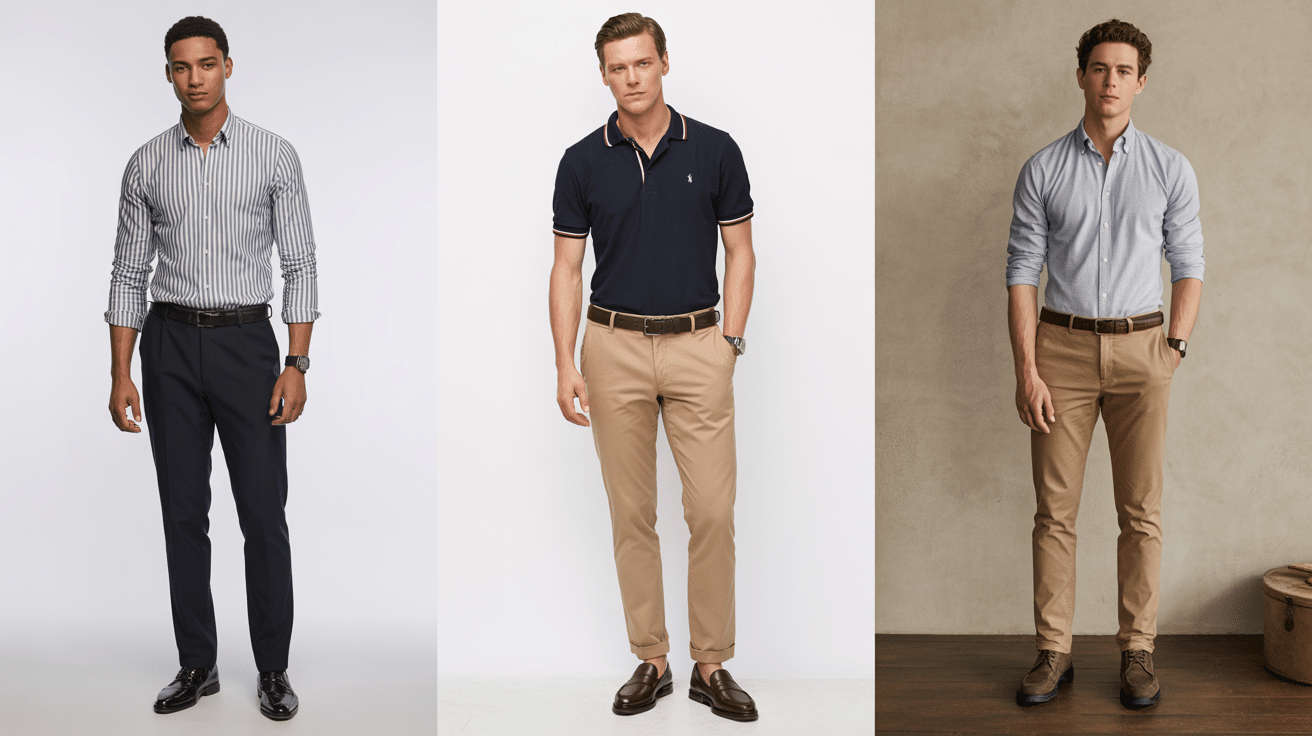
Business casual means wearing polished, professional clothing that’s less formal than a suit. It typically includes collared shirts, dress pants or chinos, and leather shoes.
You skip the tie and jacket but still look put together and ready for the office.
The Evolution of Business Casual
Business casual wasn’t always around. Men used to wear full suits daily, but the 1990s flipped the script.
Tech companies led the charge by loosening dress codes. Professionals sought comfort without sacrificing polish, and other industries quickly followed suit.
The result? A workplace style that balances professionalism with practicality, and it’s stuck around ever since.
Smart Casual vs Business Casual
People often mix these two up, but they’re actually different.
Business casual leans more toward professionalism, while smart casual gives you more freedom.
| Business Casual | Smart Casual |
|---|---|
| Collared shirts (button-downs, polos) | T-shirts, Henleys, casual shirts |
| Dress pants, chinos | Chinos, dark jeans are more acceptable |
| Leather dress shoes | Sneakers, casual boots allowed |
| No tie needed, but still polished | More relaxed, creative touches welcome |
| Office meetings, workdays | Casual Fridays, after-work events |
Knowing which situation calls for what helps you dress confidently every time.
Styling a Business Casual Outfit: Must-Have Items
Building a solid wardrobe starts with the right pieces. You don’t need dozens of options, just quality basics that mix and match easily.
Shirts That Work Well in Business Casual
Your shirt choice sets the tone for your entire outfit. Pick the right one, and you’re halfway to looking sharp.
1. Classic Oxford Shirt

The Oxford is your reliable go-to. It’s structured enough for important meetings but comfortable for all-day wear.
Light blue and white are safe bets that pair with almost anything.
2. Button-Down Shirt

These collared shirts give you a clean, professional appearance.
The buttons on the collar keep everything in place, which helps you look neat throughout the day.
3. Subtle Check or Stripe Shirt

Add some personality without going overboard. Small patterns in muted colors work perfectly.
They’re more interesting than solid shirts but still office-appropriate.
4. Polo Shirt

Polos work great in more relaxed business settings. Choose ones with a proper collar and avoid loud logos.
Solid colors or thin stripes keep things professional.
5. Long-Sleeve Knit Top

Think of these as dressed-up sweaters. They offer comfort while maintaining a polished look, especially during cooler months.
Stick with fitted styles rather than baggy ones.
With these shirts in rotation, you’ll have plenty of options for any workday situation. Next up are the pants that complete the look.
Pants That Fit the Dress Code
Getting your pants right matters just as much as your shirt selection. The wrong pair can throw off an otherwise solid outfit.
6. Chinos
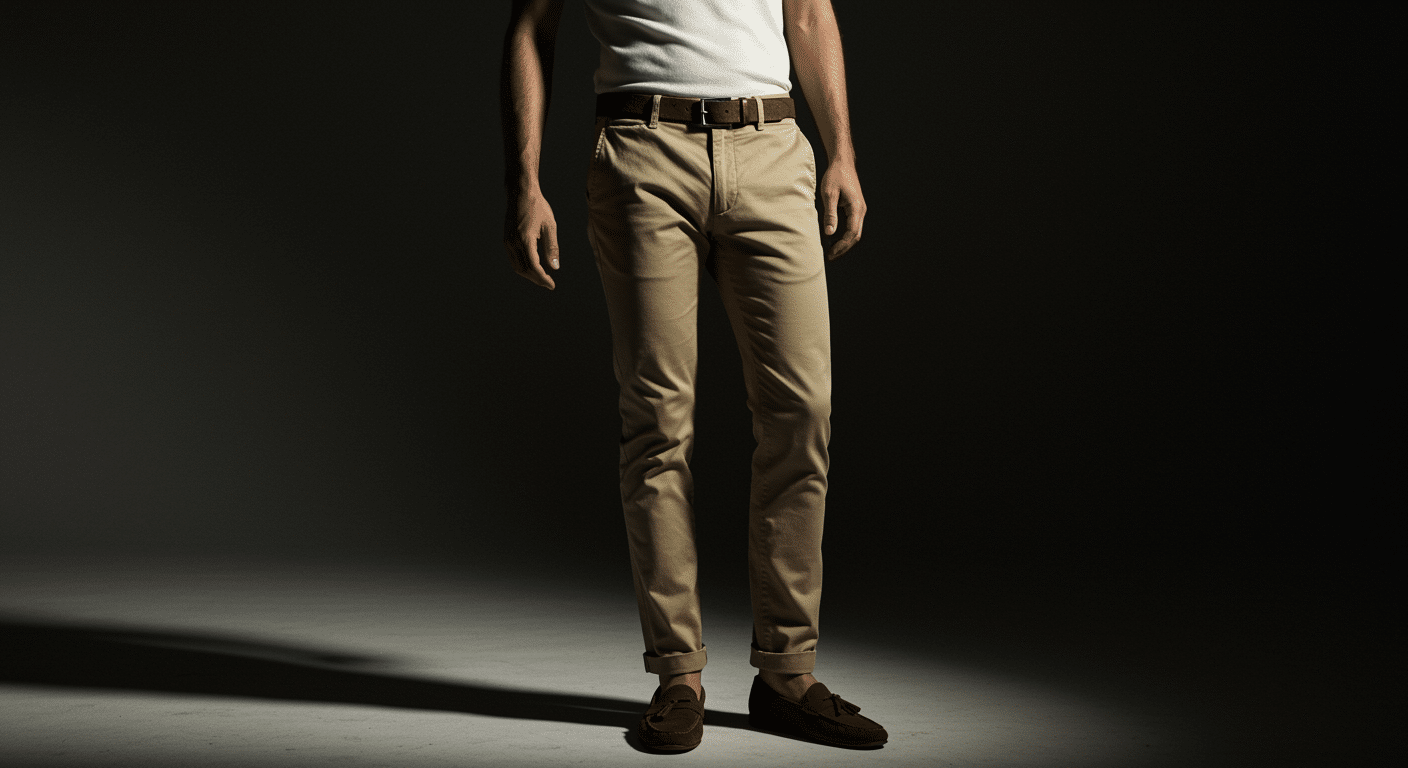
Chinos are the backbone of business casual.
They’re more relaxed than dress pants but still look put together. Navy, khaki, and gray work best. Make sure they fit well at the waist and aren’t too baggy.
7. Dress Slacks

When you need to look sharper, dress slacks do the job. They work great for client meetings or presentations.
Wool or wool-blend materials hold their shape better throughout the day.
8. Dark Jeans (When Acceptable)

Some workplaces allow dark jeans on casual Fridays.
Stick with deep indigo or black, no rips or fading. Pair them with a collared shirt to keep things appropriate.
9. Stretch Trousers

These give you freedom to move while maintaining a professional appearance.
The added stretch fabric makes sitting at a desk all day much more bearable. They look like regular dress pants, but feel way more comfortable.
10. Cotton Dress Pants

Cotton pants breathe well and work great in warmer weather. They’re lighter than wool but still structured enough for the office.
Press them before wearing to avoid a wrinkled look.
11. Straight-Fit Pants

A straight fit flatters most body types without being too tight or loose.
The legs maintain the same width from hip to ankle, giving you a clean silhouette that never goes out of style.
Now that you’ve got the top and bottom sorted, let’s talk about shoes that tie everything together.
Shoe Choices That Keep the Look Polished
Your shoes can make or break a business casual outfit. They’re one of the first things people notice.
12. Loafers (Brown or Black)

Loafers offer comfort and style in one package.
Brown pairs well with almost any color of pants, while black looks sharper in formal settings. Skip the tassels for a cleaner appearance.
13. Derby Shoes

Derby shoes are lace-ups that look professional without being too stiff.
They’re slightly more casual than dress shoes but still office-appropriate.
14. Oxfords

Oxfords are your dressiest option.
The closed lacing gives them a sleeker look, and they pair perfectly with dress slacks when you need to step things up.
15. Brogues

The decorative perforations on brogues add character without looking flashy.
They sit between casual and formal, making them ideal for business-casual settings.
16. Clean Sneakers Suited for Office Settings

Leather or canvas sneakers in neutral colors work in more relaxed workplaces. Keep them spotless and avoid athletic styles.
Think minimalist designs rather than running shoes.
17. Chelsea Boots

These ankle boots with elastic side panels look sharp with both pants and jeans.
They’re easy to slip on and give you a modern, polished vibe.
18. Chukka Boots

Chukka boots feature two or three eyelets and hit just above the ankle. Both suede and leather versions work well and add some texture to your outfit.
These shoe options cover everything from relaxed to refined.
Layering Tips
Weather changes throughout the day, and your outfit needs to adapt.
Layering lets you stay comfortable without sacrificing your professional appearance.
- Blazers for Extra Polish: A blazer instantly elevates any business-casual outfit. Navy and charcoal gray work with most combinations. Keep one at your desk for unexpected meetings.
- Sweaters Over Collared Shirts: V-neck or crew-neck sweaters add warmth while keeping things professional. Merino wool breathes well and resists wrinkles.
- Cardigans for Flexibility: Cardigans are easier to take on and off than pullover sweaters. They give you temperature control throughout the day.
- Lightweight Jackets for Transitional Seasons: Spring and fall call for something between a shirt and a heavy coat. A lightweight jacket does the trick without adding bulk.
How to Build a Business Casual Outfit Step by Step
Putting together a business casual outfit doesn’t have to feel complicated. Follow this simple process, and you’ll look sharp every time.
Start with your pants: Choose chinos or dress slacks in a neutral color, such as navy, gray, or khaki. They form the foundation of your outfit.
Pick your shirt next: A button-down or polo works well. Make sure it’s clean and wrinkle-free. Tuck it in for a neater appearance or leave it untucked if the shirt hem is designed for that.
Add your shoes and belt: Your belt should match your shoes for a cohesive look.
Finishing with Accessories
Accessories complete your look and show attention to detail. Here’s what works best for business casual:
- Watches – A simple leather strap watch keeps things professional without being too formal
- Ties (optional) – Add one for important meetings, but they’re not required for everyday wear
- Pocket squares – Use them sparingly in blazers for a refined touch
- Cufflinks – Save these for dress shirts with French cuffs on dressier days
- Minimal jewelry – A wedding band or simple ring is fine, but skip chains and bracelets
When to Layer Up
If it’s chilly or you want to look more polished, throw on a blazer or sweater. This extra piece takes your outfit up a notch without much effort.
With these steps down, getting dressed becomes quick and stress-free.
When to Wear Business Casual?
Business casual fits most modern office environments. Here’s when you’ll wear it:
- Regular workdays at the office
- Internal team meetings
- Casual client interactions
- Networking events
- Business lunches
- Conference attendance
- Office holiday parties
- Company social events
Pay attention to your workplace culture and dress accordingly. If everyone around you wears blazers daily, you should too.
When your office leans casual, you can wear darker jeans and polo shirts.
Mistakes Men Make with Smart and Business Casual
1. Wearing wrinkled or stained clothes.
Fix: Always iron your shirts and check for spots before heading out. Keep a lint roller handy.
2. Choosing shoes that are scuffed or dirty.
Fix: Polish your leather shoes regularly and replace worn-out pairs. Clean shoes make a bigger difference than you think.
3. Going too casual with graphics or logos.
Fix: Skip the branded tees and loud patterns. Stick with subtle designs that don’t scream for attention.
4. Ignoring proper fit.
Fix: Clothes that are too baggy or too tight look sloppy. Get your pants hemmed and shirts tailored if needed.
Conclusion
Mastering business casual attire for men comes down to knowing your basics and building from there.
Invest in quality pieces that fit well, keep your shoes polished, and pay attention to the details. Once you’ve got these essentials in your closet, getting dressed becomes effortless.
Ready to upgrade your wardrobe?