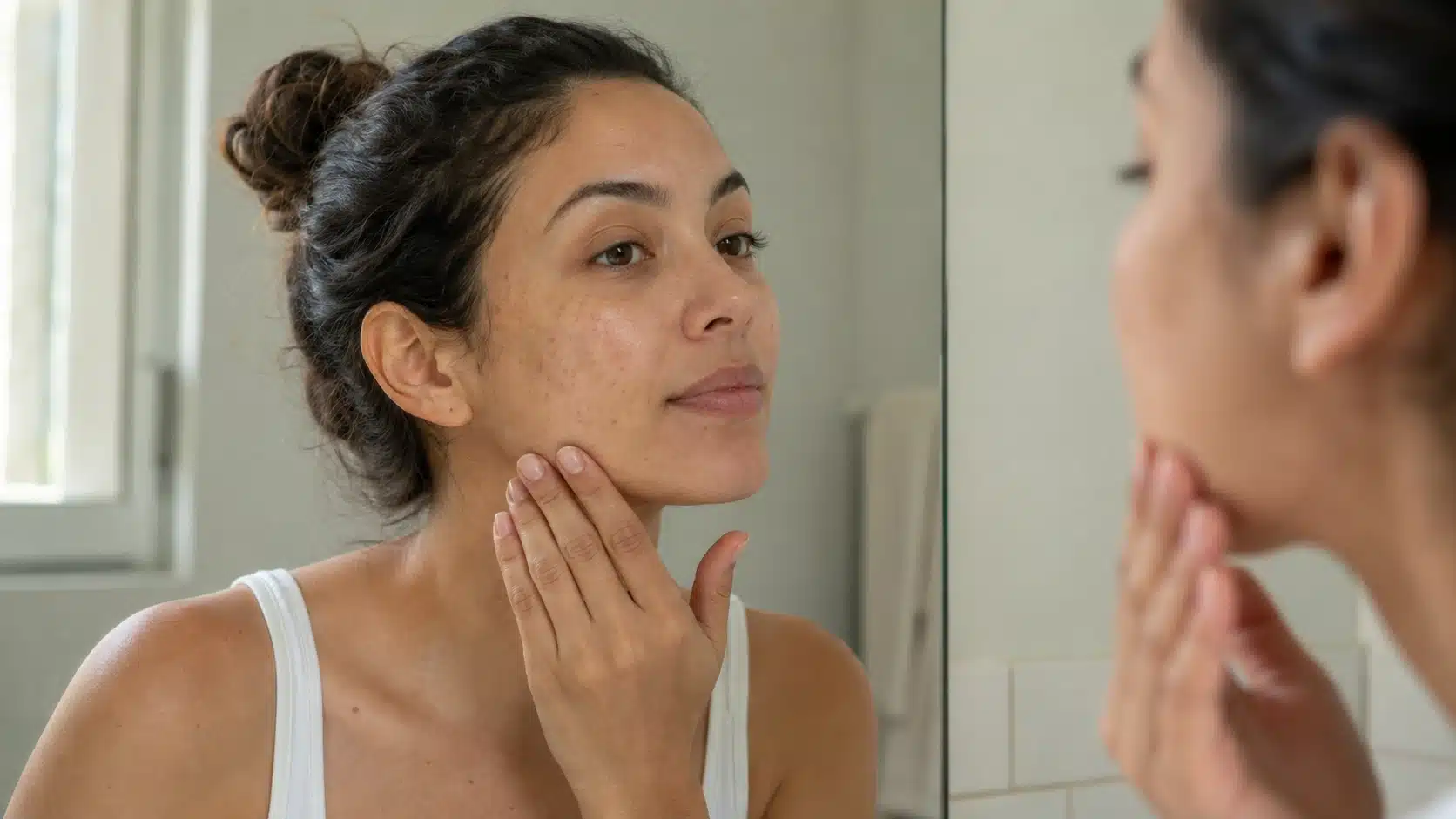
The painful reminder that dark marks are the challenge of skincare.
You could go through the same workout routine for weeks, take progress shots, and still ask yourself if there has been any difference.
But tretinoin can fix this.
This blog will tell you what usually changes at each stage: the reasons for the different timescales and the best way to assess where you are.
Can Tretinoin Cause Purging, Irritation, or Damaged Skin Barrier?
Mild dryness, tightness, or light flaking can occur when treatment begins.
Some users also report a temporary increase in breakouts, but every new breakout should not automatically be called purging.
Painful burning, swelling, cracking, crusting, or raw skin points to more than a mild adjustment.
Continuing through strong irritation can delay progress and may worsen discoloration.
Official labeling advises discontinuing use when a reaction suggests sensitivity or chemical irritation and contacting the prescribing professional for guidance.
Realistic Tretinoin Before and After Timeline
Below is an account compiled from several typical reports in medical journals, clinical histories, and common user observations.
Do not treat the list below as a guarantee. Time factors vary due to the depth of pigments, degree of sensitivity of the patient, and such external factors as solar exposure, etc.
| Timeframe | Possible Skin Changes | What Photos May Show |
|---|---|---|
| Weeks 1 to 4 | Dryness, tightness, mild peeling, or temporary breakouts | Little pigment change and possible redness |
| Weeks 5 to 12 | Smoother texture and fewer new breakouts | Early brightening or slightly lighter marks |
| Months 3 to 6 | More visible fading with steady, tolerated use | Better contrast between baseline and current photos |
| Months 6 to 12 | Continued tone improvement or a treatment plateau | Clearer long-term progress and remaining stubborn areas |
Common Tretinoin Transformation Patterns
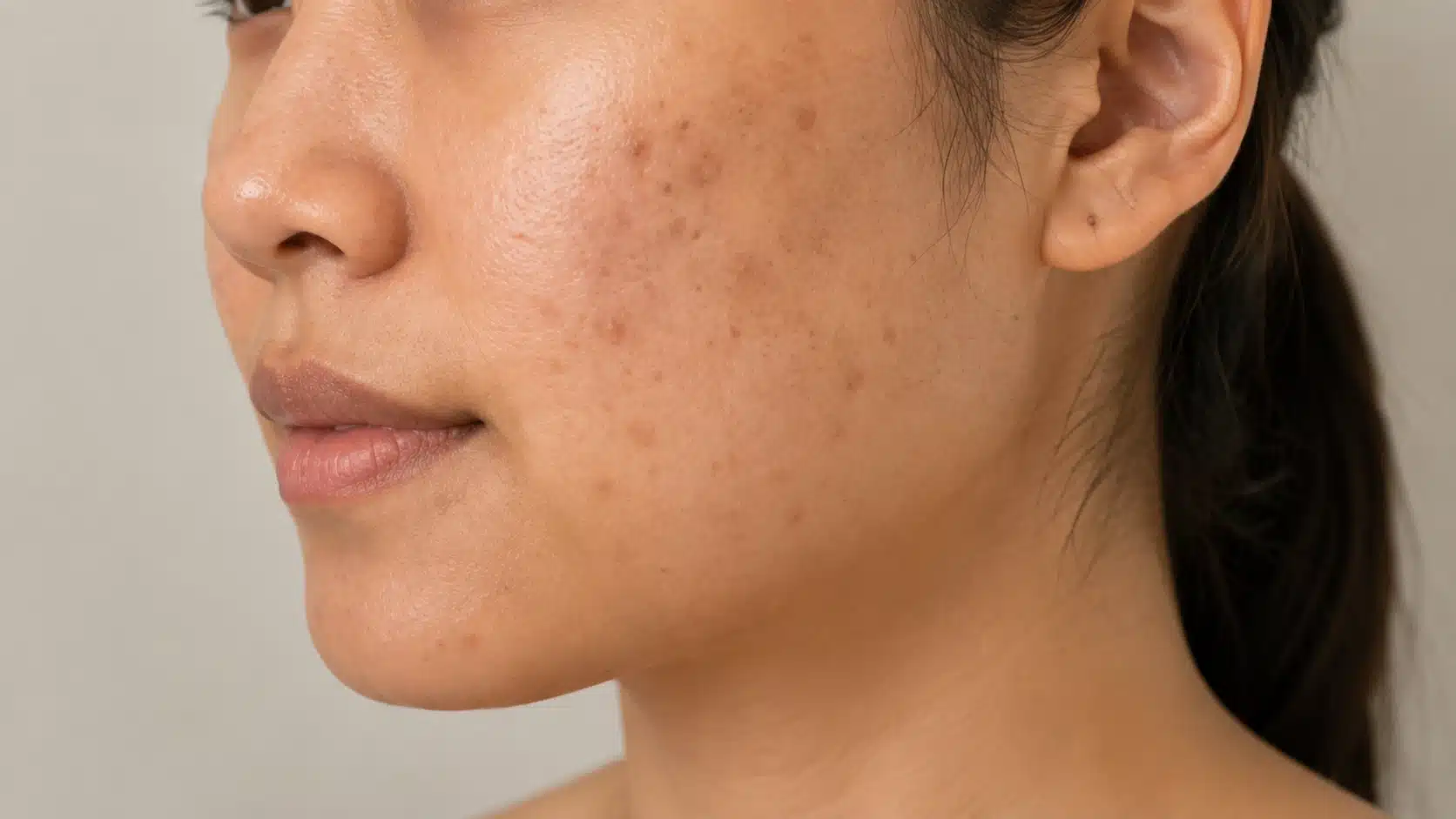
Individual results differ, but several transformation patterns appear repeatedly. These examples explain common treatment journeys rather than guaranteed outcomes or individual testimonials.
Slow Fading After an Uneventful Start
Certain people may have minimal dryness with minimal breakouts or purging on their face.
Many may find their face getting better and silkier throughout the first few weeks, but their dark spots are still the same from when they started.
Most people will see some improvement between months 3-6 in the monthly photos.
A few dots and the entire face overall will look more even and brighter.
The best comparison you’ll notice is when you compare the progress of their starting face with their faces at different months.
Improvement After an Irritation Setback
A second one might experience increased stinging, burning, or repeated applications with lots of peeling and redness before getting the break.
You may need to slow down or even temporarily stop the treatment while the skin barrier repairs and gets stronger.
It’s slower, of course, until some gains are restored by taking a gentle routine that starts with moisturizer and includes less active products at some point.
Fewer Breakouts and Fewer New Marks
For those who are experiencing post-acne pigmentation, it’s the balance of fading while also actively preventing more from forming.
Older pigmentation will gradually lighten over time, and new breakouts are deterred, so no new spots occur.
The final photo may still highlight previous spots; however, the skin may be clearer due to reduced acne activity, which results in fewer new hyperpigmentation spots forming.
The American Academy of Dermatology notes that topical retinoids can treat acne and help lighten the dark spots left behind.
How to Compare Before and After Photos Fairly?
Take baseline photos before starting treatment, then repeat them about once every four weeks.
Use the same room, daylight conditions, camera distance, angle, and facial expression. Avoid makeup, filters, smoothing tools, and different exposure settings.
Keep a short note with each photo recording the date, tretinoin concentration, weekly frequency, treatment breaks, irritation, sunscreen, and other active products.
This context matters because a brightly lit image taken beside a window can look more improved than an accurately matched follow-up.
Types of Pigmentation Tretinoin May Improve
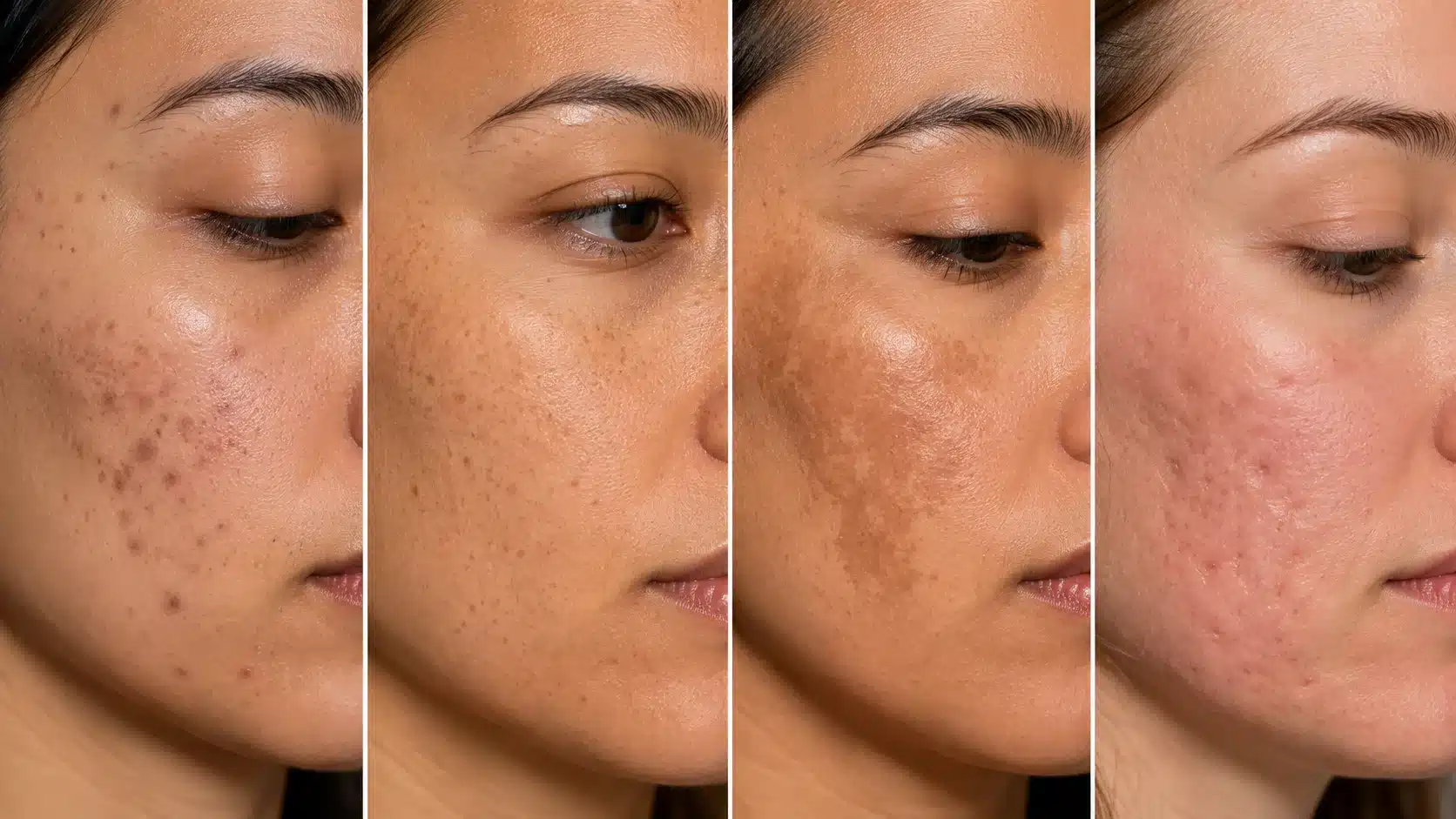
Not every dark mark responds to tretinoin in the same way. Its effectiveness depends on the cause, depth, and type of pigmentation, so identifying the type of mark helps set realistic expectations for improvement.
Post-Inflammatory Hyperpigmentation
Post-inflammatory hyperpigmentation, or PIH, develops after inflammation or injury, commonly following acne.
It can appear brown, gray, or darker than the surrounding skin.
PIH may improve naturally, but the process can take months or years and may be more persistent in darker skin tones.
Tretinoin may support gradual fading while acne control helps reduce the formation of new marks.
Sun Spots and Uneven Tone
Tretinoin may gradually soften some sun-related discoloration and uneven tone.
Progress can stall when unprotected exposure keeps stimulating pigment, so sun protection is part of the treatment result rather than an optional extra.
Tretinoin labeling also advises minimizing sun exposure because treated skin may become more susceptible to sunlight.
Melasma and Hormonal Pigmentation
Melasma often forms larger, symmetrical patches and can return after improvement.
Tretinoin may be prescribed alone or as part of a combination plan, but results are often slower and professional supervision matters.
In a small trial, 68% of participants using 0.1% tretinoin once daily were rated improved or much improved after 40 weeks, compared with 5% in the group. Significant improvement first appeared after 24 weeks.
This result should not be treated as the expected outcome for every concentration, skin type, or treatment routine.
Marks That May Not Be Hyperpigmentation
Red, pink, or purple post-acne marks may be post-inflammatory erythema rather than excess pigment.
Indented scars, raised scars, visible blood vessels, and changing moles also require a different assessment.
Tretinoin may improve some texture concerns, but a brown-mark transformation should not be used to predict results for scar depth or vascular redness.
Common Side Effects of Tretinoin
Tretinoin can cause side effects, especially during the first few weeks or when the skin is adjusting to treatment. Mild reactions are common, but strong or persistent irritation should not be ignored.
- Dryness: Skin may feel dry, rough, or unusually tight after starting tretinoin.
- Peeling and Flaking: Light peeling can occur as the skin adjusts, but heavy peeling may signal irritation.
- Redness: Temporary redness may appear, particularly after increasing the strength or frequency of application.
- Stinging or Burning: Mild sensitivity can occur, while persistent or painful burning may require medical advice.
- Temporary Breakouts: Some people notice more breakouts during the early stages, although every breakout should not automatically be considered purging.
- Increased Sun Sensitivity: Treated skin may be more sensitive to sunlight, making daily sun protection especially important.
- Worsening Hyperpigmentation: Strong irritation can sometimes make discoloration more noticeable, particularly in skin prone to pigmentation.
Severe swelling, cracking, crusting, raw skin, or persistent burning is not something to push through. Reducing or stopping tretinoin and contacting the prescribing professional may be necessary when significant irritation develops.
Why Tretinoin Results Differ Between Users
Two people can use the same concentration and still have different outcomes. The main variables include:
- Pigment cause and depth: Surface marks may fade sooner than deeper or hormone-related patches.
- Skin tolerance: Irritation can force treatment breaks and may trigger additional discoloration in pigment-prone skin.
- Application pattern: Following the prescribed schedule is more useful than alternating between overuse and long pauses.
- Formula and concentration: Higher strength is not automatically faster or better, especially when it creates irritation.
- Sun exposure: Unprotected exposure can darken existing marks or create new unevenness.
- Other treatments: Hydroquinone, azelaic acid, chemical peels, lasers, or acne medication can influence the final photo.
Before-and-after captions should disclose other active ingredients and procedures. Otherwise, readers may incorrectly attribute every change to tretinoin alone.
When to Contact a Dermatologist?
Seek professional advice when burning, swelling, cracking, or persistent redness develops; pigmentation becomes darker or spreads.
Acne may worsen for an extended period, or several months pass without meaningful improvement despite correct use.
A changing mole or unusual dark patch also needs assessment rather than cosmetic treatment.
The American Academy of Dermatology recommends avoiding topical retinoids such as tretinoin during pregnancy.
Anyone pregnant, planning pregnancy, or breastfeeding should discuss current or planned use with a qualified healthcare professional.
Frequently Asked Questions (FAQs)
1. How Long Does Tretinoin Take to Fade Hyperpigmentation?
Some users notice early changes near 12 weeks, while deeper marks and melasma may need six months or longer. The cause of pigmentation, treatment tolerance, sun exposure, and additional therapies all affect the timeline.
2. Does Tretinoin 0.025% Help With Dark Spots?
A lower concentration may still support pigment improvement. Concentration alone does not determine success, and a tolerable routine may be more sustainable than a stronger formula that repeatedly damages the skin barrier.
3. Is Peeling a Sign That Tretinoin is Working?
Peeling is a possible side effect, not a required sign of effectiveness. Skin can improve without visible flaking, and heavy peeling does not mean spots will fade faster.
4. Can Tretinoin Remove Old Acne Marks?
It may gradually lighten brown post-inflammatory marks, especially when new acne is controlled. Indented scars, raised scars, and red vascular marks may respond differently and often need another treatment approach.
5. Can Hyperpigmentation Return After Tretinoin?
Yes. New acne, inflammation, hormonal changes, and sun exposure can create fresh pigmentation after older marks improve. A maintenance plan should focus on preventing the trigger as well as fading existing discoloration.