Ever look in the mirror and notice your skin looks dull, rough, or just tired?
That is usually dead skin sitting on the surface, and a good natural exfoliant can fix it fast.
The best part is you probably already have what you need in your kitchen
From gentle oatmeal to a simple face scrub with sugar and honey, these options work without harsh chemicals or a big price tag.
This is what actually works and how to use it without irritating your skin.
What Makes a Good Exfoliant?
A good exfoliant does two things. It either buffs away dead skin with small particles such as Sugar, rice powder, and finely ground oats.
It uses enzymes and acids to loosen the bonds that hold dead cells in place, such as those found in papaya, pineapple, and yogurt.
Neither method is automatically better. It really comes down to your skin type. Someone with tough, oily skin can often handle a coarser scrub.
Someone with thin or reactive skin usually does better with a gentle enzyme mask instead.
Natural Exfoliant According to Your Skin Type
Which scrub to use, which ingredients, and why comes down to what skin type and problems you face.
Some of the scrubs that will suit your skin can be,
Oatmeal + Honey
This is a staple for sensitive or reactive skin, mainly because it’s hard to get wrong.
Oats contain compounds that calm inflammation while gently lifting away dead skin cells, so the skin gets exfoliated without causing harsh micro-tears.
Grind the oats finely (a coffee grinder works fine), mix with a spoonful of raw honey, and let it sit on damp skin for five to ten minutes.
Honey’s natural antibacterial properties are a nice bonus for skin that’s prone to occasional breakouts too.
Papaya
Papaya is a bit of an underrated pick, especially for skin that flares up at the sight of a washcloth.
It contains an enzyme called papain that breaks down dead skin cells chemically rather than physically, so there’s genuinely no rubbing required.
Mash a small piece into a paste and apply a thin layer for a few minutes; let it dissolve rather than scrubbing it in.
Good for sensitive skin, but also a nice occasional treat even for normal skin types looking for a gentle refresh.
Brown Sugar + Honey
For dry skin, the goal is something to exfoliate and replenish moisture in the same step
Otherwise, it’s just stripping without giving anything back. Brown sugar has smaller, softer granules than white sugar, so it buffs away flaky patches without being too harsh,
while honey works as a moistening agent, pulling moisture into the skin as it goes.
Exfoliation isn’t the finish line for dry skin; a rich moisturizer should follow immediately, since dry skin left bare after exfoliating tends to feel tighter and more irritated by the end of the day.
Avocado + Honey
This one’s basically a spa treatment from the fridge, and it works well for very dry, flaky, or windburned skin, as if it’s post-hiking, post-winter kind of dryness.
Avocado is rich in fatty acids that reinforce the skin barrier, and combined with honey’s moisture-binding effect, it feels more like a nourishing mask than a typical exfoliant.
Mash and apply a generous layer, leave it slightly longer than other options (around ten minutes), and rinse with lukewarm water (not hot) to avoid dehydrating the skin.
Coffee Grounds + Fine Sea Salt
For oily or acne-prone skin, some texture actually helps, unlike with sensitive skin.
Coffee grounds provide gentle physical exfoliation and are believed to aid circulation and reduce puffiness, while fine sea salt assists with oil control.
That said, one thing that most people have the instinct to do is scrub harder or more often to “fight the shine,” which almost always backfires.
Over-exfoliating oily skin strips it, which paradoxically signals the skin to produce even more oil to compensate, and that can inflame active breakouts.
Once or twice a week, with gentle pressure, is the sweet spot.
Yogurt
A quieter, gentler option for oily or acne-prone skin that still offers chemical exfoliation without adding extra grease.
Plain yogurt contains natural lactic acid, an alpha-hydroxy acid that dissolves the “glue” holding dead skin cells together without any oil or grit.
It’s a great choice on days skin feels congested but too sensitive for coffee or salt. Apply a thin layer, leave for five to seven minutes, then rinse.
Oatmeal + Yogurt
Combination skin is one of the trickier types to advise on, since two different needs are being managed on one face.
This pairing works well because oats calm and gently exfoliate drier patches, often the cheeks, while the lactic acid in yogurt takes care of oilier zones like the forehead and nose.
It can help to leave it on slightly longer around the T-zone and rinse the drier areas a touch sooner if one area seems to be over-processing compared to the other.
Best Natural Exfoliants for the Body
Body skin is thicker than facial skin, so it can usually handle a firmer scrub.
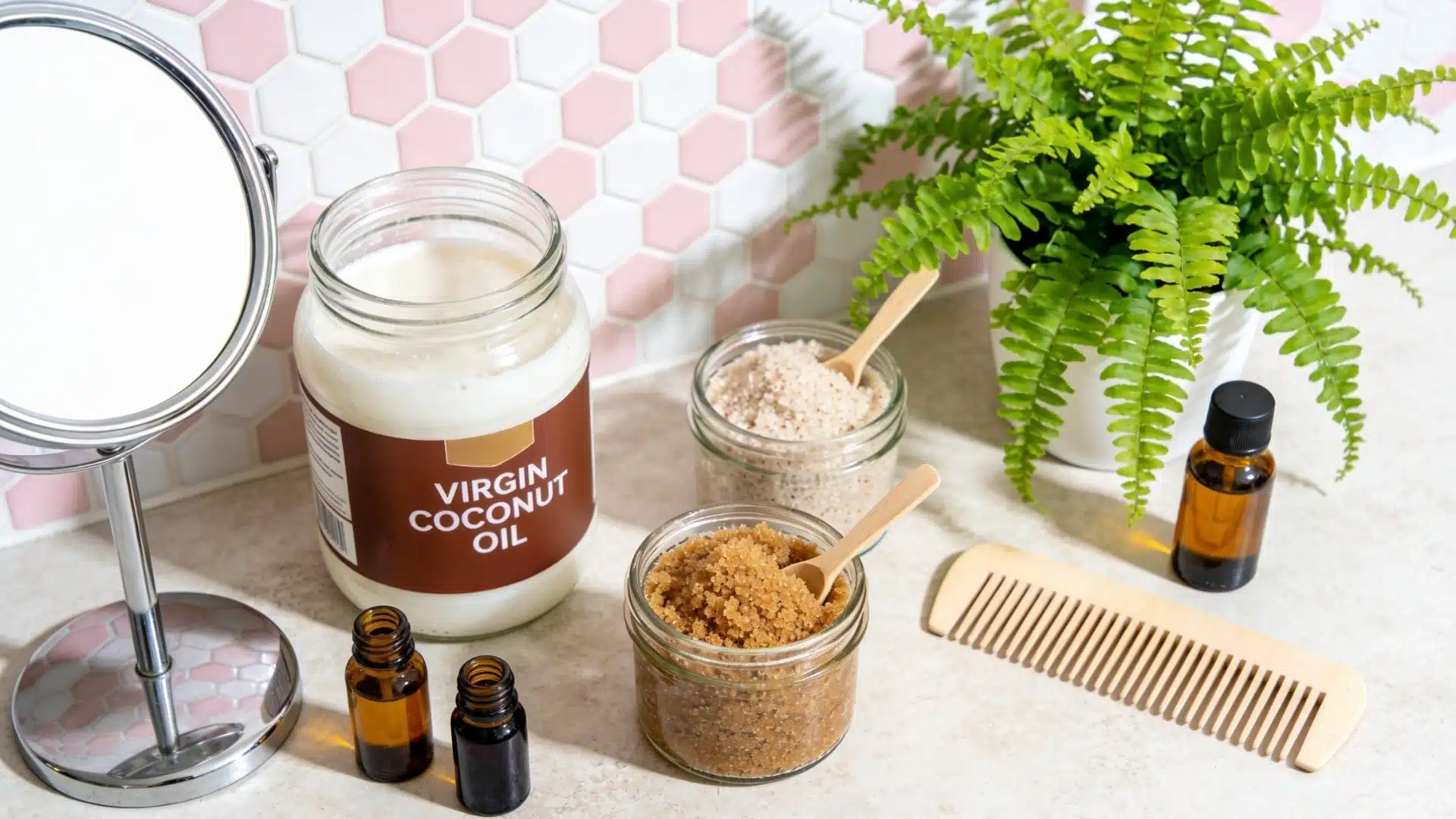
Brown sugar mixed with olive oil or coconut oil works well for elbows, knees, and heels where skin tends to get rough.
Massage it in for about a minute in the shower, then rinse with lukewarm water.
Coffee grounds mixed with a carrier oil are another common choice for the body.
Many people use this on their arms and legs to help with rough patches and dull skin. The grit is coarser than most facial ingredients, so it should stay off the face.
Sea salt scrubs work well too, especially on the back and legs, but they can feel harsh on freshly shaved skin.
A simple fix is to wait a day after shaving before using a salt-based scrub.
How to Make a DIY Face Scrub at Home
Making your own face scrub takes just a few minutes. Here is a simple process to follow.
1. Start with clean, slightly damp skin.
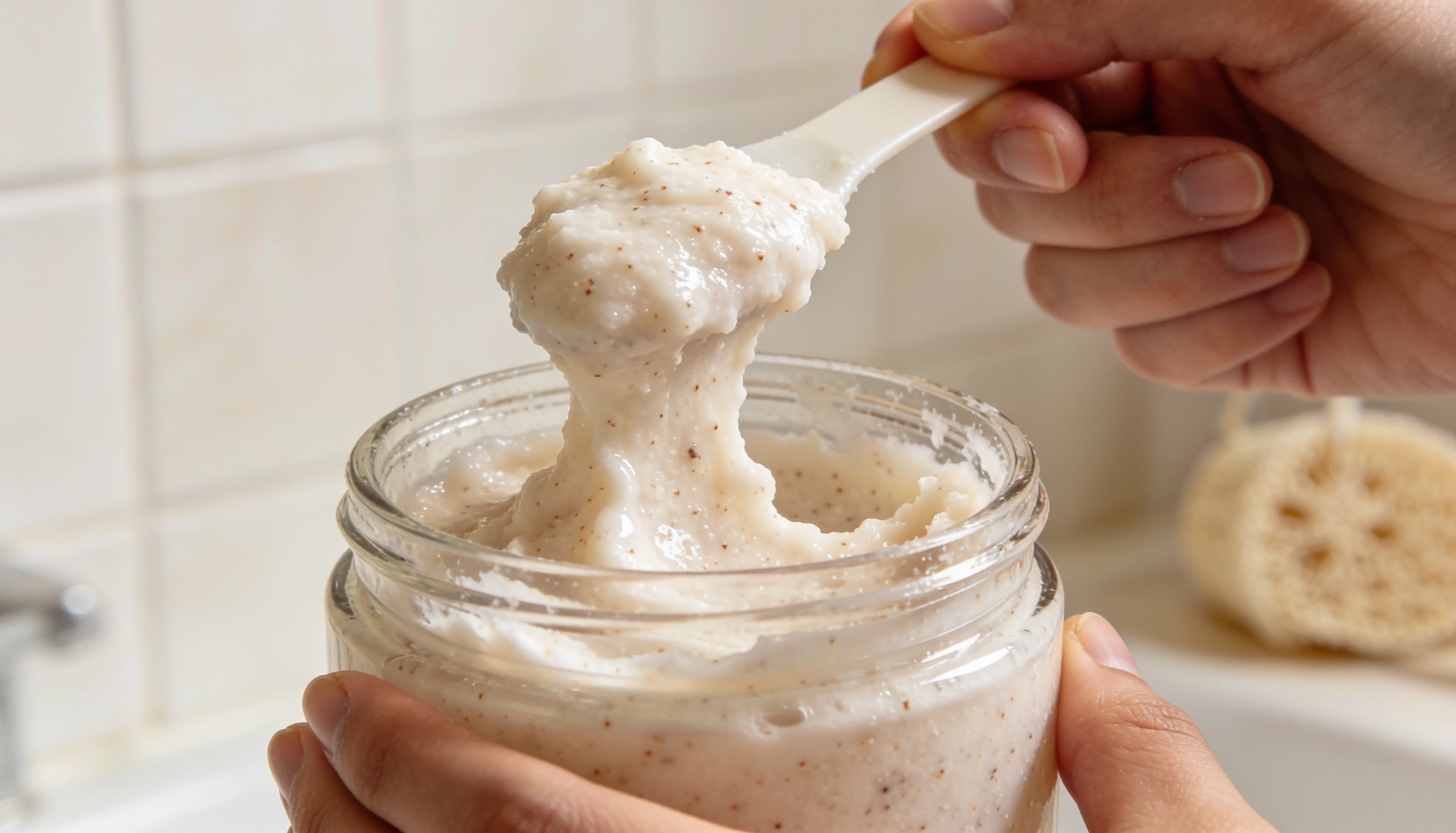
2. Mix your chosen ingredients into a smooth paste. Two tablespoons of a base ingredient, like oats or sugar, plus one tablespoon of honey or yogurt, is a good starting ratio.
3. Apply using your fingers in small circular motions for about thirty seconds. Enzyme masks like papaya do not need to be rubbed at all.
4. Leave it on for the suggested time for your ingredients, usually 5 to 15 minutes.
5. Rinse with lukewarm water and pat your skin dry.
6. Follow up with a moisturizer while your skin is still a little damp.
A patch test on your wrist before trying a new mix on your face is worth the extra minute, especially with lemon juice or any acidic ingredient.
How Often Should You Exfoliate?
Most skin types do well with exfoliating one to three times a week.
Sensitive or dry skin often does better sticking closer to once a week, while oily skin can sometimes handle a bit more.
Signs you’re overdoing it include tightness, ongoing redness, or skin that suddenly feels more reactive to your usual products.
If any of that shows up, cut back and let your skin recover before trying again.
If you have active breakouts, sunburn, or a condition like rosacea or eczema, check with a dermatologist before adding any new exfoliant to your routine.
Conclusion
Finding the right natural exfoliant really comes down to knowing your skin type and being consistent without overdoing it.
Whether you reach for oatmeal, yogurt, or a simple face scrub with sugar and honey, gentle, regular use will do more for your skin than an aggressive scrub ever could.
Start slow, watch how your skin responds, and adjust from there.
Frequently Asked Questions (FAQs)
1. Diy Home Exfoliating Scrub for Sensitive Skin
Mix 1 tablespoon of finely ground oatmeal or superfine sugar with 1 teaspoon of raw honey and a splash of warm water to create a paste.
2. Best Homemade Body Scrub for Skin Whitening
Mix 1 cup of finely ground sugar or rice flour, 2 tablespoons of coconut or almond oil, 1 teaspoon of turmeric powder, and 1 tablespoon of lemon juice or raw honey.
3. Is It Better to Exfoliate with a Sugar or Salt Scrub?
Salt scrubs offer a more robust exfoliation experience and are better suited to people with thicker, rougher skin.