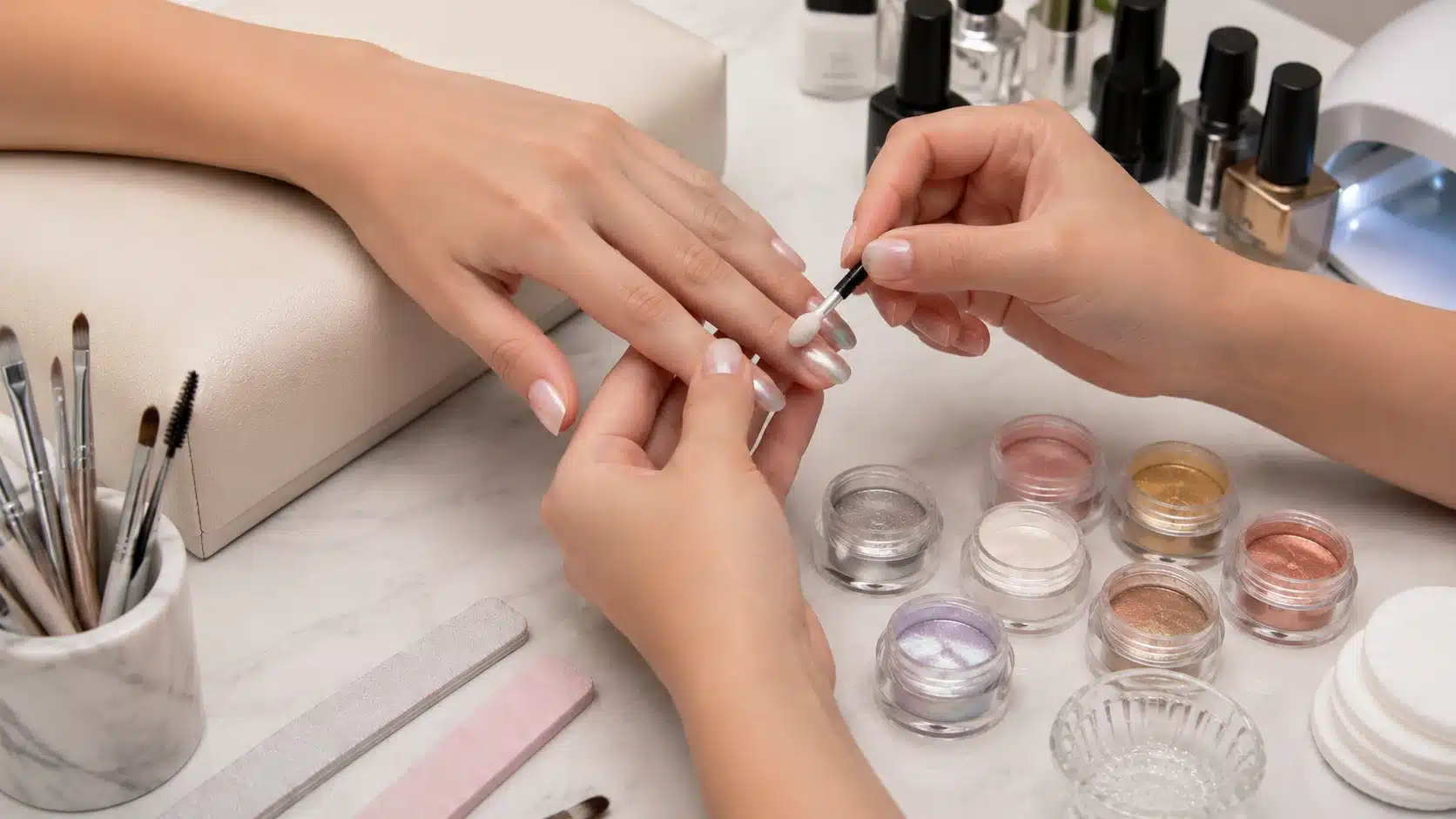
You’ve probably seen flawless, long-lasting nails on TikTok and wondered why your manicure never looks the same. The difference often comes down to technique, not your nails.
Let’s learn exactly what a Russian manicure is, how it stacks up against other manicures, and what safety concerns are worth knowing before you try one.
What is a Russian Manicure?
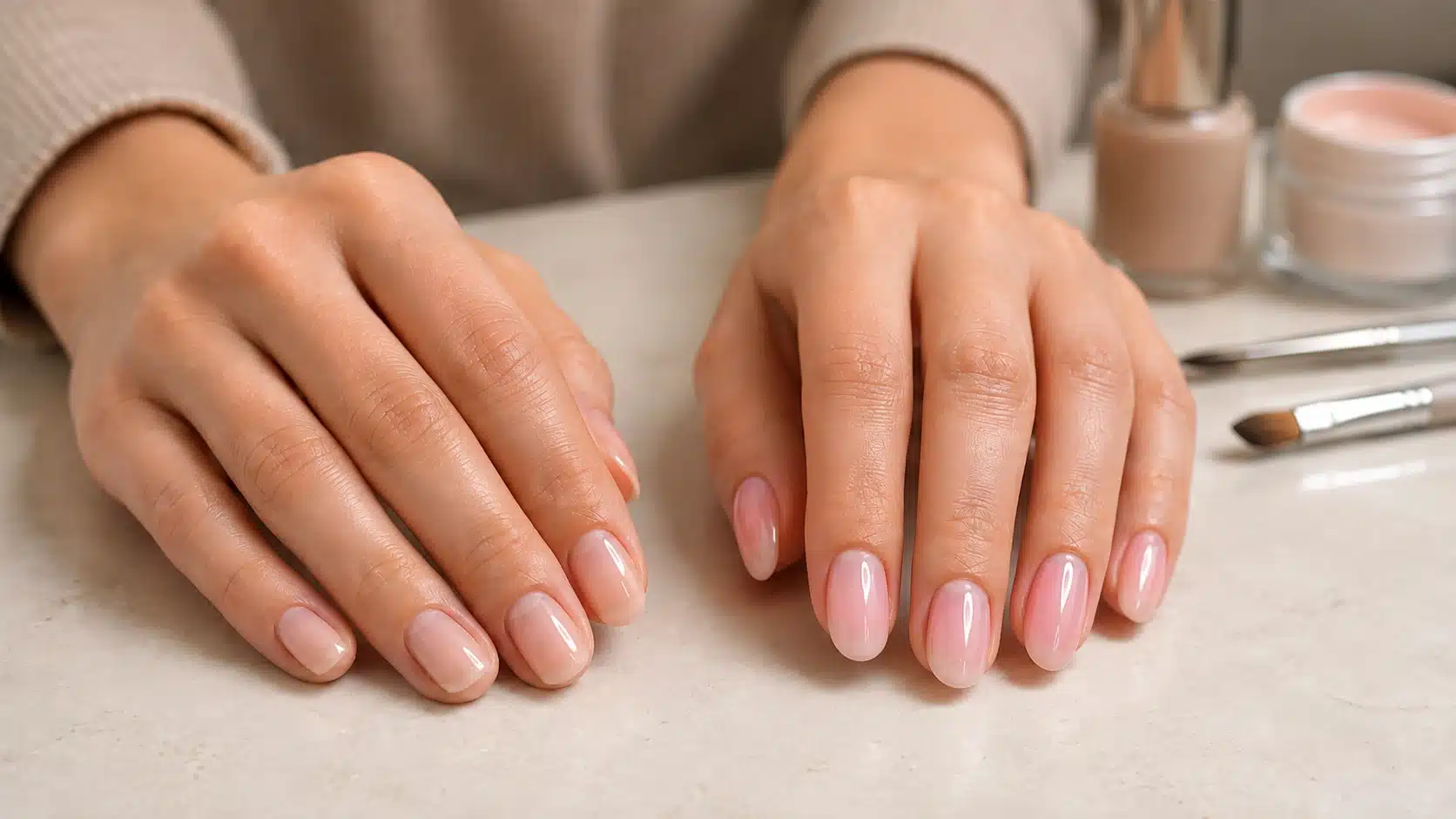
A Russian manicure is a dry nail treatment that focuses on precision cuticle work. Unlike a regular manicure, it skips the warm water soak completely.
Instead, a trained nail technician uses an electric file with specialized drill bits to clean and shape the cuticle area.
You may also hear it called a dry manicure or an e-file manicure. All three names refer to the same technique.
A Russian manicure removes dead skin around the nail plate with an electric file. This gives the nail a much cleaner, sharper look.
Because the nail stays dry throughout the process, the polish bonds better to the nail plate. This is why a Russian manicure tends to last so much longer than a standard one.
How is a Russian Manicure Done?
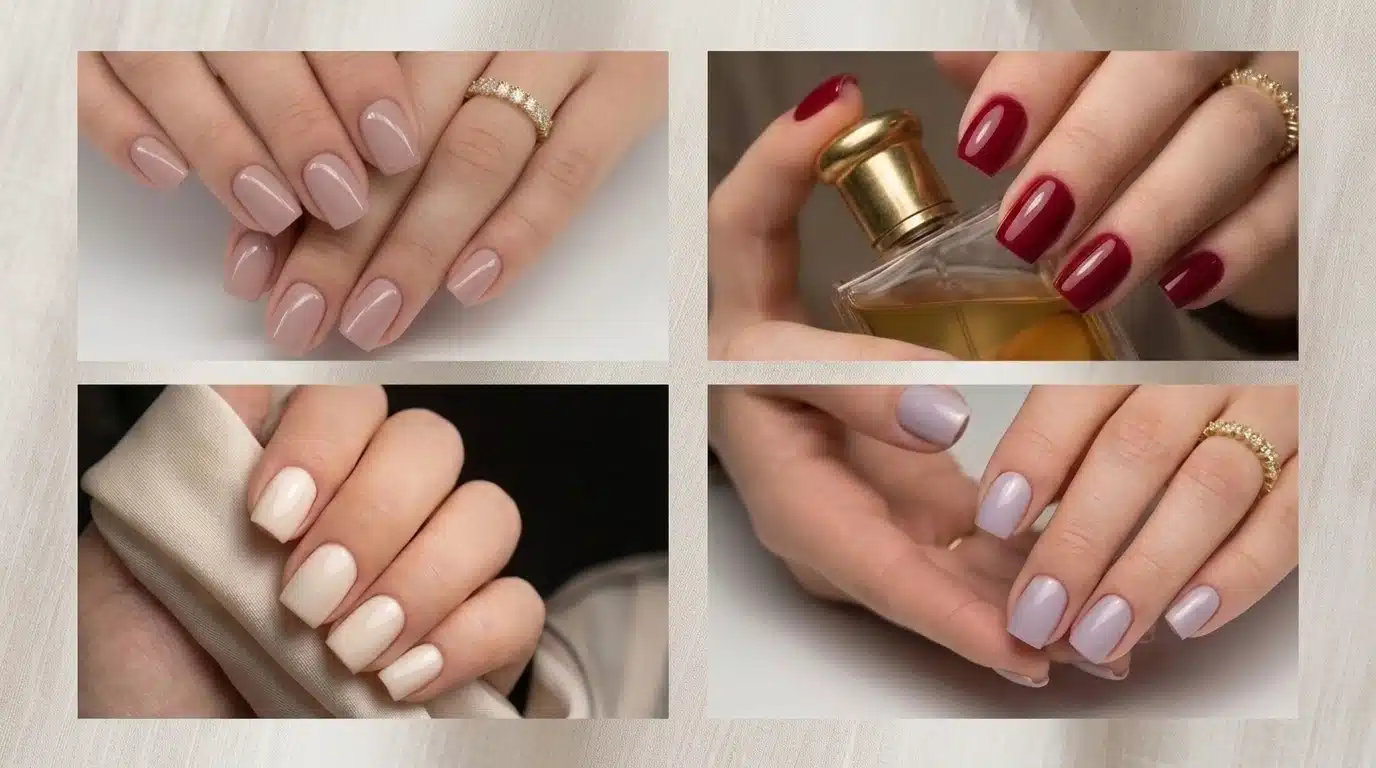
A Russian manicure takes about 60 to 90 minutes. Every step is done on dry nails, no soaking involved. The steps below explain how the process works from start to finish.
Step 1: Nail Prep
The technician starts by removing any old polish or gel from your nails. A nail cleanser is used to wipe away any oil, dust, or residue from the nail surface.
This step is important because even a small amount of oil on the nail plate can stop the gel from bonding properly. No water is used at any point during this step.
Step 2: Cuticle Work
The technician uses an electric file with specialized drill bits, usually diamond or carbide, to work around the cuticle area. Different bits are used for different purposes.
This step takes the longest. A skilled technician moves slowly and carefully. The goal is to remove only the dead skin, not the living tissue underneath.
When done correctly, there is no pain, no cuts, and no bleeding.
Step 3: Nail Shaping
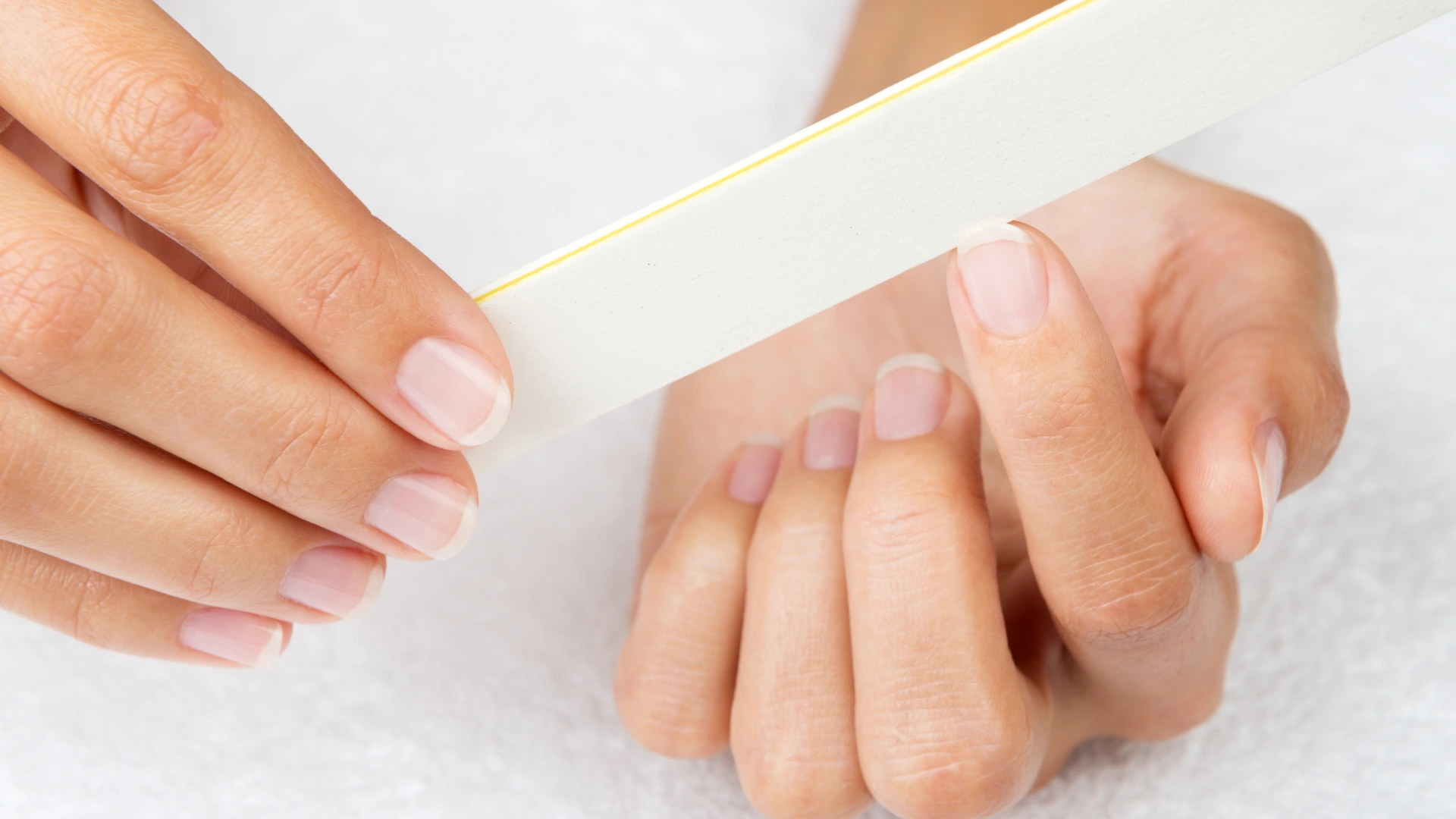
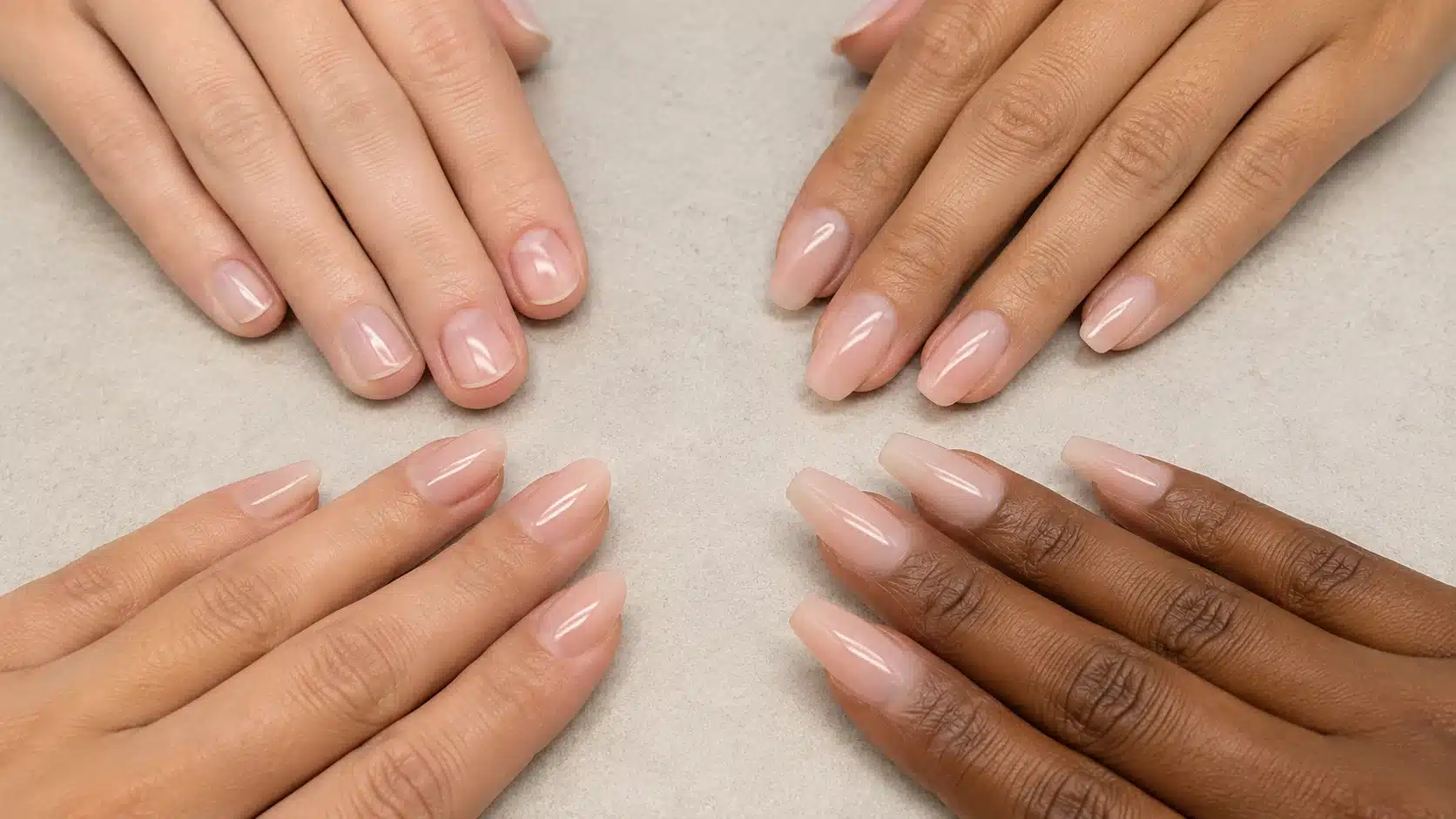
Once the cuticle area is fully clean, the technician shapes the nails using the electric file. You can choose from shapes like square, oval, almond, or round.
The edges are smoothed out and refined so the nail looks even from every angle. A soft buffing bit is used at the end to make the surface of the nail plate smooth and ready for the product.
Step 4: Base Coat Application
A specialized base coat is applied directly onto the dry, clean nail plate. The base coat used in a Russian manicure is different from a regular one.
It is chosen based on the strength and condition of your nails. Some base coats add structure and thickness, while others focus on flexibility.
This layer creates a strong foundation for the gel polish to sit on.
Step 5: Gel Polish Application
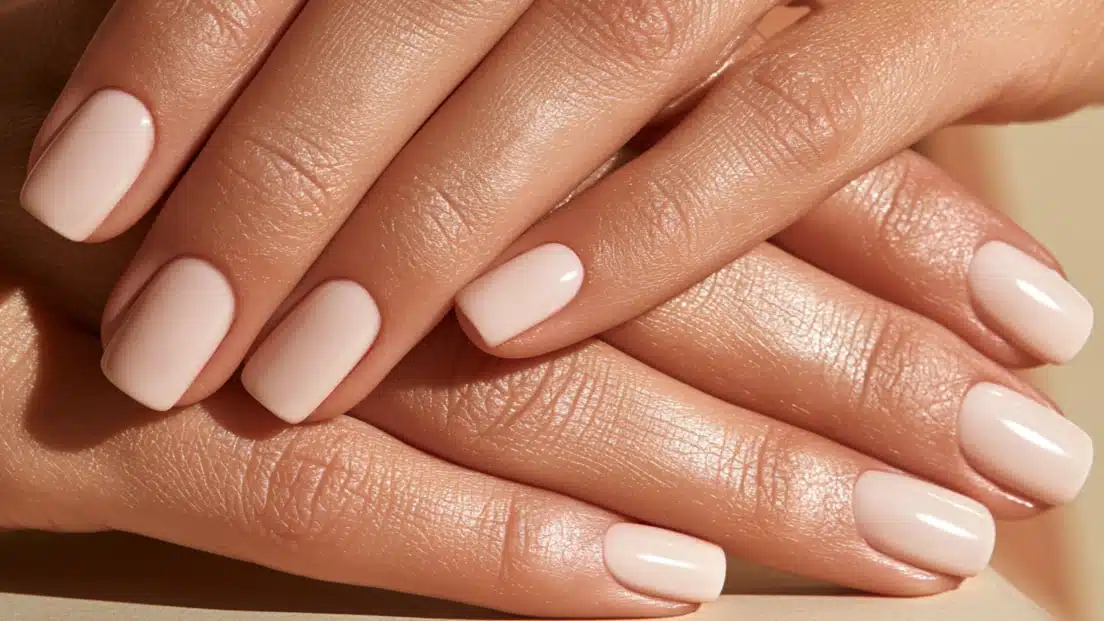
The gel polish is applied very close to the cuticle, almost underneath the proximal nail fold. This precise placement is what gives Russian nails that perfectly clean, gap-free look.
Because the polish sits so close to the skin, the grown-out look takes much longer to appear.
Each coat is thin and even, and cured under a UV or LED lamp before the next coat goes on.
Step 6: Top Coat and Finishing
A glossy top coat is applied over the finished color to seal and protect everything. This final layer adds shine and locks in the gel polish. The nails go under the lamp one last time to cure completely.
The entire process feels calm and controlled when done by a trained technician.
How Long Does a Russian Manicure Last?
A Russian manicure can last up to four weeks without chipping or lifting. That’s almost double the time of a regular manicure.
The reason comes down to the dry technique. Your nails stay free of moisture throughout the process. This helps the gel polish bond directly to the nail plate, instead of sitting on a surface that’s still slightly damp.
Polish placed close to the cuticle also means slower-looking regrowth. Your nails stay looking fresh for longer.
Factors like nail growth, daily habits, and aftercare still play a role. But on average, you can expect three to four weeks of clean, polished nails.
How Much Does a Russian Manicure Cost?
A Russian manicure typically costs more than a regular one. For a dry manicure with no polish, expect to pay between $50 and $70.
If you add gel polish, the price goes up to around $70 to $90. Some salons charge even more for master-level technicians, sometimes reaching $120.
The process takes longer, often 60 to 90 minutes. It also requires specialized training and electric file tools that regular manicures don’t use.
While it costs more upfront, the results last three to four weeks. That means fewer salon visits overall.
Russian Manicure vs. Regular Manicure vs Gel Manicure
These three terms get mixed up all the time, but they aren’t quite the same thing.
| Feature | Russian Manicure | Regular Manicure | Gel Manicure |
|---|---|---|---|
| Technique | Dry, e-file-based cuticle work | Water soak with cuticle pusher and nippers | Can use either dry or soak prep |
| Cuticle Care | Full removal with electric file | Softened and pushed back, light trimming | Standard pushback, minimal removal |
| Polish Placement | Applied close to or under the cuticle | Applied slightly away from the cuticle | Applied at the edge of the cuticle |
| Longevity | 3 to 4 weeks | 1 to 2 weeks | 2 to 3 weeks |
| Time Required | 60 to 90 minutes | 30 to 45 minutes | 45 to 60 minutes |
| Skill Level Needed | High, specialized training required | Standard nail tech training | Standard nail tech training |
Pros of Russian Manicure
A Russian manicure comes with real benefits, especially if you’re tired of nails that don’t hold up. This is what makes it worth the extra time and cost.
- Longer-lasting results: Your manicure can stay chip-free for three to four weeks, almost double the time of a regular manicure.
- Cleaner, more precise finish: The electric file removes dead skin with greater detail than nippers and pushers can.
- Less visible regrowth: Since the polish sits close to the cuticle, the grown-out look takes longer to show.
- Stronger gel bond: Skipping the water soak keeps the nail plate dry, which helps the gel stick better and last longer.
- Fewer salon visits: Because the results last longer, you don’t need to book appointments as often.
- Better for problem cuticles: If your cuticles grow thick or fast, this technique handles them more effectively than a regular trim.
Cons of Russian Manicure: Is the Russian Manicure Safe?
The Russian manicure has a real fan base, but it also has its critics. And both sides have valid points worth understanding.
What the Critics Say
The American Academy of Dermatology has flagged the Russian manicure as a technique with safety concerns. Board-certified dermatologists warn that the cuticle is not just dead skin.
It acts as a protective seal between the outside world and your nail bed. When that seal is removed or damaged, bacteria and germs have a much easier path to cause infection.
In one documented medical case, a patient developed paronychia, a bacterial infection causing swelling and pus, after a Russian manicure.
Her nail eventually detached from the cuticle area and had to regrow fully.
What Trained Technicians Say
Experienced nail technicians push back on these concerns not by dismissing them, but by pointing to context. They argue that the controversy is not about the technique itself. It is about who is performing it.
A skilled technician only removes dead skin, called pterygium, from the nail plate. They do not cut into living tissue.
The electric file is used with precision, not force. When done correctly, the process is controlled and careful.
The Real Problem
In many US states and parts of the UK, nail regulatory boards do not teach e-file cuticle work. Some states actually restrict the use of electric files on living skin.
This means many salons offering Russian manicures may not have technicians with proper training.
The risk, therefore, is not the Russian manicure itself. The risk is getting it done by someone who is not fully trained to perform it safely.
Wrapping Up
A Russian manicure is not just another nail trend. It is a completely different approach to nail care, one that focuses on precision, cleanliness, and long-lasting results.
If you are tired of polish that chips within days and cuticles that look rough by week two, Russian nails directly tackle both problems.
The technique itself is not dangerous. But in untrained hands, it can cause real damage. Always take the time to research your technician, ask about their training, and check that their tools are properly sterilized.
It costs more and takes longer, but the results speak for themselves.
Frequently Asked Questions (FAQs)
1. Is a Russian Manicure Painful?
No. When done by a trained technician, a Russian manicure should not hurt. You may feel a light vibration from the electric file, but there should be no pain or discomfort at any point.
2. How Often Should I Get a Russian Manicure?
Most people book their Russian manicure appointments every four to five weeks. This keeps the cuticle area in good condition and maintains the clean finish between visits.
3. Can I Get a Russian Manicure If I Have Thin Nails?
It depends. Thin nails require extra care during the electric filing process. Always let your technician know about your nail condition before the service begins. A good technician will adjust their technique accordingly.