Press-on nails look great until it is time to take them off.
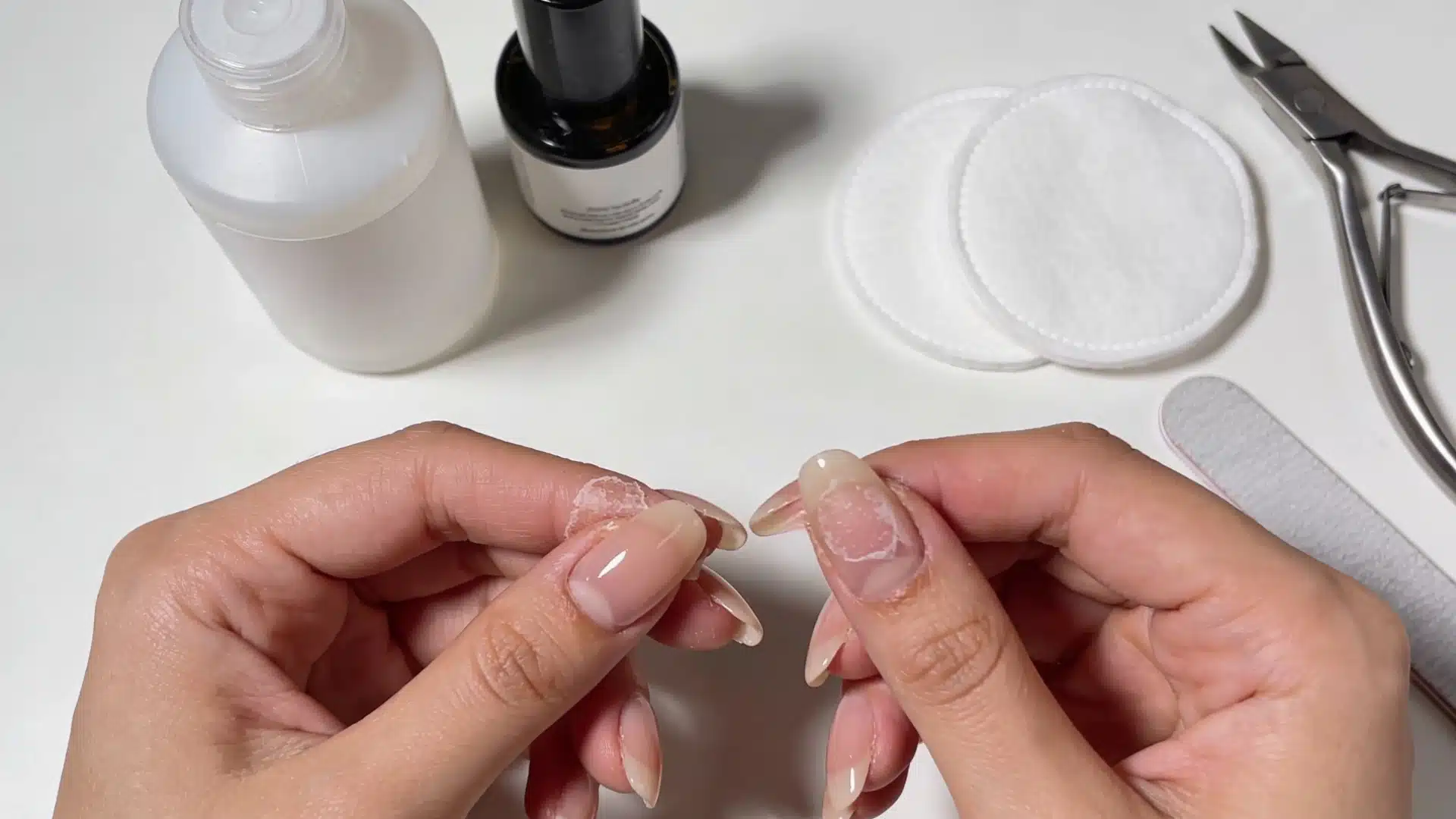
The nail lifts, but that stubborn layer of glue stays right where it is. Picking at it feels tempting, but it almost always leaves the nail surface rough, thin, or peeling.
If you have been there, you already know the damage it can cause.
Knowing how to get nail glue off your nails without forcing it keeps your natural nails intact — and your next set looking just as clean.
What is Nail Glue and Why is it so Hard to Remove?
Nail glue doesn’t just stick like tape. It creates a near-instant chemical bond the moment it touches skin or nail.
It fuses at a molecular level, which is why it holds press-on nails through hand washing, dishwashing, and everyday wear.
The Ingredient That Makes it Stick
Most nail glues contain cyanoacrylate as the main ingredient. This is the same compound found in super glue.
When exposed to moisture, even the small amount naturally present on your skin, cyanoacrylate hardens almost instantly.
Some formulas also contain plasticizers that make the bond slightly flexible, which is why press-on nails can bend without snapping off immediately.
But that flexibility does not make removal easier.
Why it Grips the Nail Surface so Tightly
Your nail surface is covered in tiny ridges and grooves. The glue fills those in on contact.
Once cured, it’s gripping the nail at a structural level, not just sitting on top of it.
Peeling it off dry almost always takes a layer of your nail with it. Softening the bond first is the only safe approach.
Why Water Alone Won’t Work
Regular craft glues or wood glues are water-based and break down when soaked. Nail glue does not.
It is solvent-resistant by nature, which is why plain water does almost nothing to it.
You need either a chemical solvent like acetone or a repeated oil-based softening method to break it down properly.
Best Methods for How to Get Nail Glue Off Your Nails
Most nail glue removal methods are simple enough to do at home. In many cases, there is no need to visit a salon or seek professional help.
As long as the instructions are followed carefully and patience is used during the process, nail glue can usually be removed safely without damaging the natural nail.
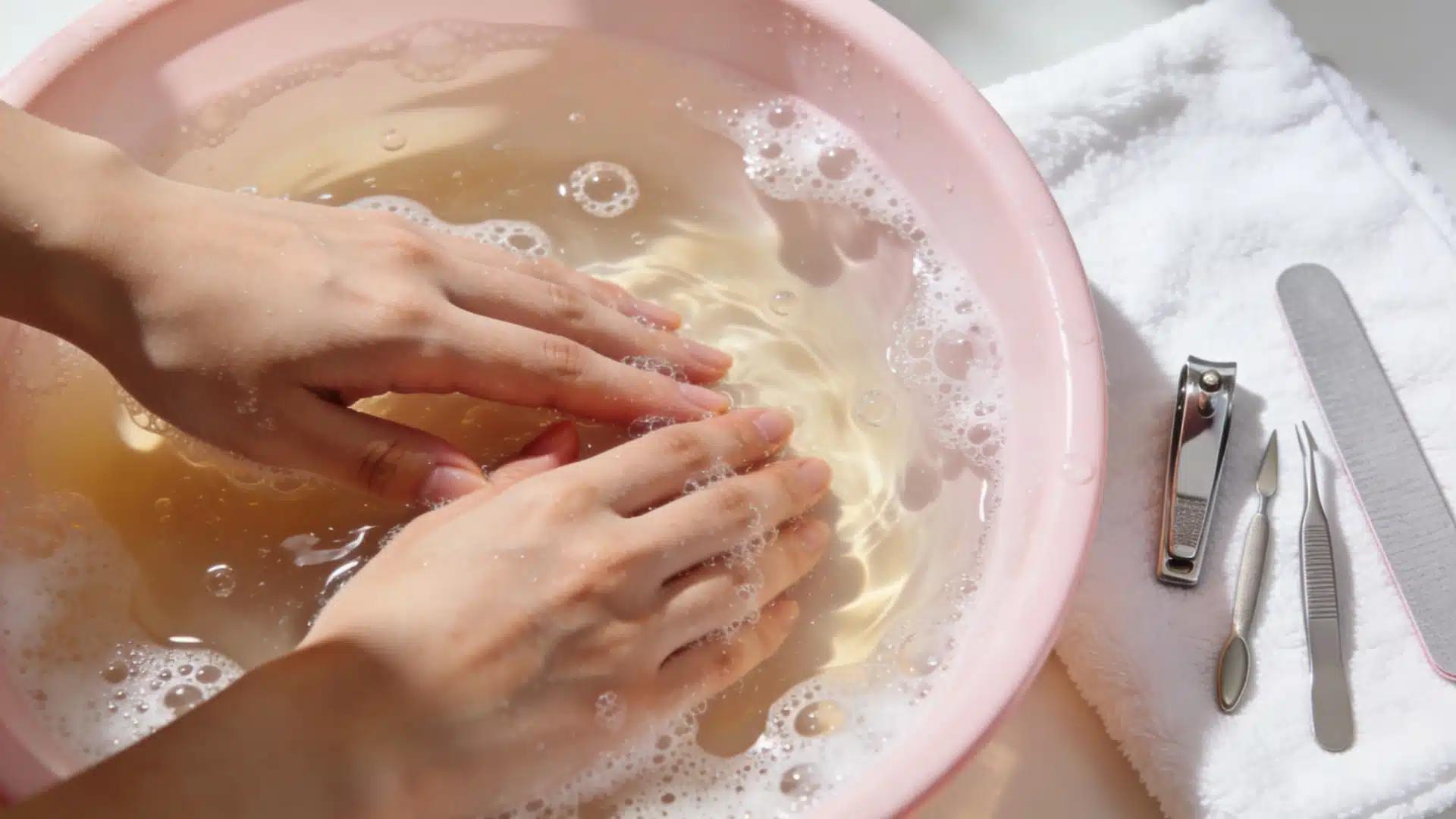
Method 1: Soak Nails in Warm Soapy Water
Why This Method Works
Warm water softens cured cyanoacrylate slowly over time. Dish soap adds a mild surfactant that helps lift the bond from the nail surface.
It will not dissolve the glue completely, but it loosens it enough to roll or gently buff off.
This method works best for thin glue residue rather than thick build-up.
Step-by-Step Instructions
- Fill a bowl with warm water. It should be comfortable to hold your hand in, not scalding.
- Add a few drops of dish soap and stir gently.
- Soak your fingertips for 15 to 20 minutes.
- Once you notice the glue softening or lifting at the edges, use the pad of your other thumb to roll the glue off gently.
- Do not pull or peel. If it resists, soak for another five minutes.
- Rinse your hands and apply hand cream after.
Expected Results and Timing
This method takes patience. For light residue, you may see results within 15 minutes. For thicker glue, you may need two or three rounds of soaking.
It is a slow method, but it is the gentlest option available.
Method 2: Use Acetone Nail Polish Remover
Materials You’ll Need
- Acetone-based nail polish remover (check the label — most drugstore removers are acetone-free unless specified)
- Cotton balls or cotton pads
- A small bowl
- Hand moisturizer
How to Remove Nail Glue With Acetone
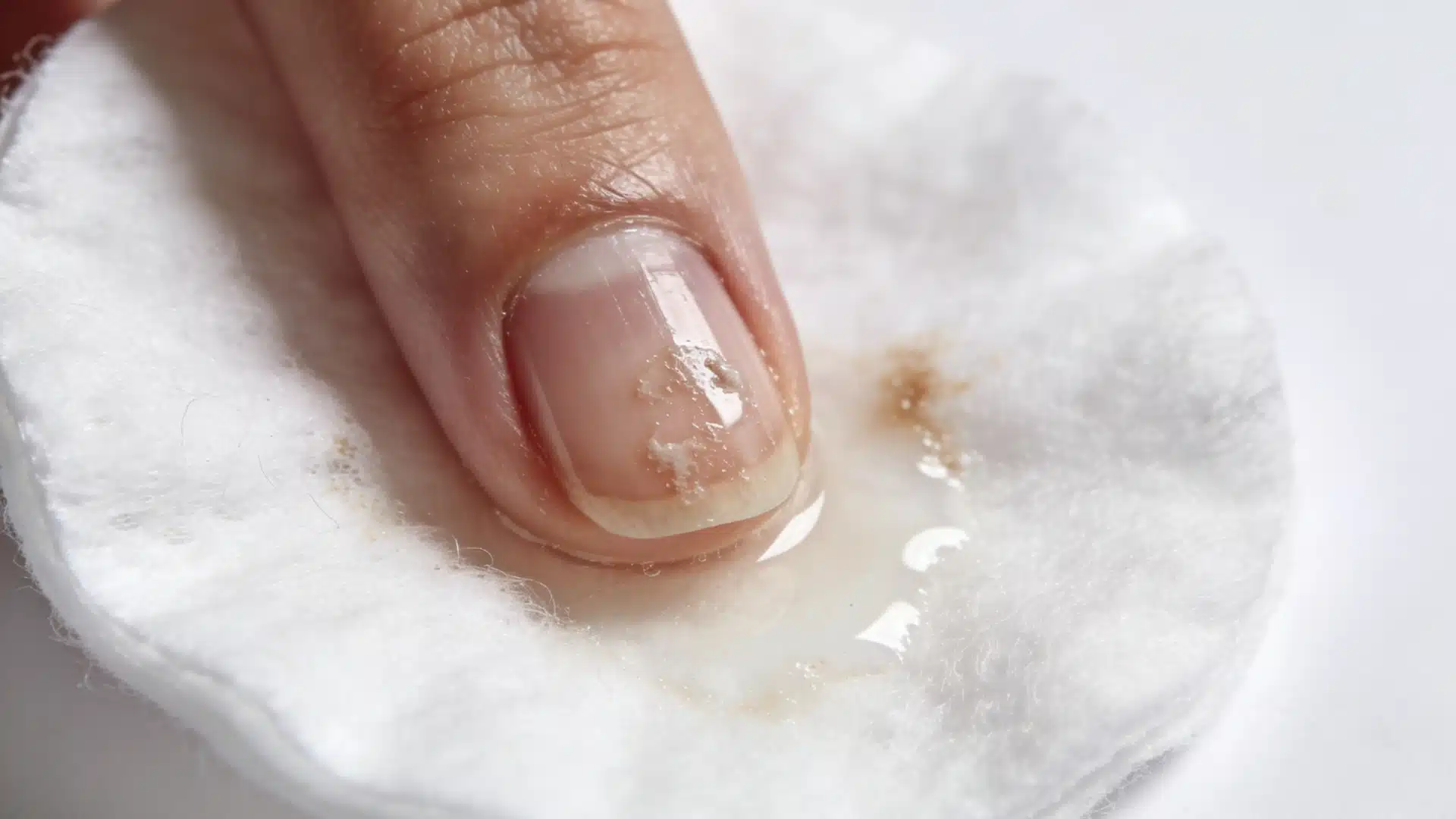
- Soak a cotton ball with acetone nail polish remover.
- Press it against the area with glue and hold it for 30 to 60 seconds.
- Gently rub in small circular motions. You should notice the glue starting to loosen or flake.
- For stubborn patches, re-soak the cotton ball and repeat.
- Once the glue is gone, wash your hands thoroughly and apply moisturizer.
Precautions When Using Acetone
Acetone dries out the skin and nails with repeated use. Keep the contact limited to the areas with glue rather than soaking the entire finger.
If you have any cuts or broken skin nearby, skip this method until healed since acetone on open skin stings and can slow healing.
Acetone is also flammable, so keep it away from open flames.
Method 3: Try an Acetone Soak for Stubborn Glue
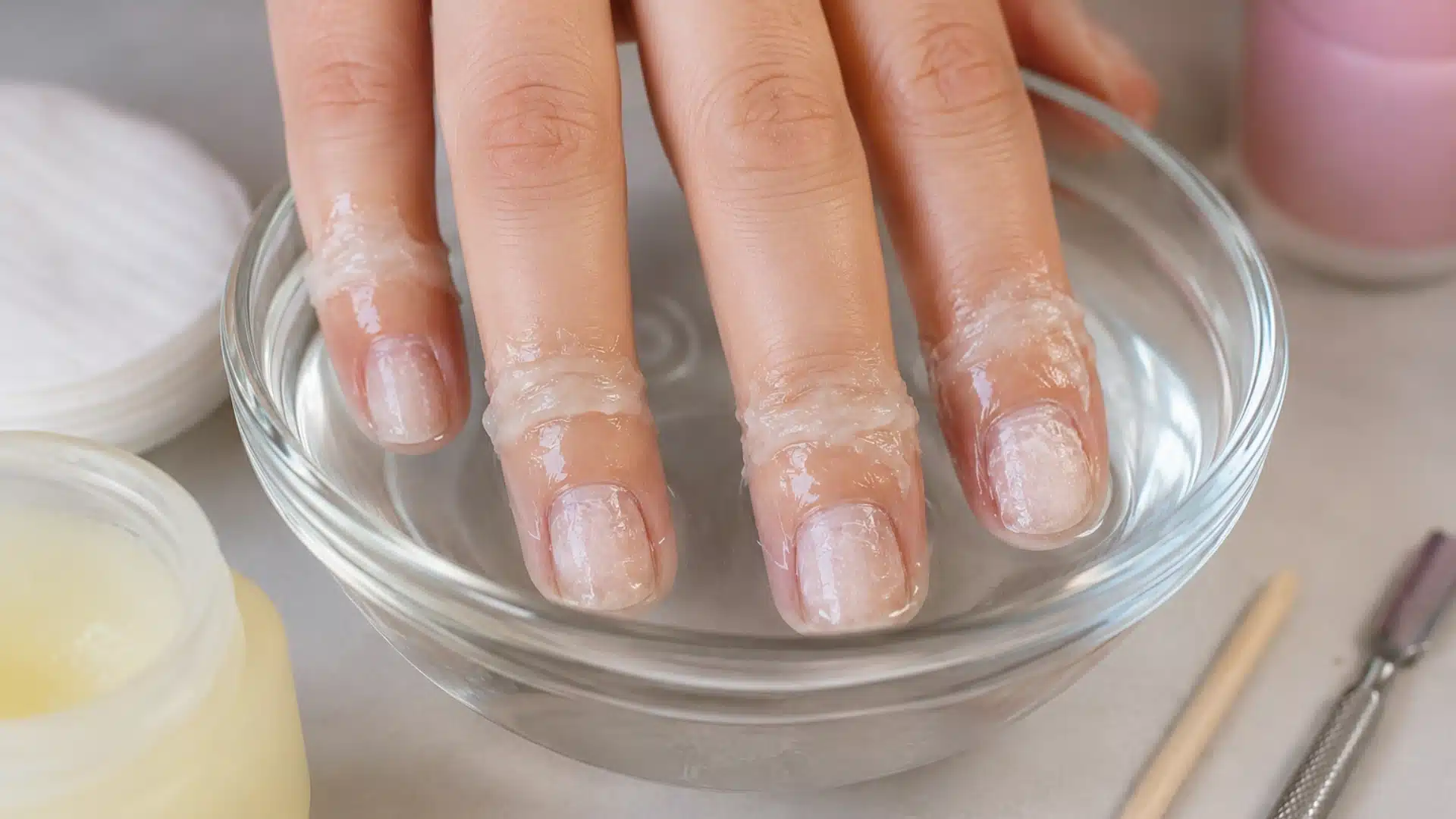
When dabbing isn’t cutting through it, a short soak handles heavy or widespread residue.
How to Create an Acetone Soak at Home
- Pour a small amount of pure acetone into a glass or ceramic bowl. Avoid plastic containers — acetone dissolves some plastics and will eat through them.
- Coat the skin around your nails with petroleum jelly or a thick hand cream to protect it from excessive dryness.
How Long to Soak Your Nails
Soak for 10 to 15 minutes. Check every five minutes. The glue should start to feel soft and rubbery rather than hard.
What to do After Soaking
After the soak, use an orangewood stick or the side of a cuticle pusher to gently push the glue off.
Do not scrape aggressively. Once removed, wash your hands with soap and warm water and apply a generous amount of hand cream.
Following up with cuticle oil helps restore moisture to the nail bed.
Method 4: Remove Nail Glue With Petroleum Jelly
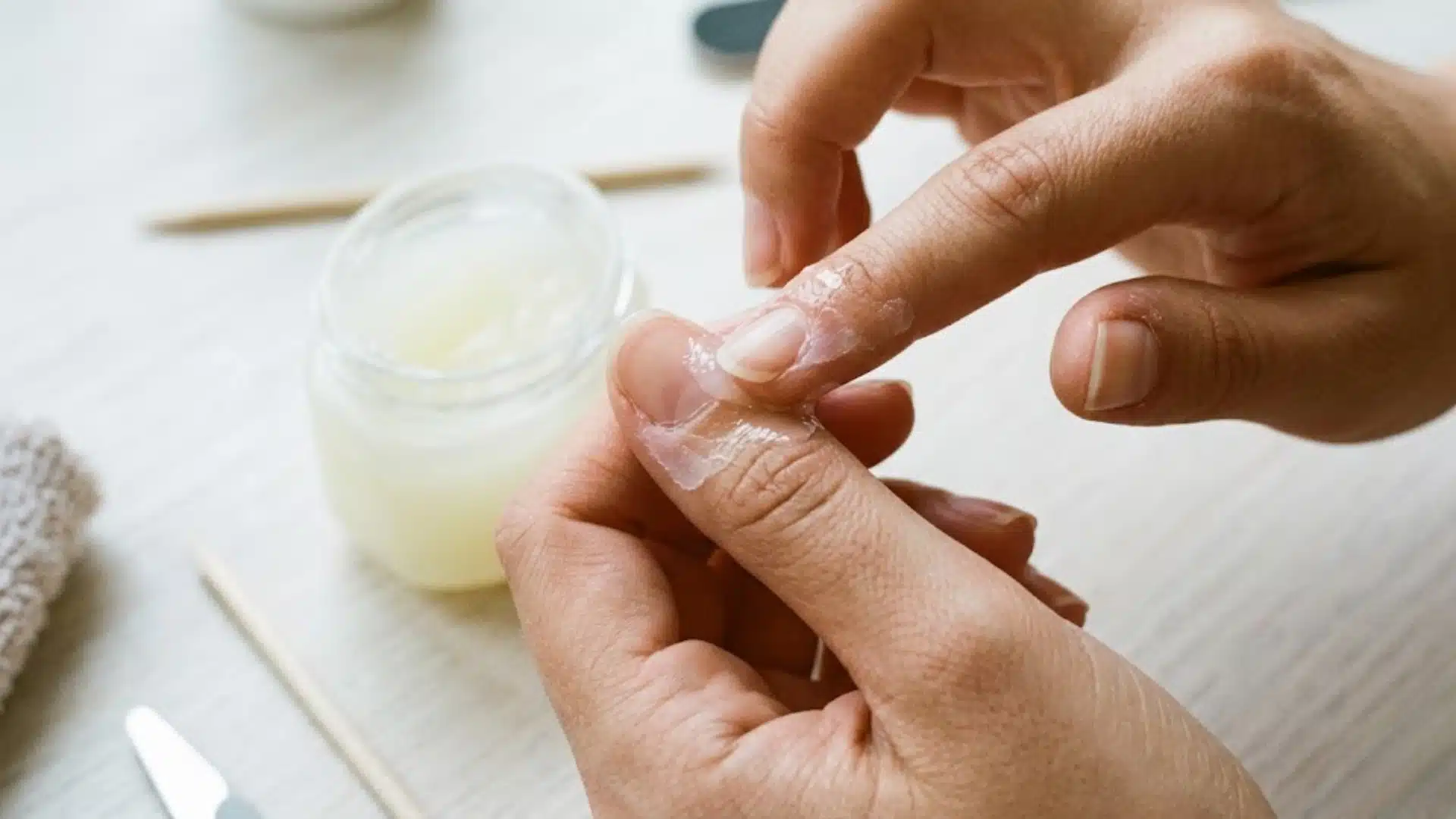
Steps for Safe Removal
- Apply a generous layer of petroleum jelly over the glue-covered area.
- Let it sit for 15 to 20 minutes.
- Use your fingers or a soft cloth to gently rub the area in circular motions.
- The glue should start to roll or peel away from the skin.
- Repeat once or twice if needed.
When This Method is Helpful
Petroleum jelly works well when glue has stuck to the skin around the nail rather than the nail plate itself. It is a slow method, but it is safe for sensitive skin and causes no dryness or irritation.
Benefits for Sensitive Skin
Because petroleum jelly creates a barrier that slowly works under the bond, it does not strip moisture from the skin.
People with dry or reactive skin often find this method far more comfortable than acetone-based options.
Method 5: Use Cuticle Oil and Gentle Buffing
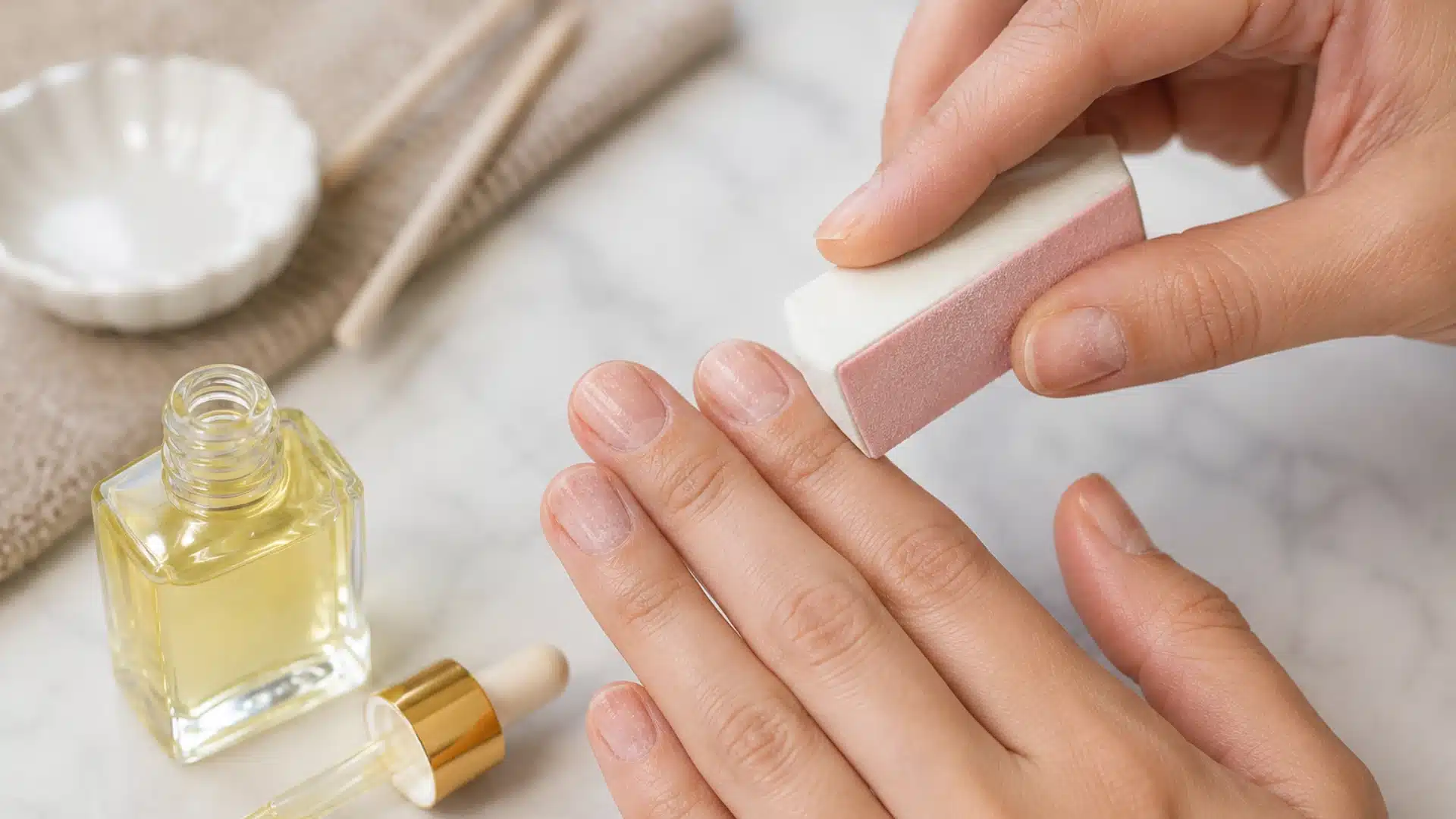
How Cuticle Oil Helps Loosen Glue
Cuticle oil, especially formulas with jojoba or vitamin E, can work its way under the edges of dried glue over time.
It’s not a fast fix. Apply it several times through the day and the bond will gradually loosen without any harsh chemistry involved.
Safe Buffing Techniques
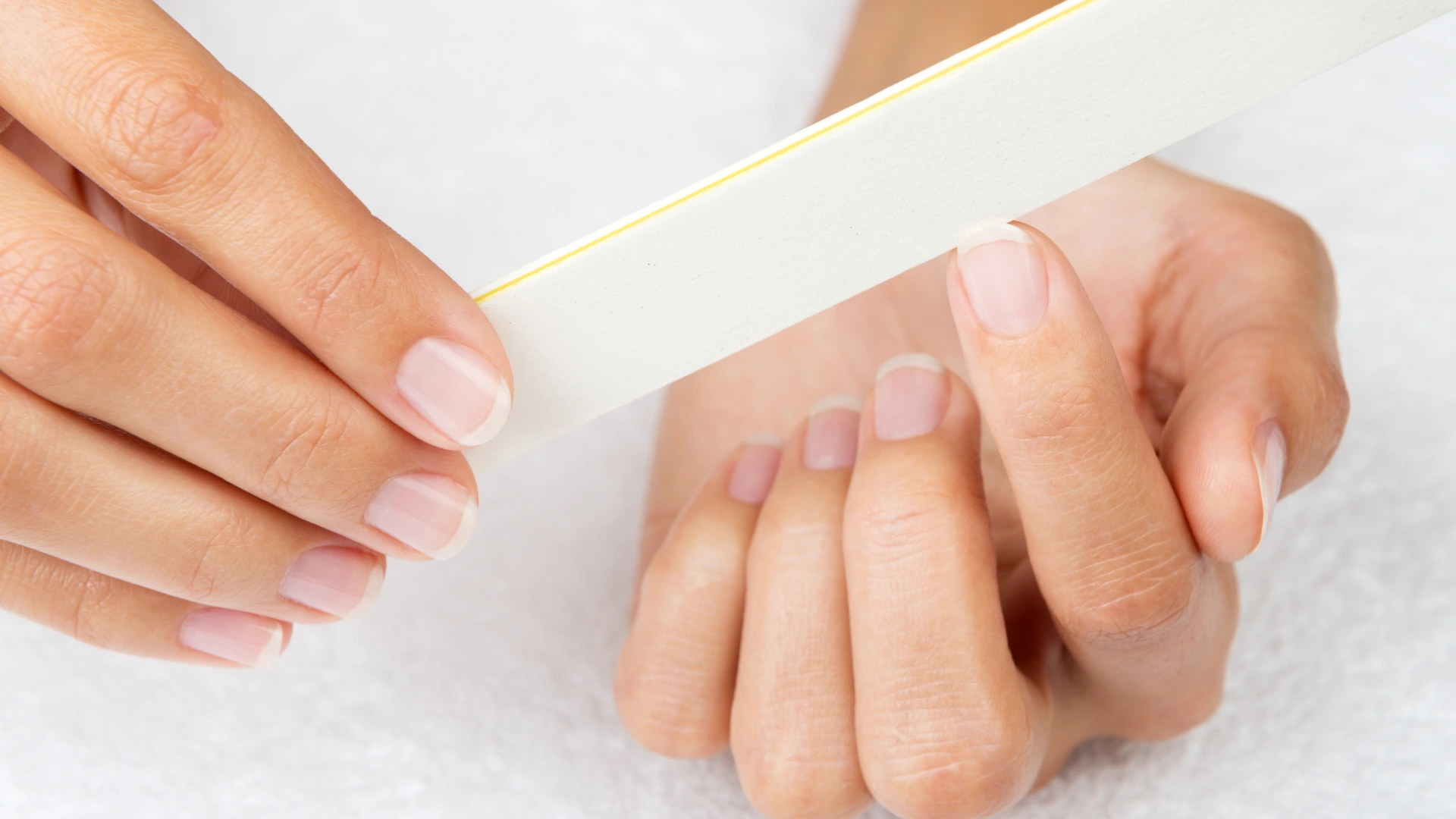
Once the glue feels less rigid after oil application, use the fine side of a nail buffer very lightly over the surface. Use short, gentle strokes rather than pressing hard.
The goal is to thin out the glue layer without grinding into your natural nail.
Don’t Over-Buff
Over-buffing is the most common mistake with this method. Press too hard or go too long and you thin the actual nail plate, not just the glue.
A natural nail is about 0.5 mm thick. That’s not a lot of material to work with.
If you see the surface becoming shiny or the nail feeling thinner, stop and switch to a soaking method instead.
How to Remove Nail Glue Without Acetone?
If your nails are already brittle or your skin is sensitive, skipping acetone entirely is a reasonable call.
These methods take longer, but they won’t strip moisture or leave your nails feeling paper-thin.
Olive Oil Method
Olive oil’s fatty acids can slowly penetrate the edges of the cyanoacrylate bond. It won’t dissolve it, but repeated applications soften it enough to roll or peel without force.
Step-by-Step Process
- Apply a small amount of olive oil directly onto the glue residue.
- Massage gently for one to two minutes.
- Let it sit for 10 to 15 minutes.
- Try to roll or push the glue off with your fingertip.
- Repeat two to three times through the day if needed.
Coconut Oil Method
Coconut oil works the same way as olive oil, though its thicker consistency keeps it in contact with the glue longer, which can make it slightly more effective.
Step-by-Step Process
- Apply solid or melted coconut oil to the affected nail.
- Rub gently and cover with a bandage or wrap loosely with a cloth to keep the oil in place.
- Leave it on for 20 to 30 minutes.
- Use a soft cloth or your fingertip to gently work the glue loose.
- Wash your hands and reapply if the residue is still there.
Hand Lotion and Warm Water Technique
This one works by softening the skin and glue simultaneously — useful when the glue has spread across both the nail and surrounding skin.
Step-by-Step Process
- Apply a thick layer of hand lotion over the glue-covered area.
- Let it absorb for five minutes.
- Soak your fingertips in warm water for 10 minutes.
- Gently rub the area with a soft cloth using circular motions.
- Rinse and repeat once or twice if needed.
Pros and Cons of Acetone-Free Removal Methods
| Method | Effectiveness | Time Required | Nail Friendly |
|---|---|---|---|
| Olive Oil | Moderate | Medium | Yes |
| Coconut Oil | Moderate | Medium | Yes |
| Warm Soapy Water | Low to Moderate | Longer | Yes |
For light residue or already-brittle nails, these are the right starting point. For anything thick or stubborn, acetone will get there faster.
When in doubt, start gentle and escalate — it’s always easier to go from oil to acetone than to repair a nail you’ve over-buffed or stripped.
Common Situations Where Nail Glue Gets Stuck
After Removing Press-On Nails
This is the most common situation. Press-on nails are usually removed by soaking, but even after the nail lifts off, a layer of cured glue often stays behind on the natural nail. It can look cloudy or feel rough to the touch.
Glue Spills During Application
When applying press-ons, it is easy to squeeze out more glue than needed.
Excess glue spreads onto the skin around the nail or pools along the nail plate. Once it sets, it becomes a hard, raised patch that feels uncomfortable.
Excess Glue Around Cuticles and Skin
Glue that drips toward the cuticle area can bond skin to the nail or create a rigid film over soft tissue.
This is the most sensitive area to deal with, so extra care is needed here to avoid irritation or small tears in the skin.
The After Care: How to Protect Your Nails After Glue Removal
Removing nail glue, especially with acetone, can leave nails feeling dry, weak, or slightly rough.
A bit of aftercare makes a noticeable difference in how quickly they recover.
Rehydrate Nails With Cuticle Oil
Apply cuticle oil to the nail bed and cuticle line once or twice a day. It restores moisture quickly, especially after acetone use, and keeps the skin around the nail from drying out or cracking.
Apply a Strengthening Nail Treatment
A nail hardener or strengthening base coat adds a protective layer while your natural nail recovers. Look for formulas with keratin or calcium, and avoid those with formaldehyde if your nails are already thin.
Give Your Nails a Break From Artificial Nails
Space out press-on applications by at least one to two weeks. Back-to-back use with glue can gradually weaken the nail surface over time.
Signs Your Nails Are Recovering Properly
A recovering nail will feel smoother and less brittle within a week or two. If peeling or thinning continues past that, a dermatologist can help rule out any underlying nail concerns.
Conclusion
Getting nail glue off your nails does not have to be stressful.
Most methods use products you already have, and taking your time makes the process safer for your nails.
Whether you choose acetone for speed or an oil-based method for gentleness, the key is patience over force. Once the glue is gone, a little aftercare goes a long way in keeping your natural nails healthy and ready for your next look.
Frequently Asked Questions
1. What to Do If Nail Glue Won’t Come Off?
Soak in acetone for 10 to 15 minutes, then gently push the softened glue off with a cuticle stick.
2. Is Acetone Safe for Removing Nail Glue?
Yes, when used carefully. Limit contact time and moisturize well after to prevent dryness.
3. Why Does Nail Glue Leave a White Residue?
That white haze is the cured glue layer. Buffing lightly after an acetone soak usually removes it cleanly.