Figuring out what to wear when an invite just says “business casual” or “smart casual” can feel like a guessing game.
The two terms are often used interchangeably, but they’re not the same, and getting it wrong can mean showing up overdressed in a blazer and tie when everyone else is in dark jeans, or underdressed the other way around.
Part of the confusion makes sense. Both dress codes sit somewhere between a full suit and weekend clothes, and both allow blazers, button-downs, and closed-toe shoes.
But the details, like whether jeans are okay or how bold a color choice can be, matter once an office policy or invitation is involved.
Understanding business casual vs smart casual before getting dressed takes the guesswork out of the equation.
What is Business Casual?
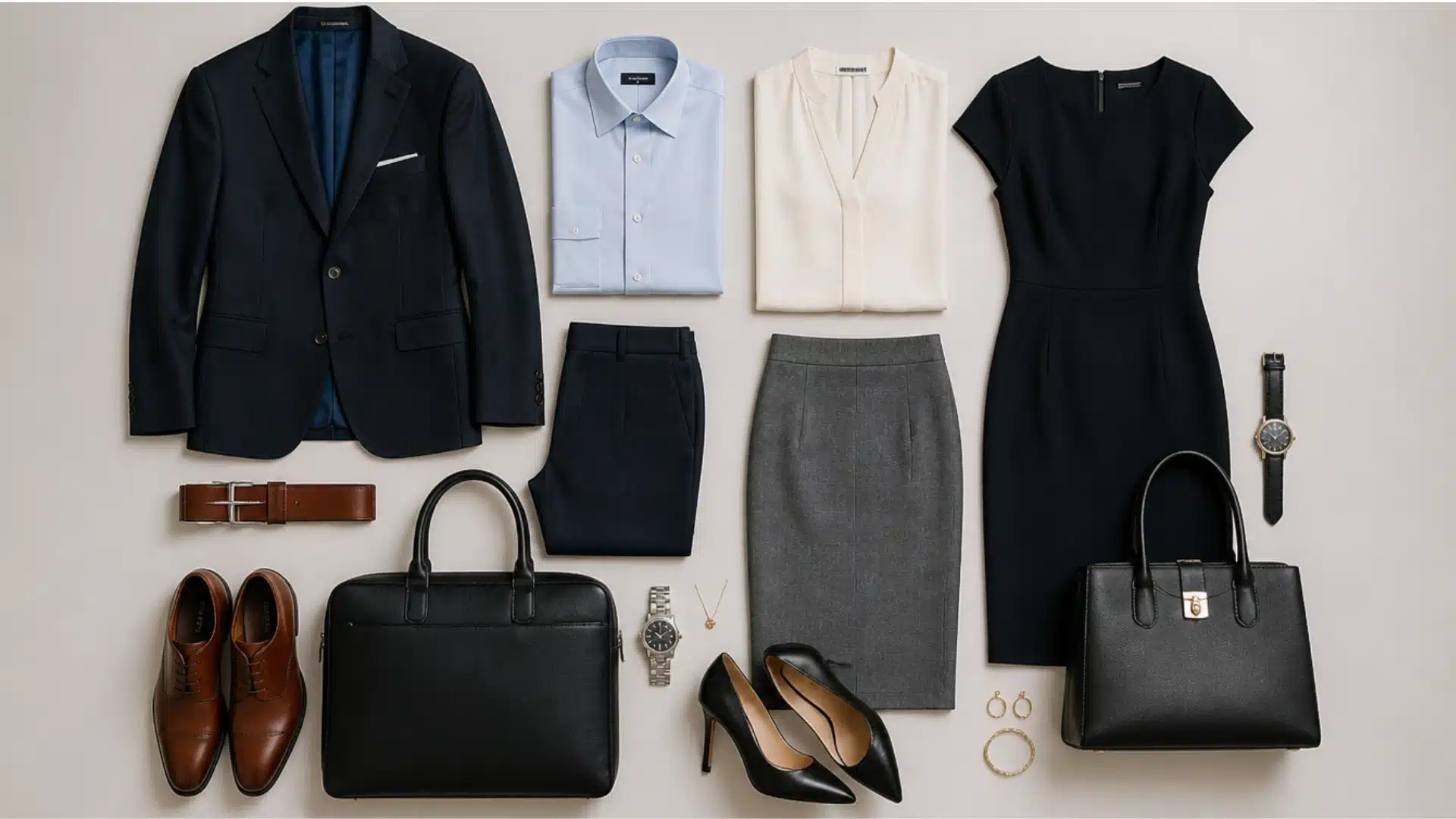
It is a workplace dress code built around polish without the full formality of a suit and tie. Think collared shirts, fitted trousers or chinos, closed-toe shoes, and optional blazers.
It’s the standard uniform for offices, client meetings, and interviews where you need to look put-together and professional, but a full suit would feel like overkill.
The dress code leans conservative. Colors tend to stay neutral, fabrics stay structured, and there’s little room for anything too casual, like graphic tees, flip-flops, or ripped denim.
What is Smart Casual?
Smart casual takes a more relaxed approach while still avoiding sloppiness. It mixes casual pieces, like jeans or sneakers, with dressier elements, like a blazer or a button-down shirt. The result is an outfit that looks intentional and current without following strict workplace rules.
This dress code shows up most often at dinners, networking events, casual weddings, and social gatherings where ‘casual’ alone would feel underdressed.
Business Casual vs Smart Casual: Key Differences
Both might look similar at a glance, but they’re built around different priorities.
The former follows a narrower set of rules meant to keep an office looking consistent and professional, while the latter leaves more room for personal style as long as the outfit still feels put-together.
| Aspect | Business Casual | Smart Casual |
|---|---|---|
| Formality | Structured and conservative | More relaxed and personal |
| Color Approach | Neutral, muted tones | Wider range, bolder choices |
| Fit and Silhouette | Tailored, closer to fitted | Relaxed, room to experiment |
| Layering Style | Blazer nearly always included | Jacket optional, more casual layers allowed |
| Footwear Formality | Dress shoes expected | Sneakers and casual shoes accepted |
| Accessory Approach | Minimal and understated | Room for statement pieces |
| Overall Flexibility | Narrower, rule-based | Broader, more room for personal style |
What to Wear for Business Casual?
These outfits come together through a handful of predictable pieces: collared tops, tailored bottoms, and closed-toe shoes.
Some pieces work for anyone, while others tend to get styled differently depending on who’s wearing them.
Choices for Men
A men’s wardrobe centers on a few reliable staples that mix and match easily across the workweek, with fit mattering more than trends.
Shirts
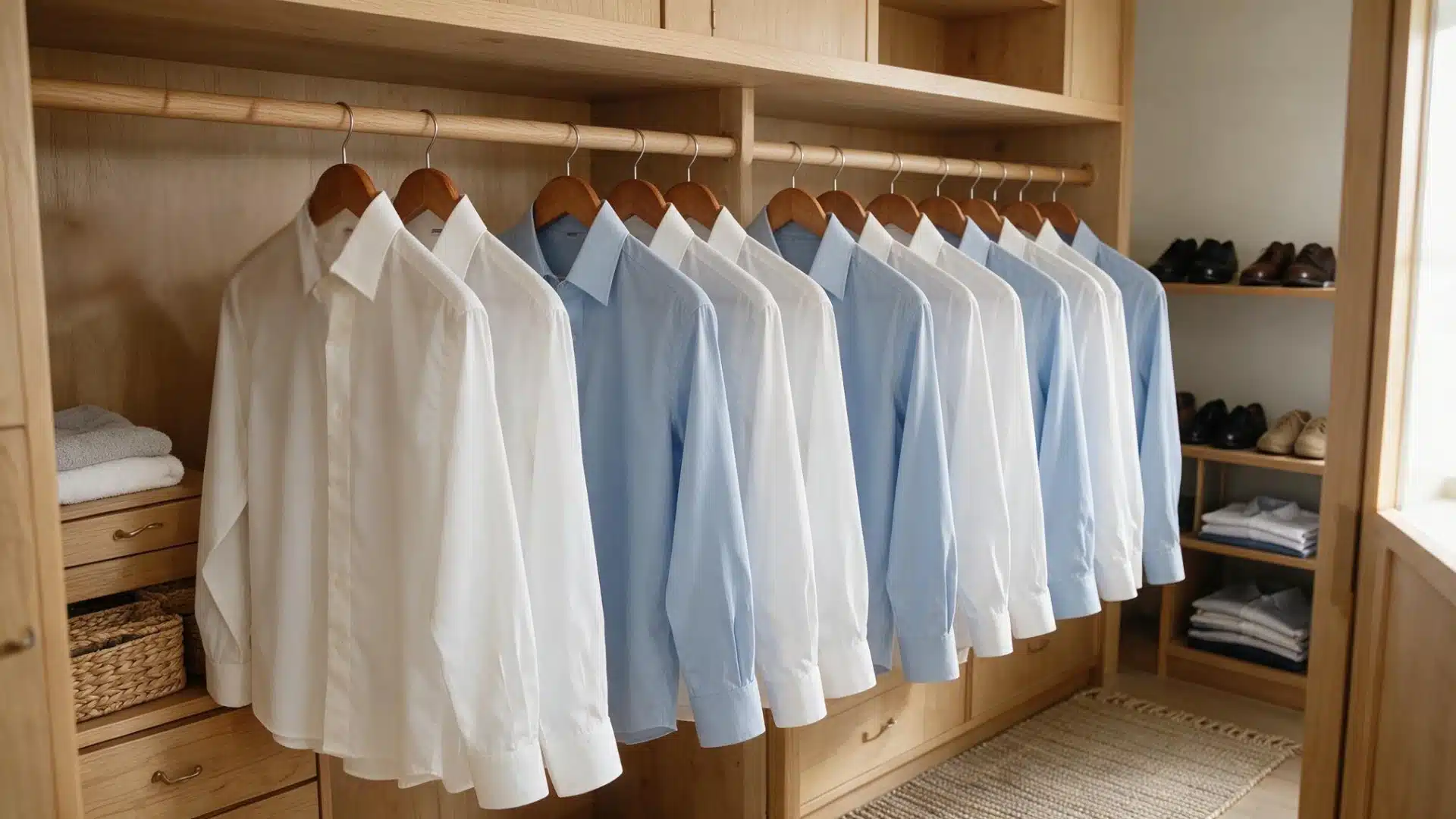
Button-down shirts in cotton or linen blends work well, along with polos for a slightly more relaxed office.
Solid colors, small checks, and thin stripes all stay comfortably within the dress code, while large graphics or bold logos are best skipped entirely.
Trousers and Chinos
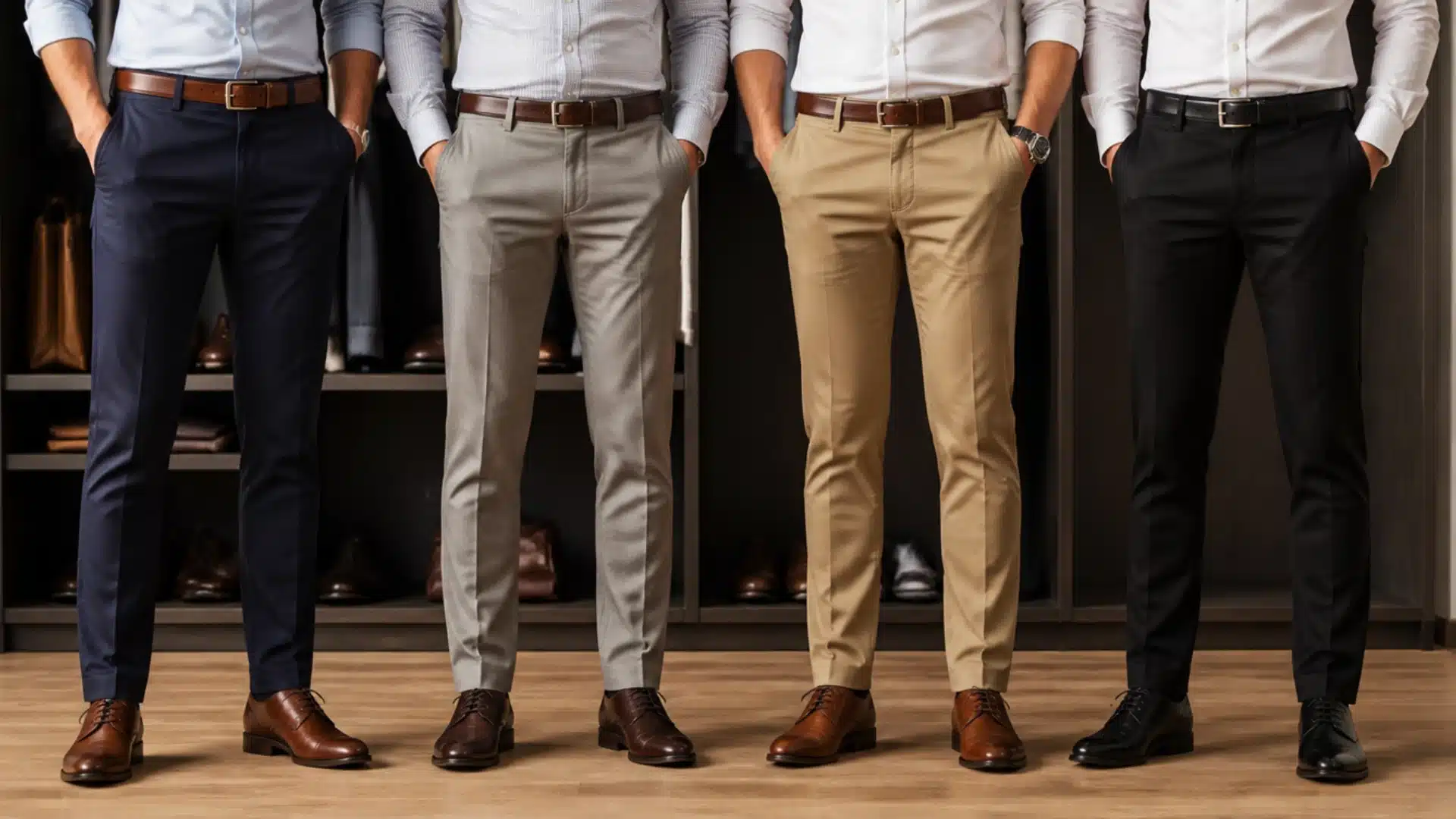
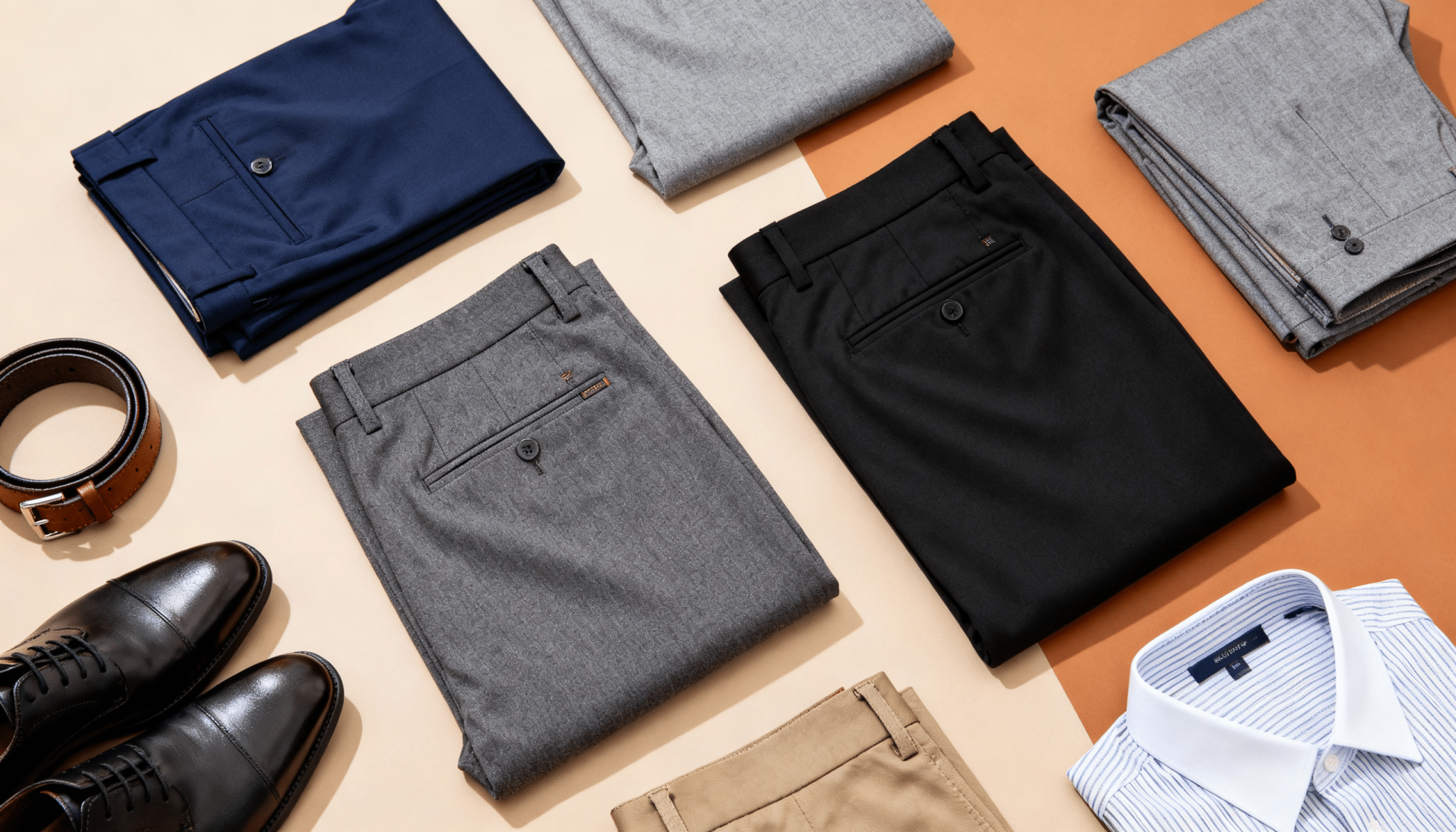
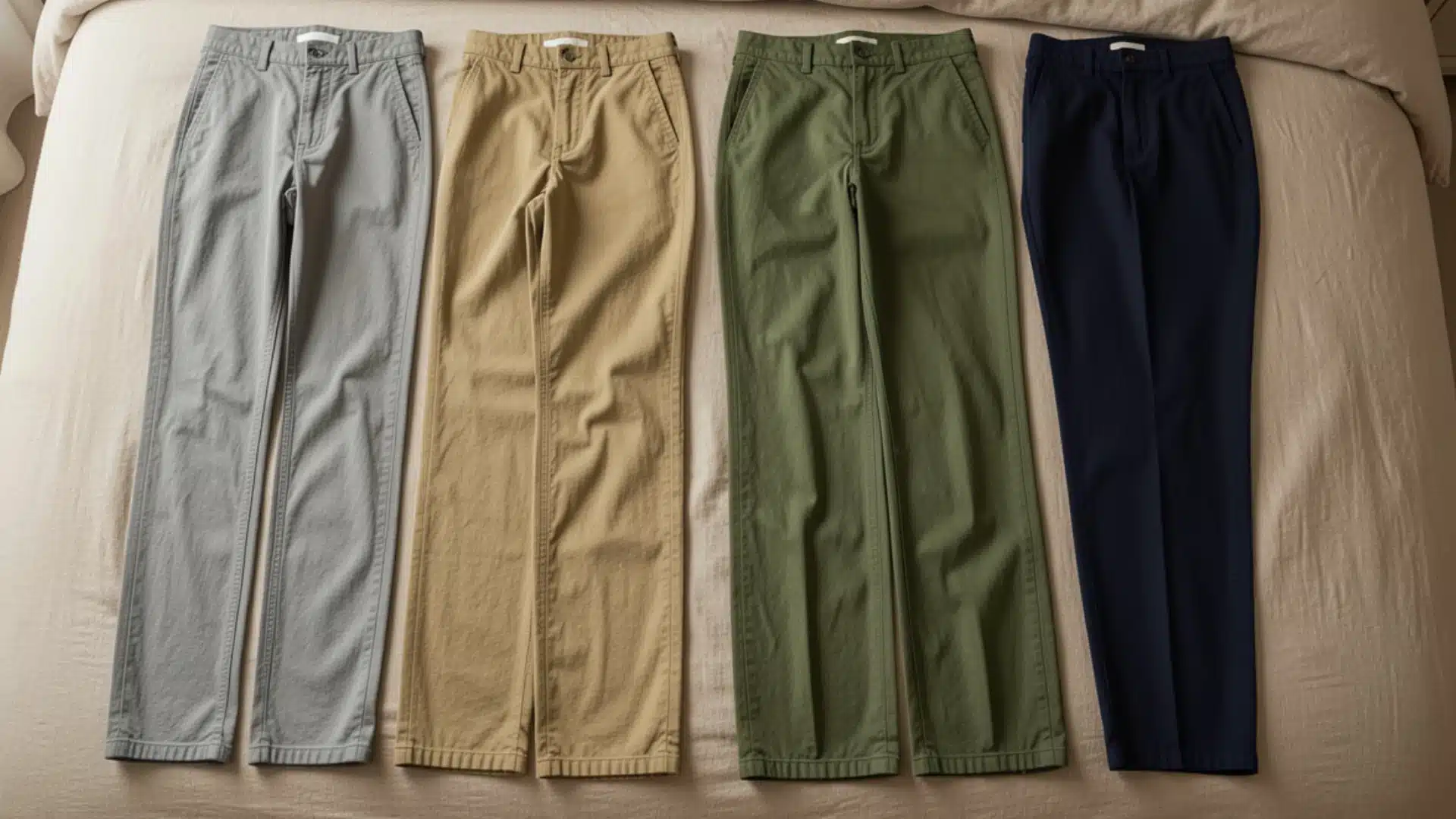
Dress trousers and chinos in navy, gray, khaki, or black form the base of most outfits in this category. Linen looks sharp for photos but wrinkles fast, so it’s a tougher pick if you’re in back-to-back meetings all day.
Slim or straight fits look sharpest overall, and cuffed hems work especially well when paired with leather loafers or derbies.
Shoes
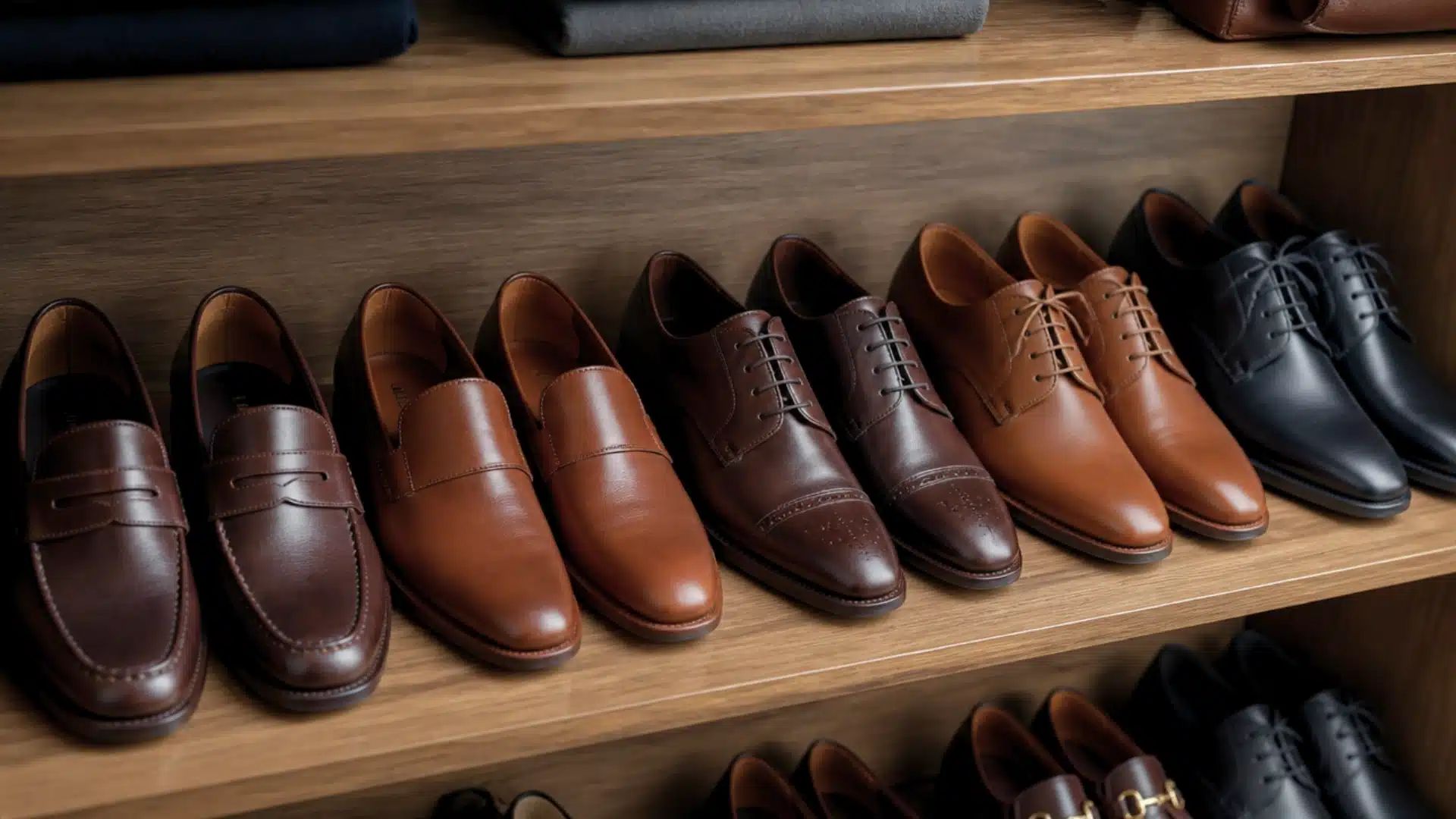
Leather loafers, oxfords, and derbies are the safest picks for nearly any setting like this, giving a polished finish to trousers and chinos alike without requiring much extra thought or effort.
Accessories
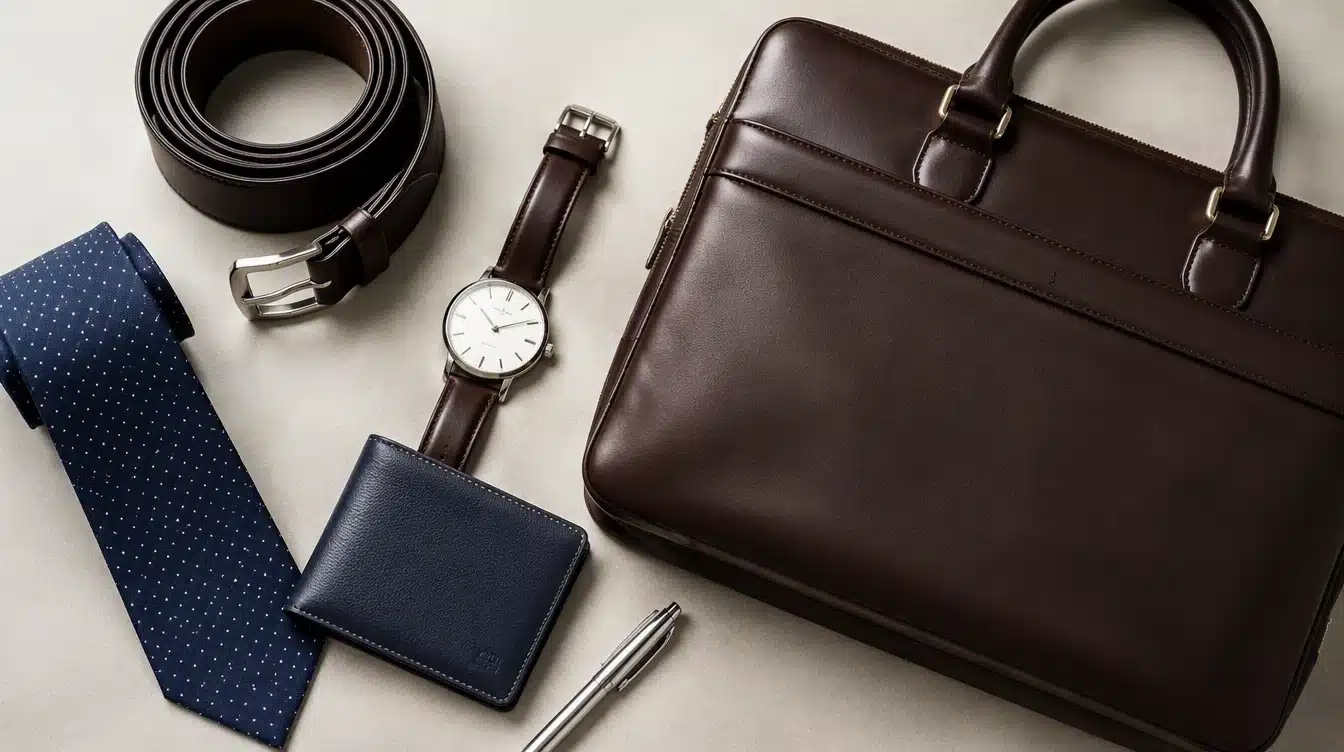
Match the belt to the shoes, keep the watch simple, and carry a structured bag. Anything louder starts to look like you’re trying too hard.
A tie stays optional in most offices but is worth keeping on hand for client meetings.
Options for Women
For women’s business casual attire, you can wear dresses, skirts, or trousers, as all can be worn professionally in office environments.
Shirts and Blazers
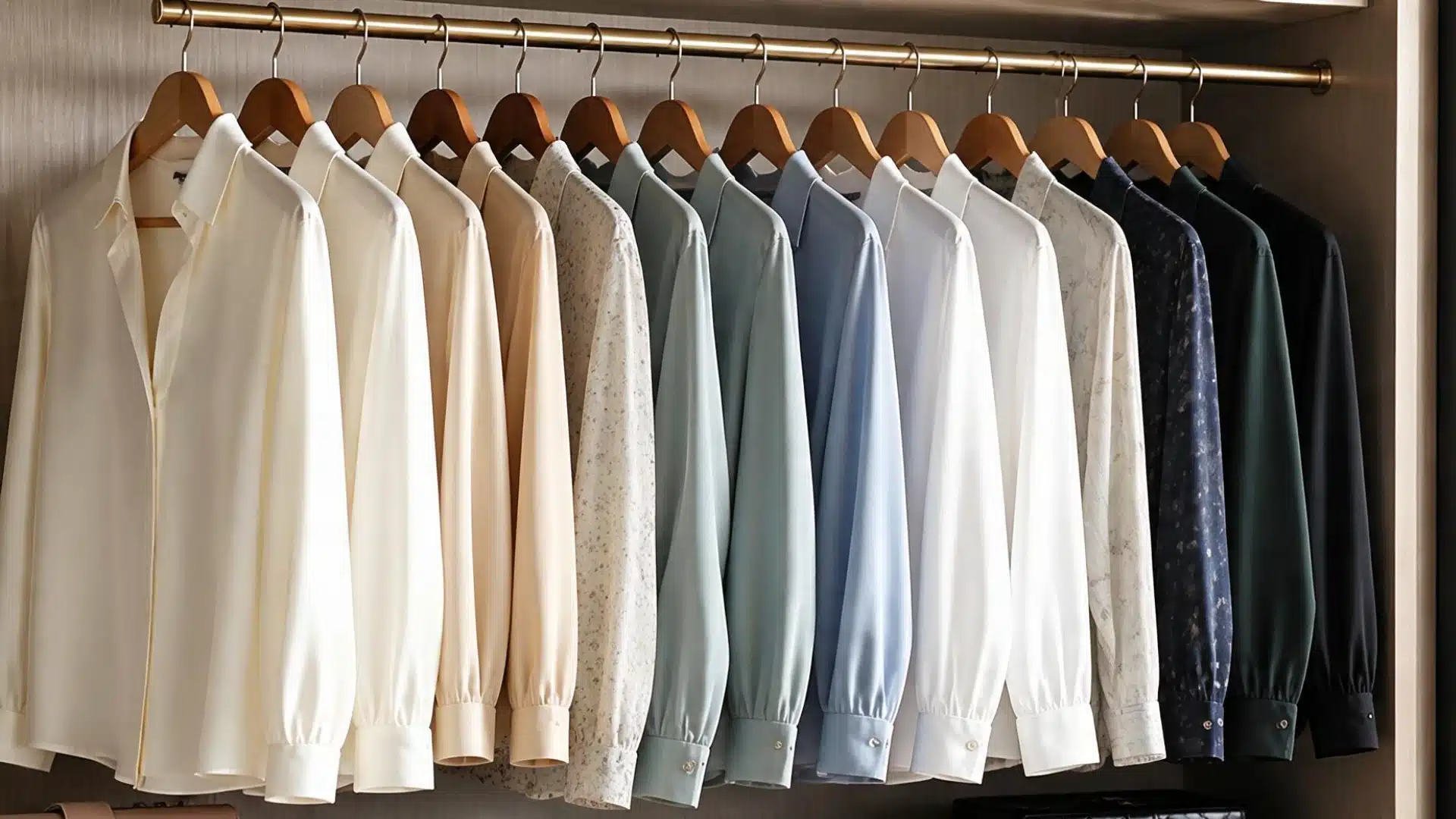
Silk and cotton blouses, fitted knit tops, and button-ups all work for business casual.
Tops should be solid or lightly printed, and should avoid sheer fabric or low-cut necklines.
Trousers and Skirts
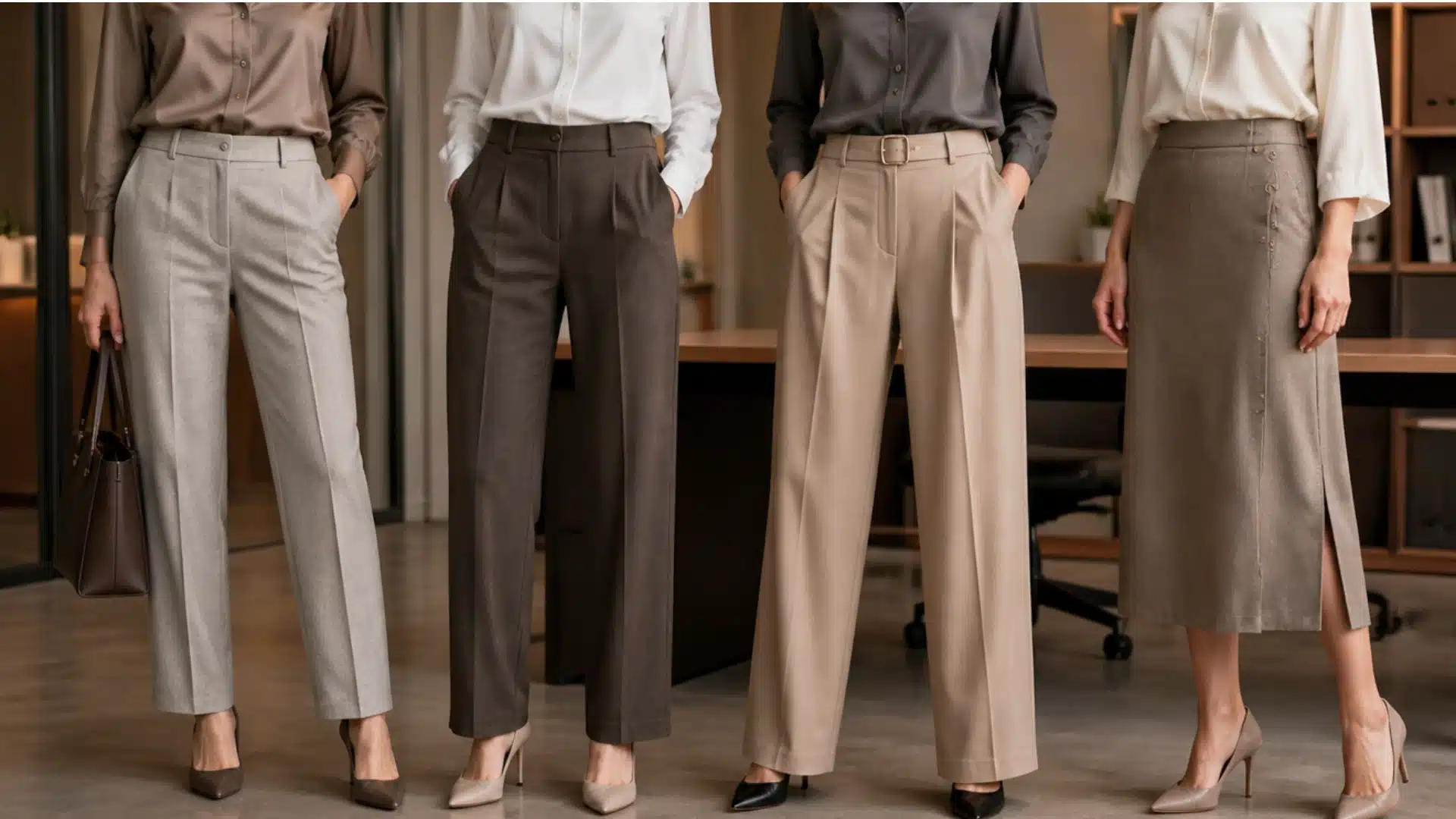
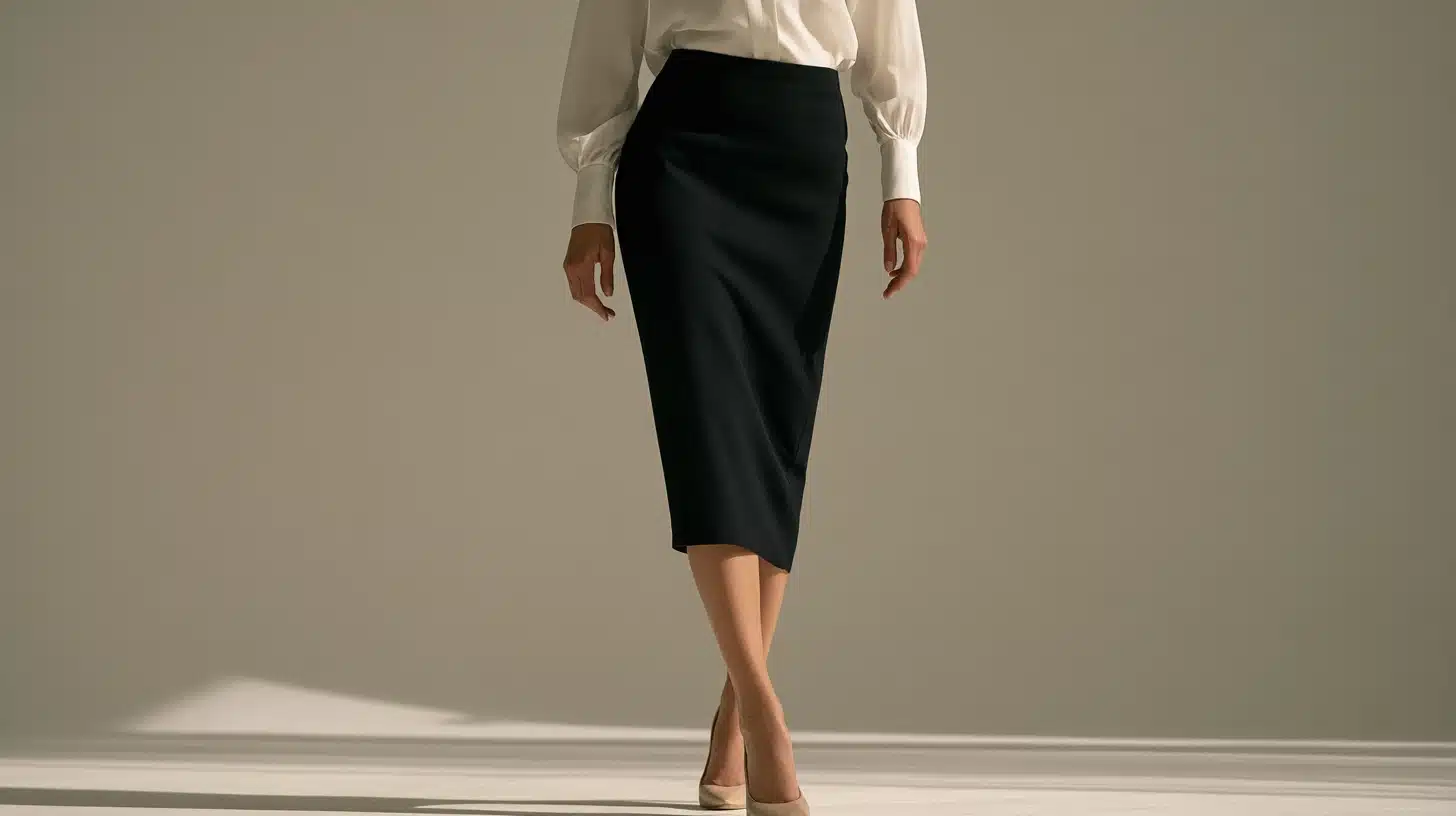
Structured trousers, straight-leg pants, and pencil skirts in neutral colors fit any office environment and pair easily with other pieces.
Pleated trousers and midi skirts are also a great option for a softer look.
Dresses
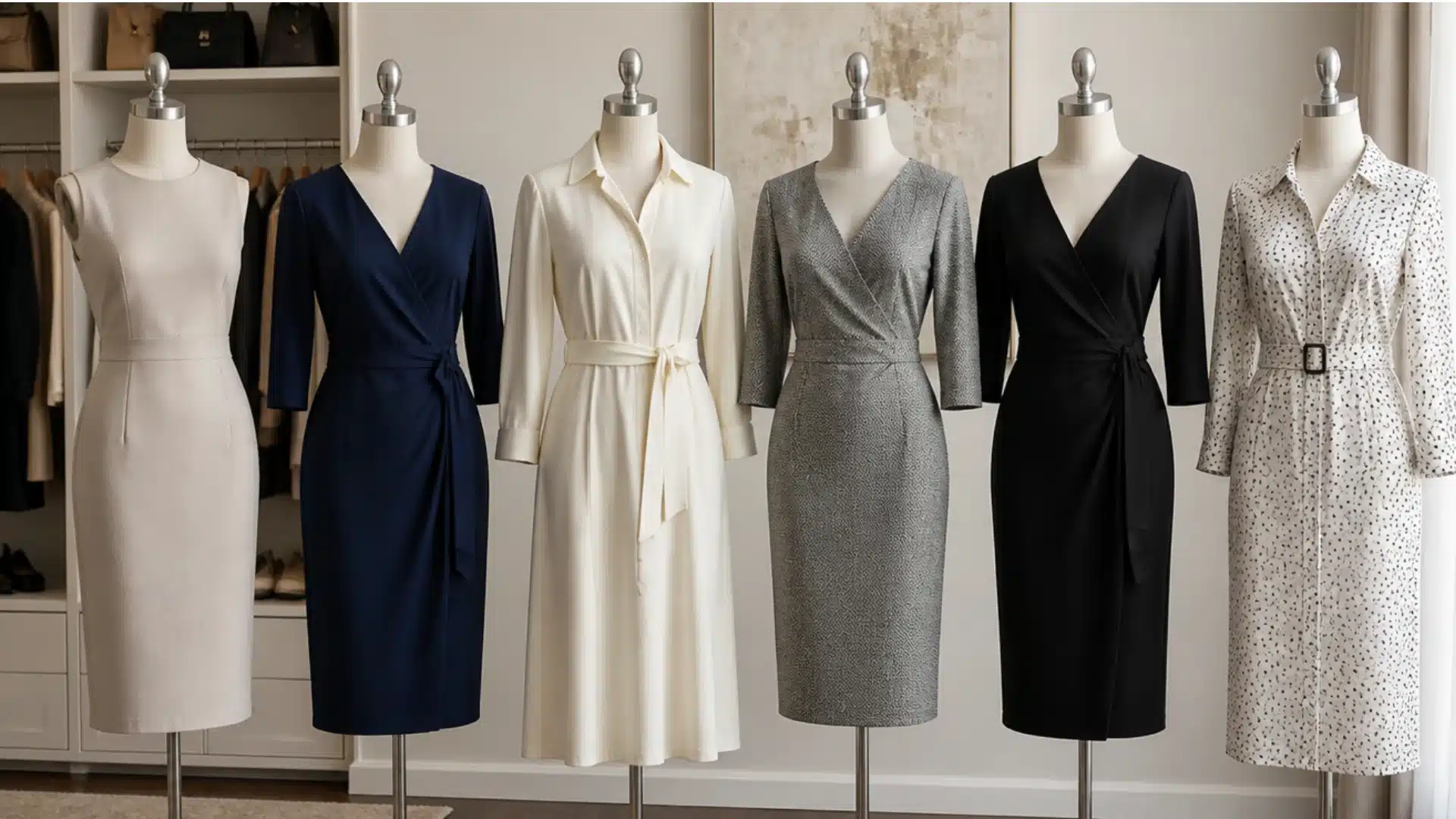
Sheath, wrap, and shirt dresses in solid colors or light patterns fit the dress code and don’t need a jacket.
Shoes
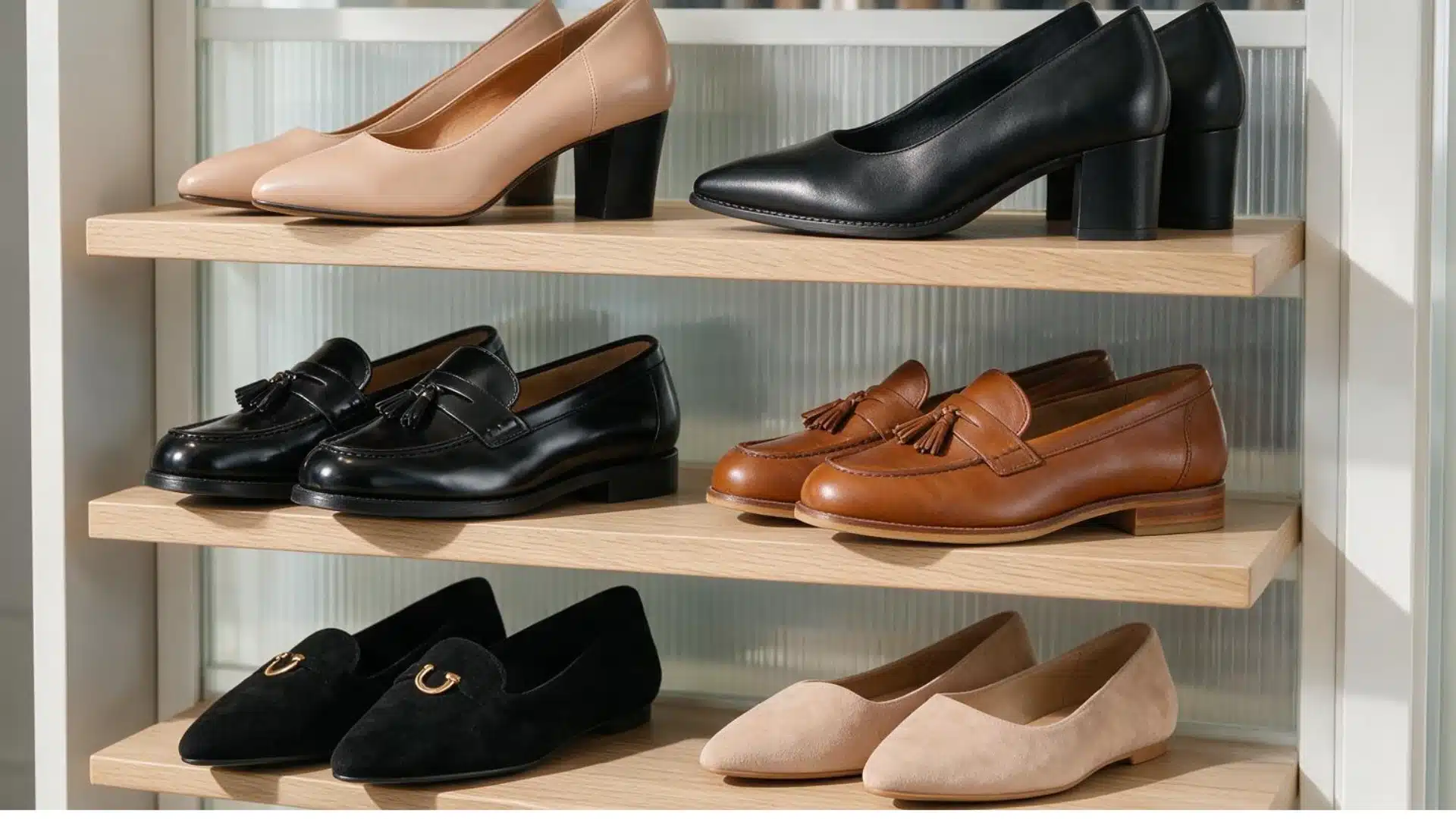
It is recommended to wear closed-toe pumps, block heels, and loafers with these outfits.
Flat shoes are also a good choice for offices with a lot of walking and standing during the day.
Accessories
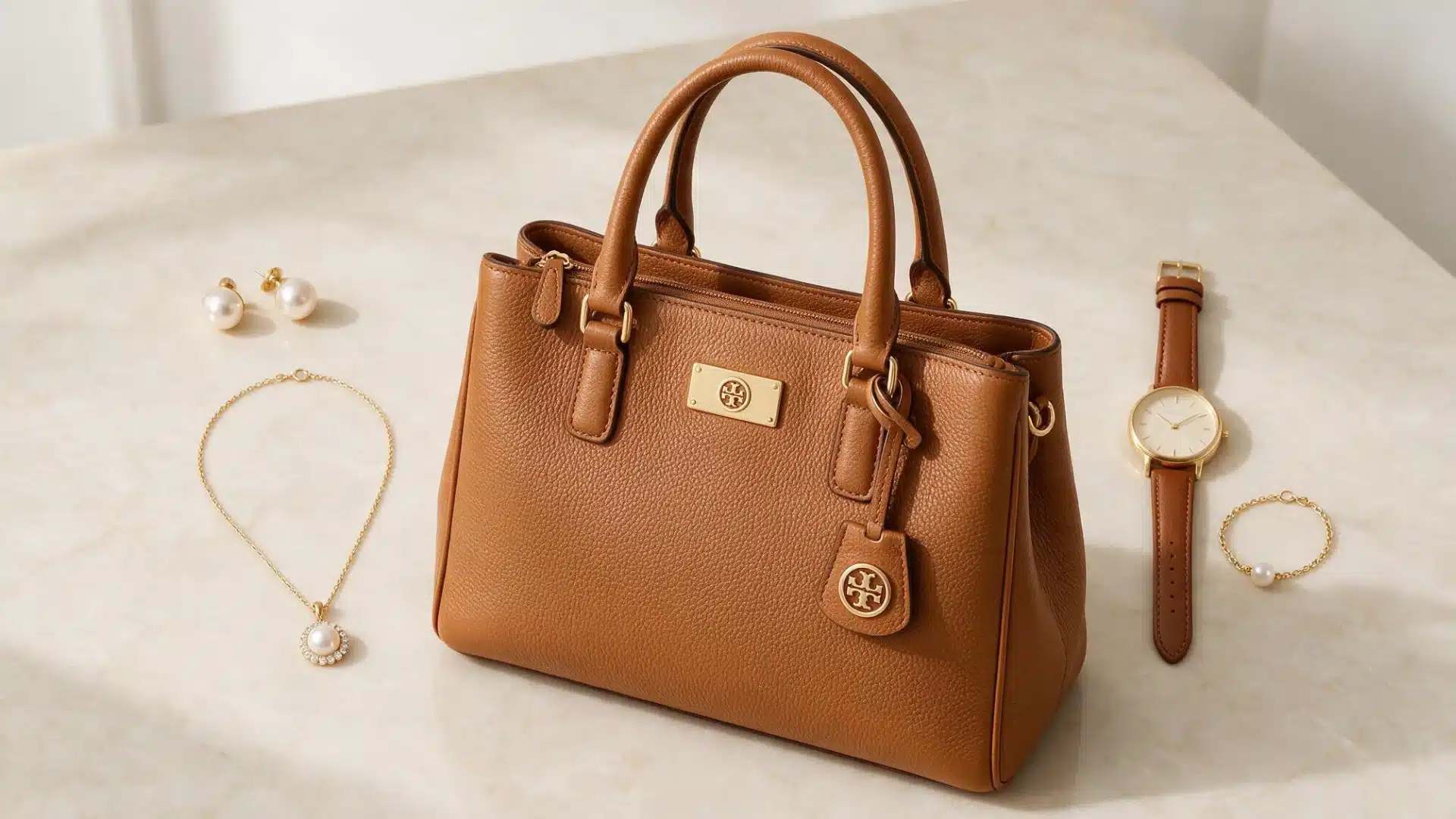
A structured tote and small stud earrings are safe bets. Save anything chunkier or more colorful for outside the office.
A slim watch or a simple bracelet also works well without feeling out of place in an office setting.
What to Wear for Smart Casual?
Smart casual outfits follow the same idea: pair one relaxed piece, like jeans or sneakers, with one polished piece, like a blazer or leather shoes.
That balance keeps the look from tipping too far in either direction.
Choices for Men
Smart casual for men gives more room to experiment with fit, texture, and color than business casual allows, while still avoiding anything that reads as too casual for the occasion.
Shirts and Polos
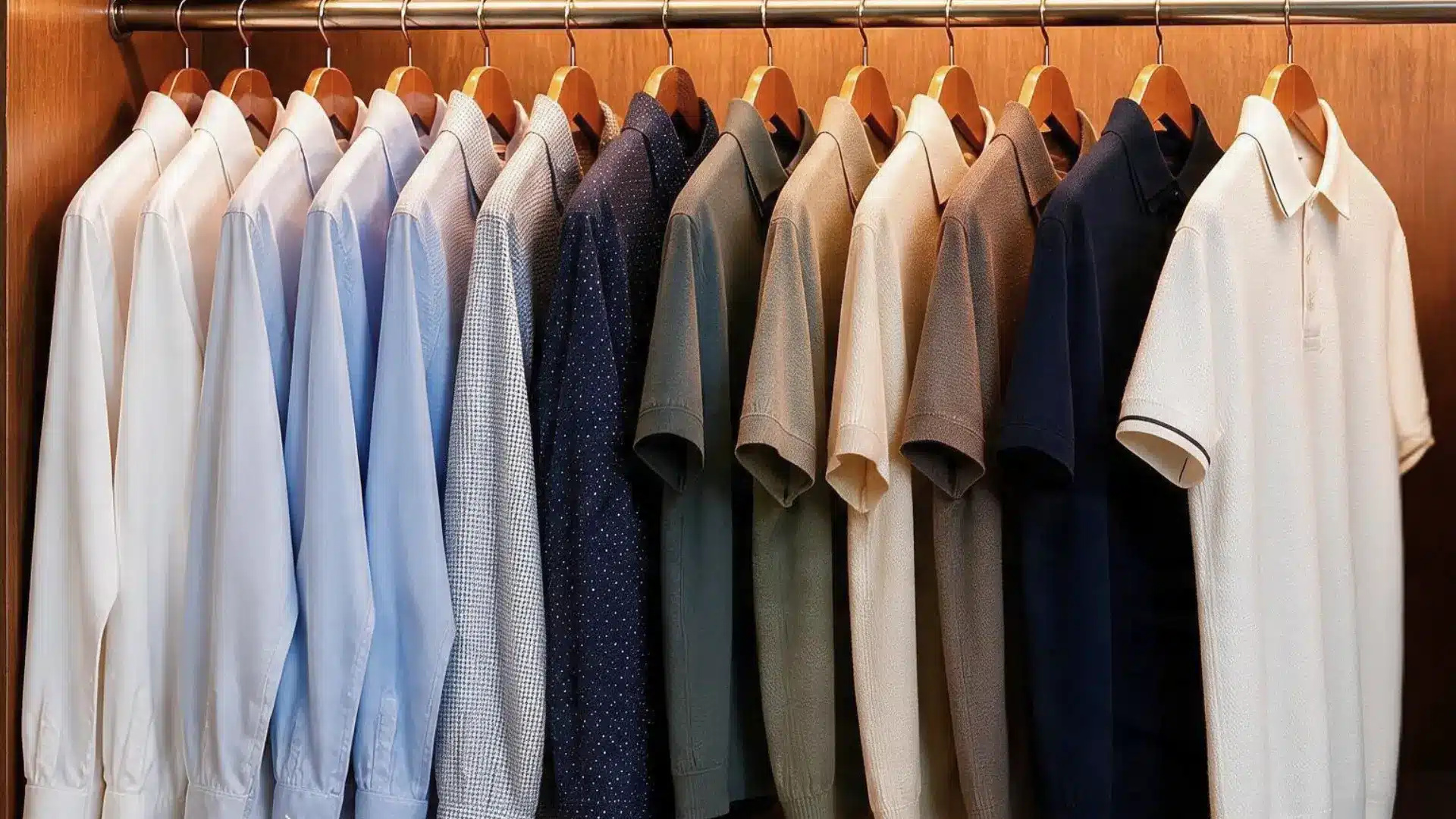
Button-downs, fitted knit polos, and even patterned shirts all work well for smart casual outfits.
A quality T-shirt layered under a jacket can also pass for smart casual at more relaxed events or evening gatherings.
Trousers and Jeans
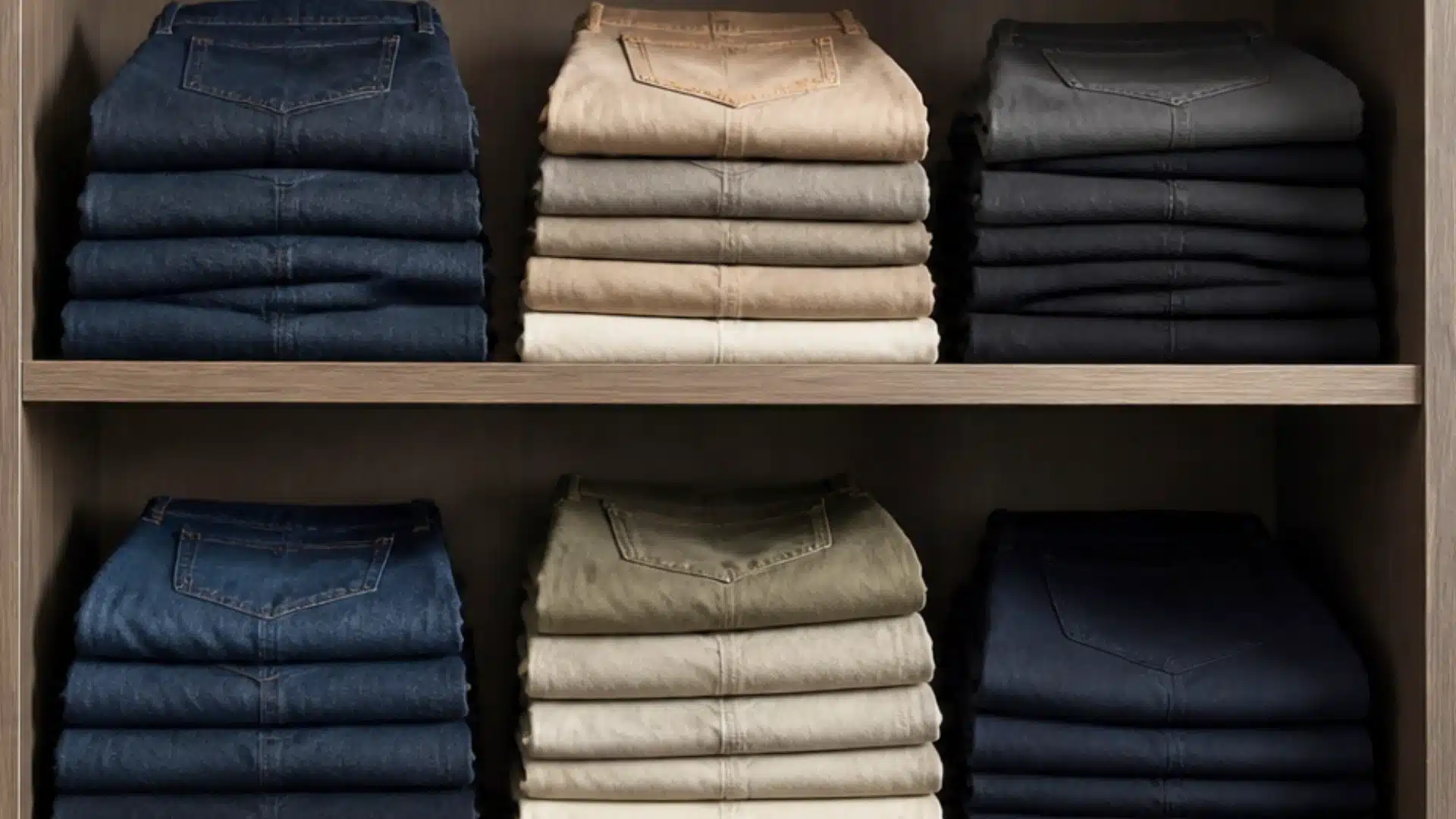
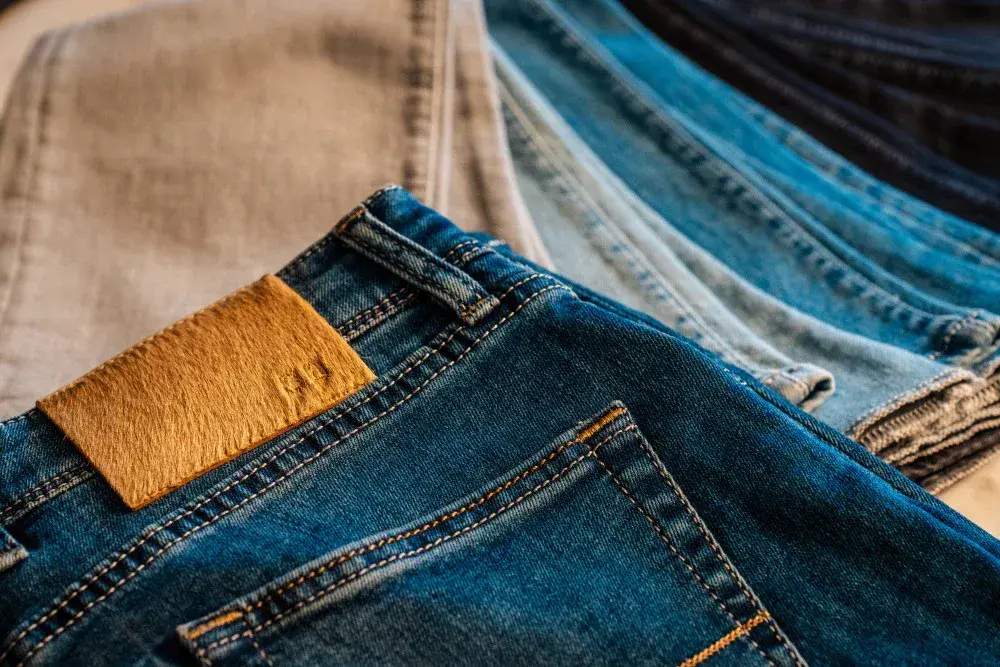
Dark, well-fitted jeans are a smart casual staple for men, along with chinos in neutral or muted colors.
Avoid distressed denim or anything with visible wear, since worn-out fabric reads as too casual.
Shoes
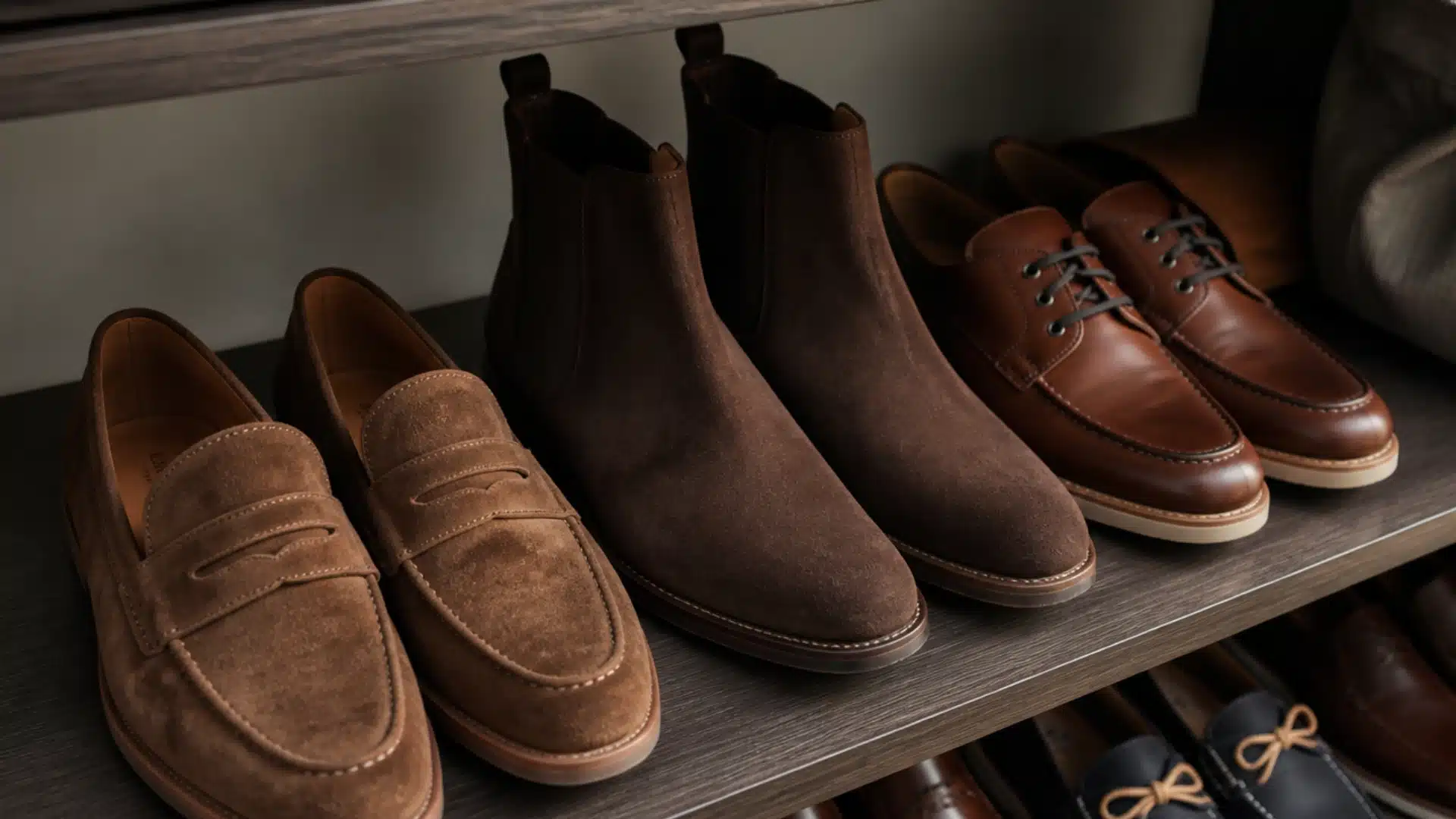
Loafers worn without socks and Chelsea boots are strong smart casual picks for men, pairing easily with both jeans and chinos for a finished look.
The no-sock look is best saved for warmer months since it gets uncomfortable once temperatures drop.
Accessories
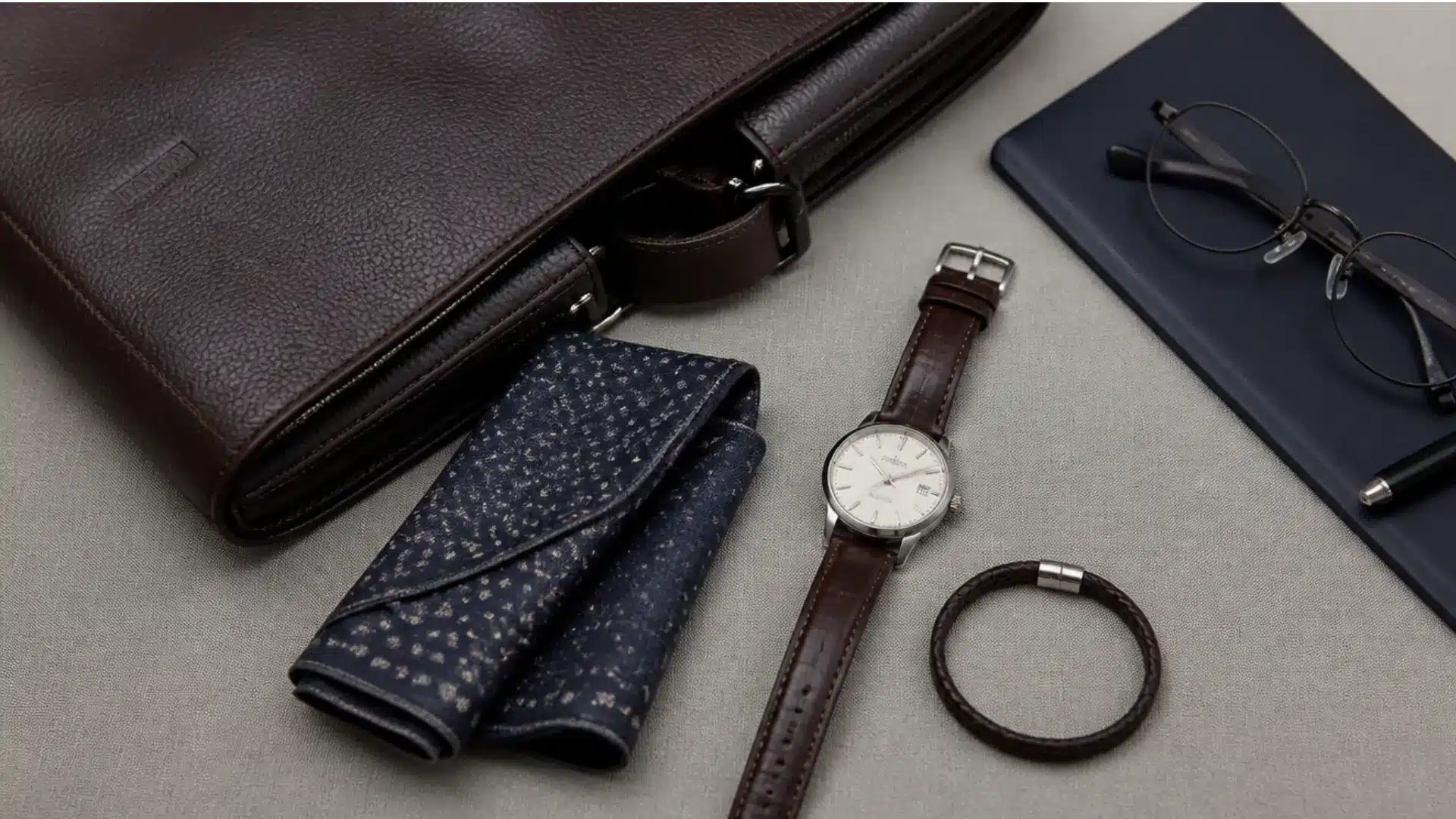
A leather watch does most of the work here. A pocket square is a nice touch if the shirt calls for it, but it’s the first thing to cut if you’re unsure.
A structured backpack or leather bag also works well for daytime smart casual looks.
Choices for Women
For smart casual attire for women, the options are varied, including dresses and jeans, as it is one of the most versatile dress codes to purchase and style.
Blouses & Tops
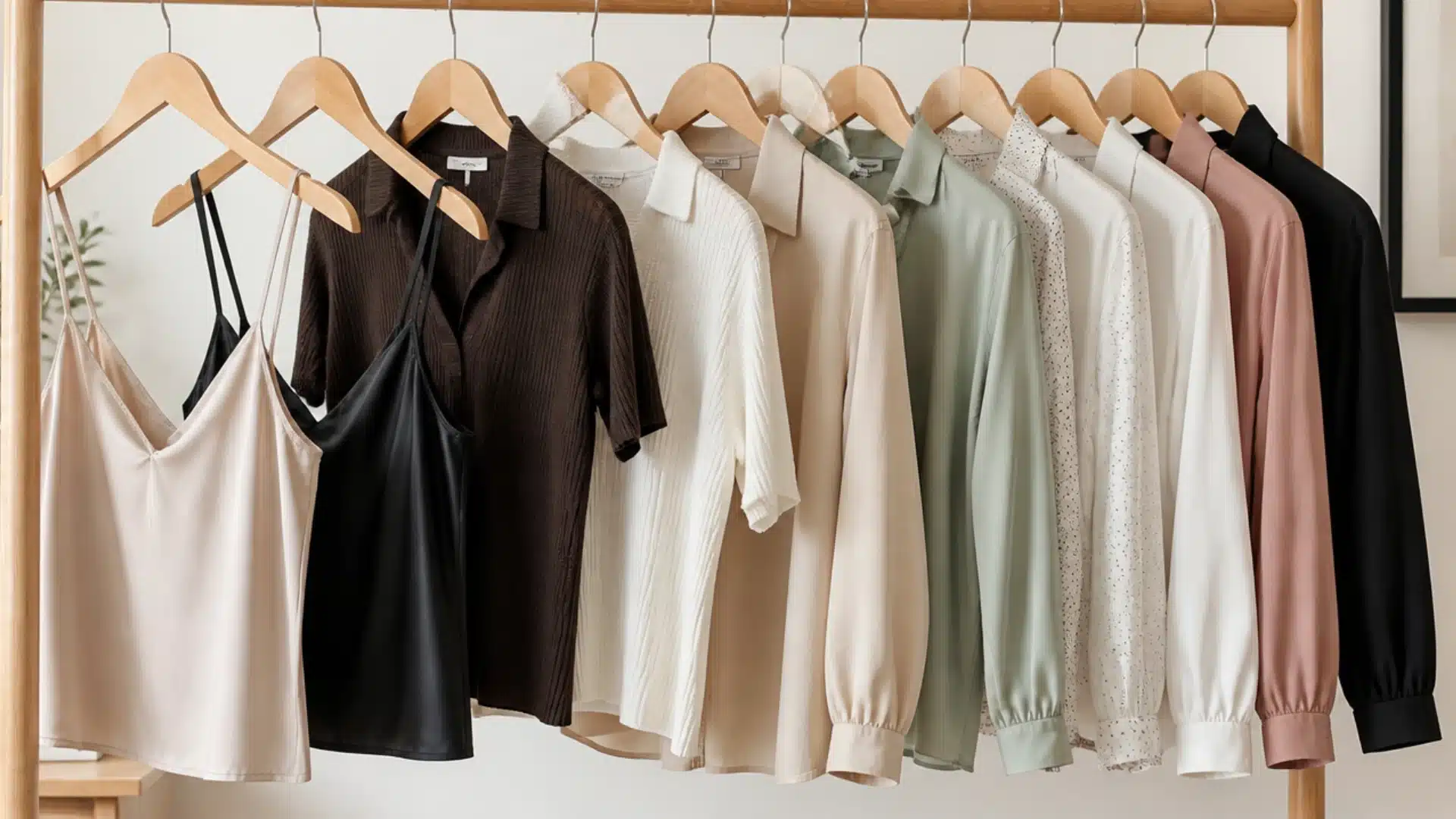
Some good tops include silk camisoles, knit shirts, and printed shirts.
It gives women more variety in colors and prints than the business casual dress code.
Trousers, Skirts, and Denim
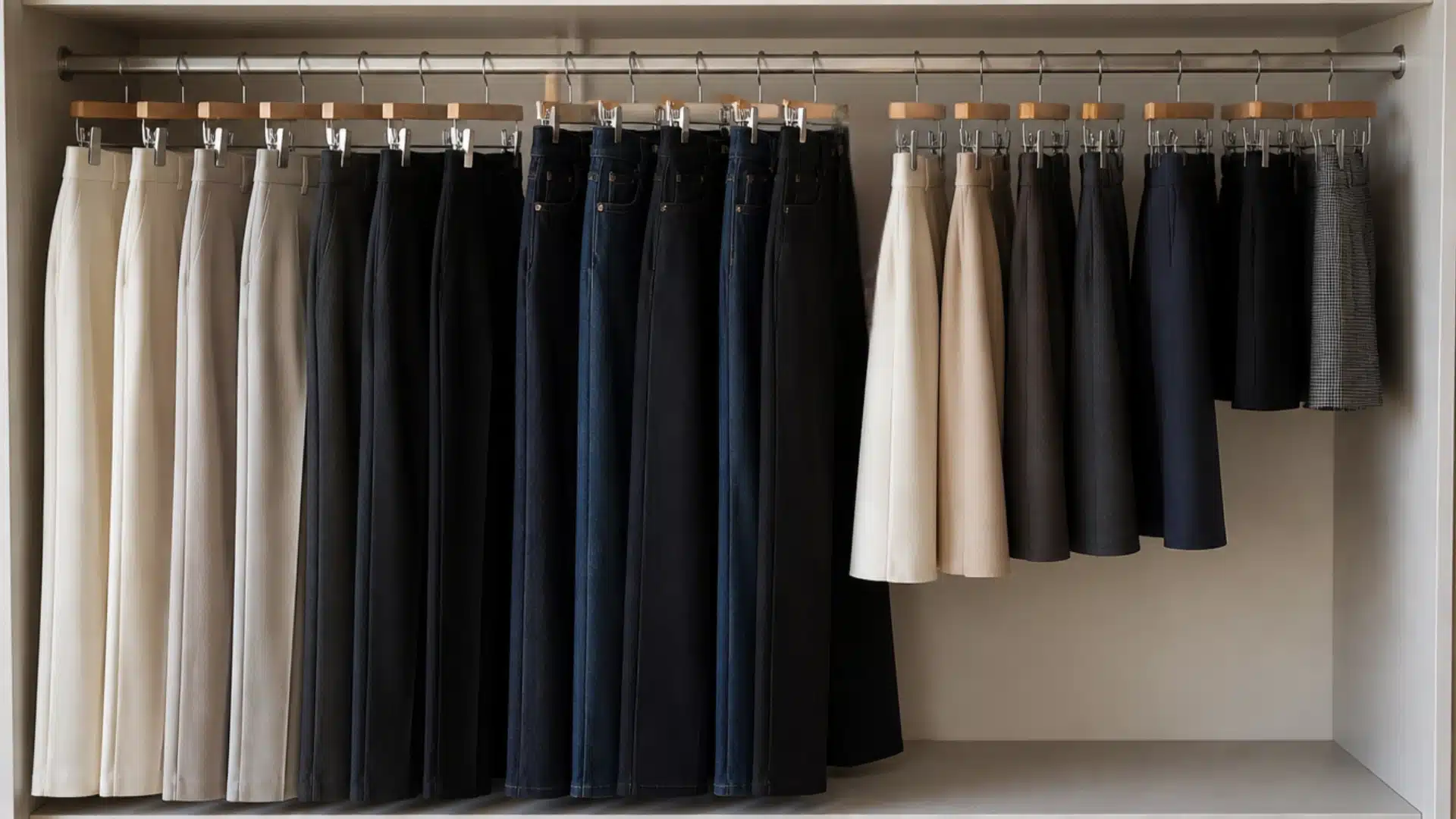
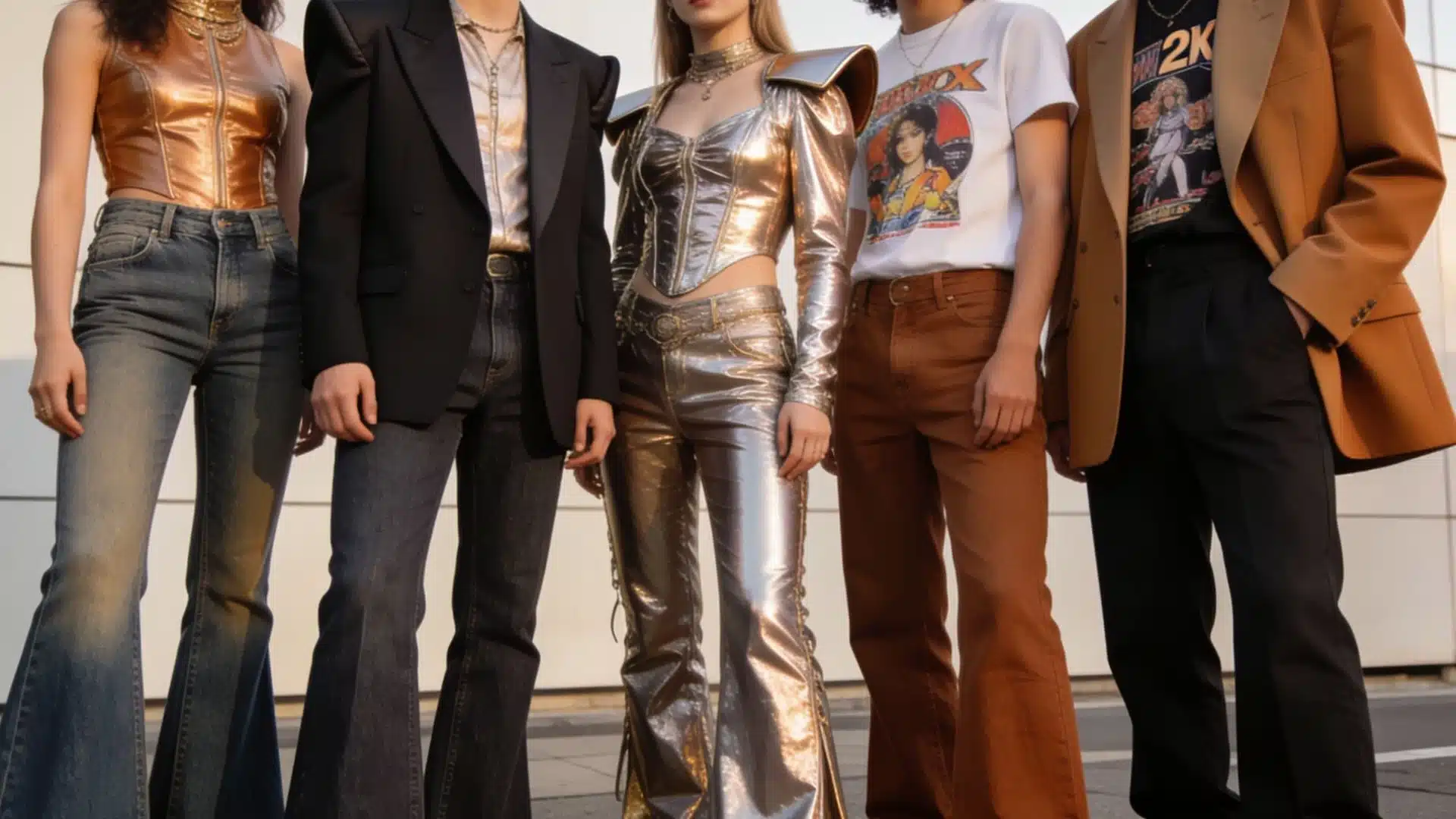
Trousers with wide legs, fitted dark blue or black jeans, and midi and mini skirts are some of the options that go well with this dress code.
Pairing casual jeans with a dressier shirt or blazer keeps the look from feeling overly casual.
Dresses and Jumpsuits
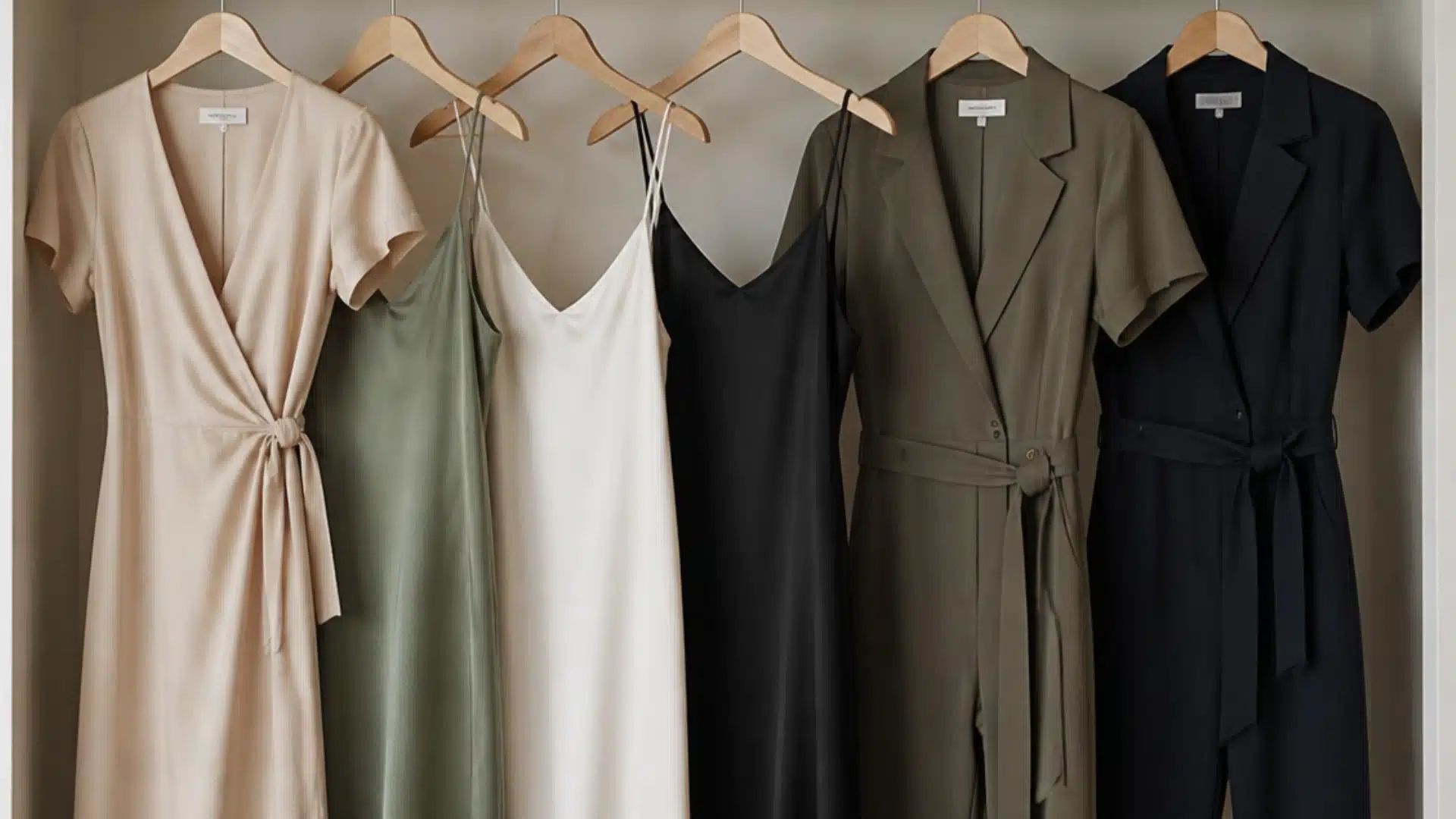
The smart casual dress code allows wrap dresses, slip dresses, and jumpsuits, especially when worn with heeled footwear.
Footwear
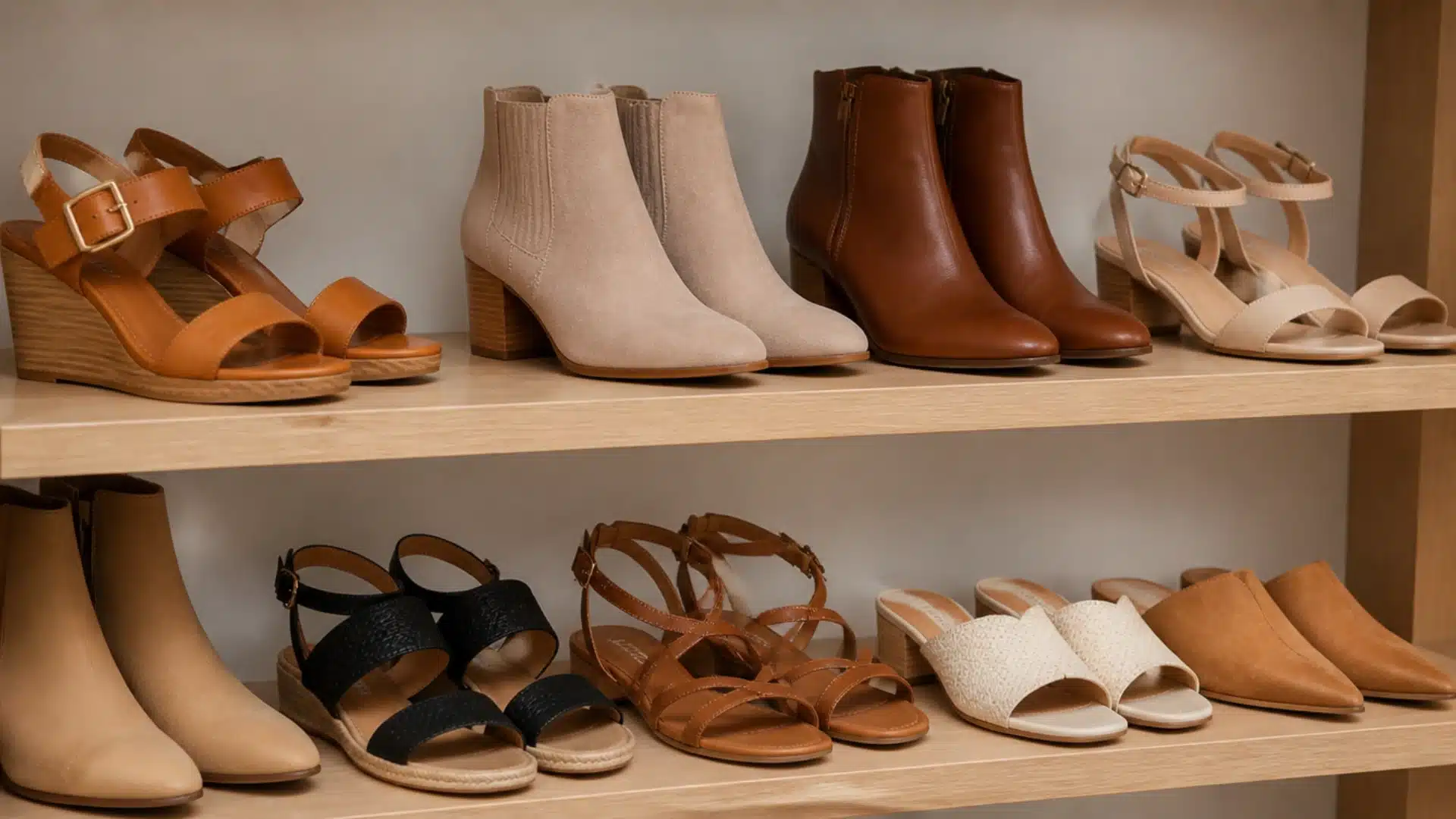
Sandals and ankle boots provide a good variety for women in smart casual clothing, unlike in business wear.
Accessories
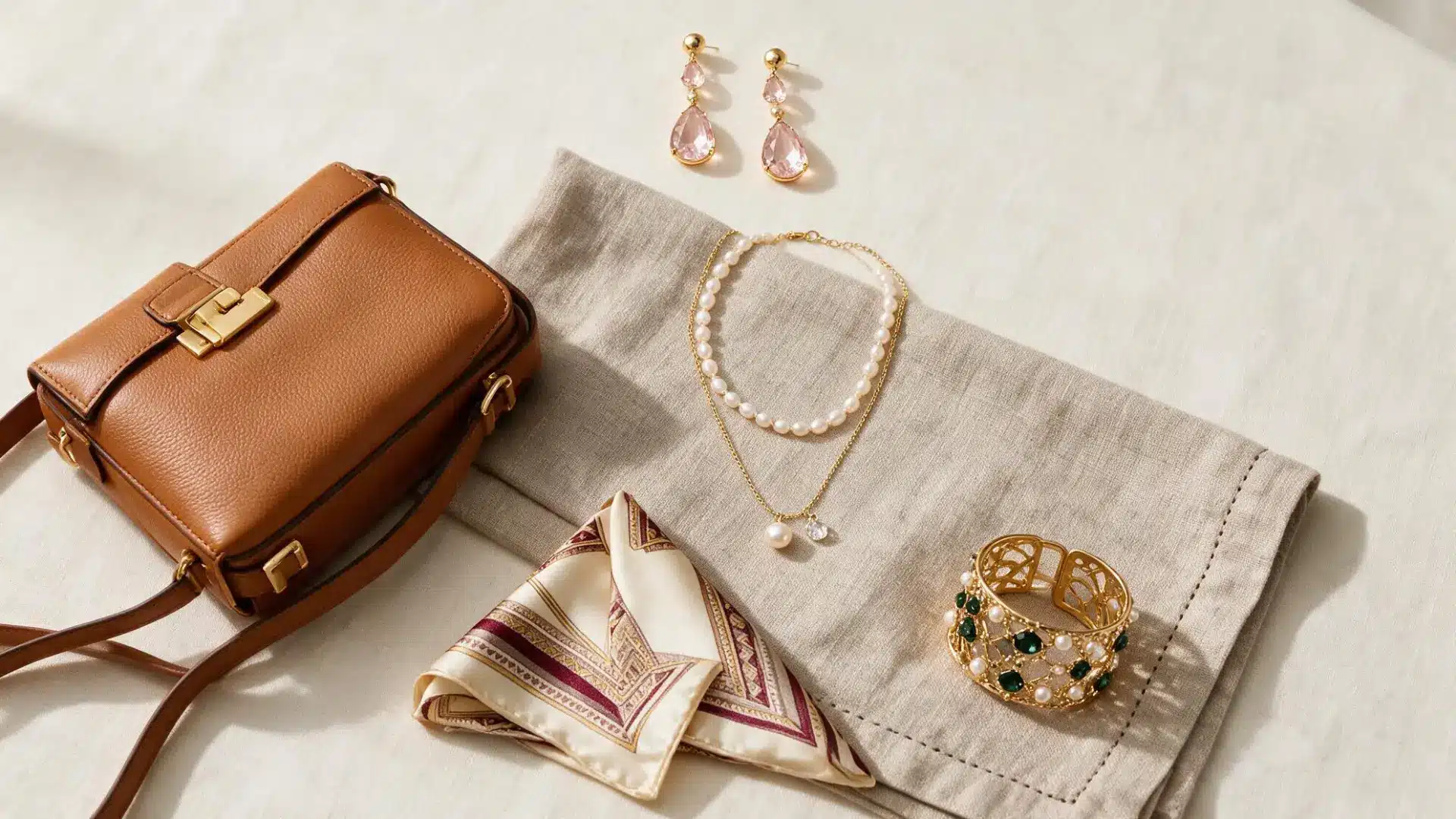
This is where smart casual has more room than business casual; statement earrings or a bold bag actually work here, rather than something to avoid
A silk scarf or a bold cuff bracelet also adds personality without feeling out of place.
When to Wear Business Casual vs Smart Casual?
The situation decides this, not personal taste.
Knowing how each dress code fits the situation helps you avoid mistakes when choosing an outfit for work, a meeting, or a social occasion.
At Work and in Offices
Business casual is the better fit here. It’s common in corporate environments, finance, law, and other conservative industries.
Creative industries and start-ups with a relaxed office environment usually opt for smart casual instead.
Client Meetings and Interviews Call for Business Casual
It shows professionalism and avoids any doubts about how seriously you’re taking the meeting. If the invite specifies smart casual, a blazer and dark jeans still work.
Networking and Business Events
Smart casual works best here, particularly for evening business networking, mixers, and conferences that involve some socializing component.
Daytime business events still call for the more traditional code of dressing if clients or the company’s executives are involved.
Smart Casual Wins for Dinners and Social Occasions
It strikes the right balance for dinners, casual weddings, and other social gatherings, letting people dress to impress without looking overdressed for the room.
Dressing With Confidence, Not Guesswork
Both dress codes solve the same problem: showing up looking like you understood the room before you walked in.
Once the core pieces are in a closet, from a solid blazer to a clean pair of dark jeans, switching between business casual vs smart casual becomes a matter of styling rather than shopping for something new each time.
When a dress code feels vague, leaning slightly more polished is the safer bet.
A blazer can always come off if a room turns out more relaxed than expected, but there’s no quick fix for showing up underdressed to something more formal.
Frequently Asked Questions (FAQs)
1. Can Smart Casual Work for a Job Interview?
It’s risky. Business casual is the more dependable choice for interviews, since it signals professionalism without leaving room for misinterpretation.
2. Is a Tie Required for Either Dress Code?
No. Ties are optional in both business casual and smart casual, and skipping one is common in most modern offices and events.
3. Which Dress Code is Safer When an Invite Doesn’t Specify One?
Business casual is the safer default. It reads as polished and professional, with little risk of being underdressed or overdressed for the occasion.