A pair of earrings can look perfect in the store and still feel “not me” when you wear it.
Many overlook small details that affect comfort and security, like the type of earring hook and the backs that hold each piece in place.
Choosing between different types of earrings involves more than picking a pretty design. It means considering how each piece feels through hours of wear.
Popular earring styles, common backs, and the findings that keep them secure are all covered ahead.
Earrings – Love of Every Woman
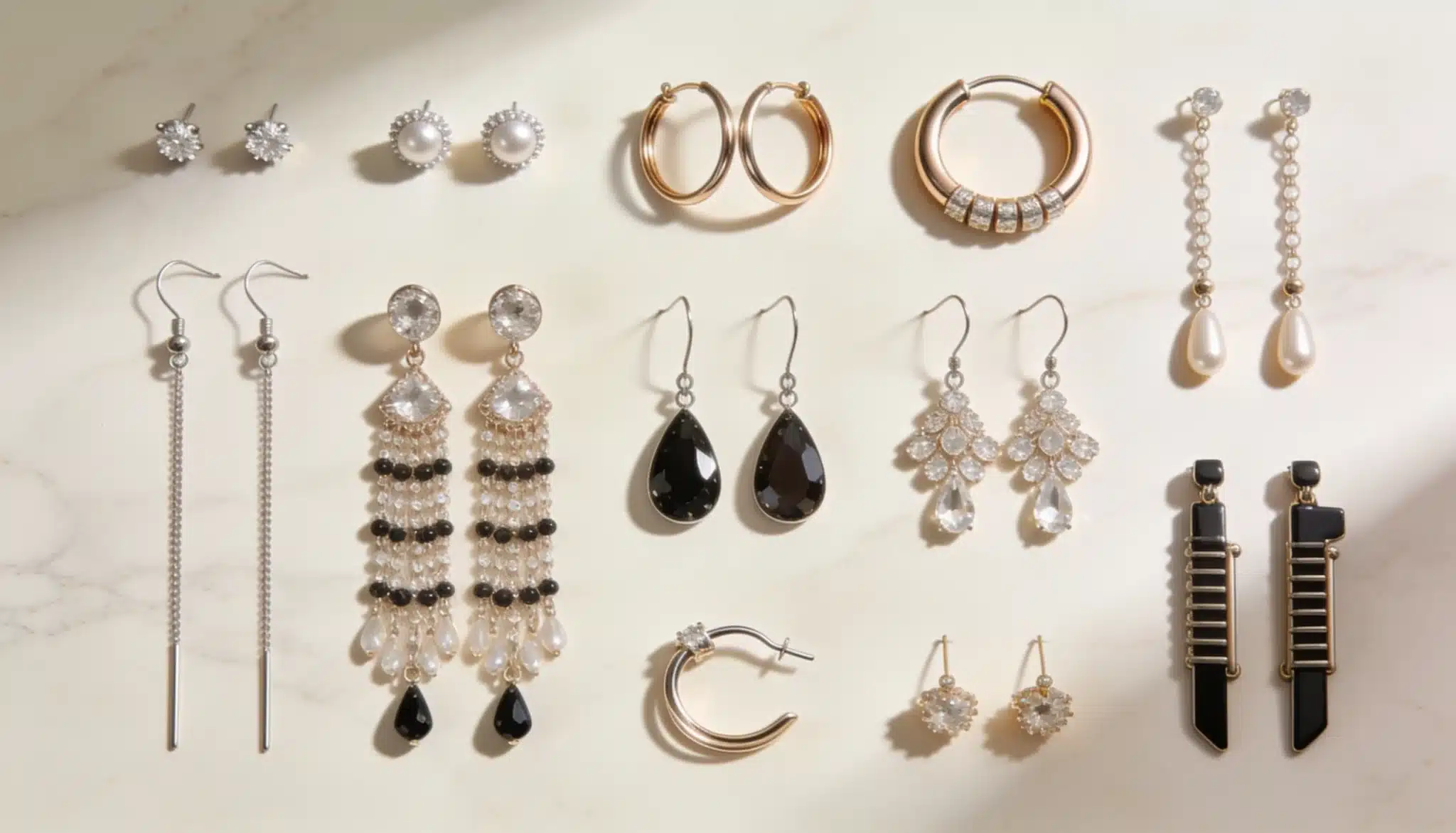
The table below aligns major earring types with their typical backs, showing how style and function work together. A quick glance can help narrow down choices before reading through each style in detail.
| Earring Type | Best For | Common Back Used |
|---|---|---|
| Stud | Work, minimal look | Butterfly (Push) |
| Hoop | Casual to bold | Hinged (Latch) |
| Huggie | Layering, small hoops | Hinged (Latch) |
| Drop | Balanced statement | Lever |
| Dangle | Evening, parties | Lever |
| Chandelier | Formal events | Screw |
| Ear Cuff | Layering, no piercing needed | French Hook |
| Threader | Minimal, multiple piercings | French Hook |
| Jacket | Layered stud look | Butterfly (Push) |
| Climber | Cartilage, curated ear looks | Butterfly (Push) |
| Tassel | Boho, festival style | French Hook |
Parts of an Earring
Every earring, no matter the style, comes down to three basic parts working together.
- The Post or Wire: Passes through the piercing, connecting the earring to the ear.
- The Decorative Front: The visible part on display, whether a plain stud or an elaborate design.
- The Back or Clutch: Sits behind the ear, keeping the earring secure through daily movement.
Together, these parts are called findings, a term used across the jewelry industry for the small components that make an earring functional.
Knowing how they work together makes it easier to spot a well-made pair.
Find the Perfect Types of Earrings for Every Outfit
Understanding the different earring types makes it easier to match a piece with an outfit or occasion. Each style carries its own look, from simple and understated to bold and eye-catching.
1. Stud Earrings
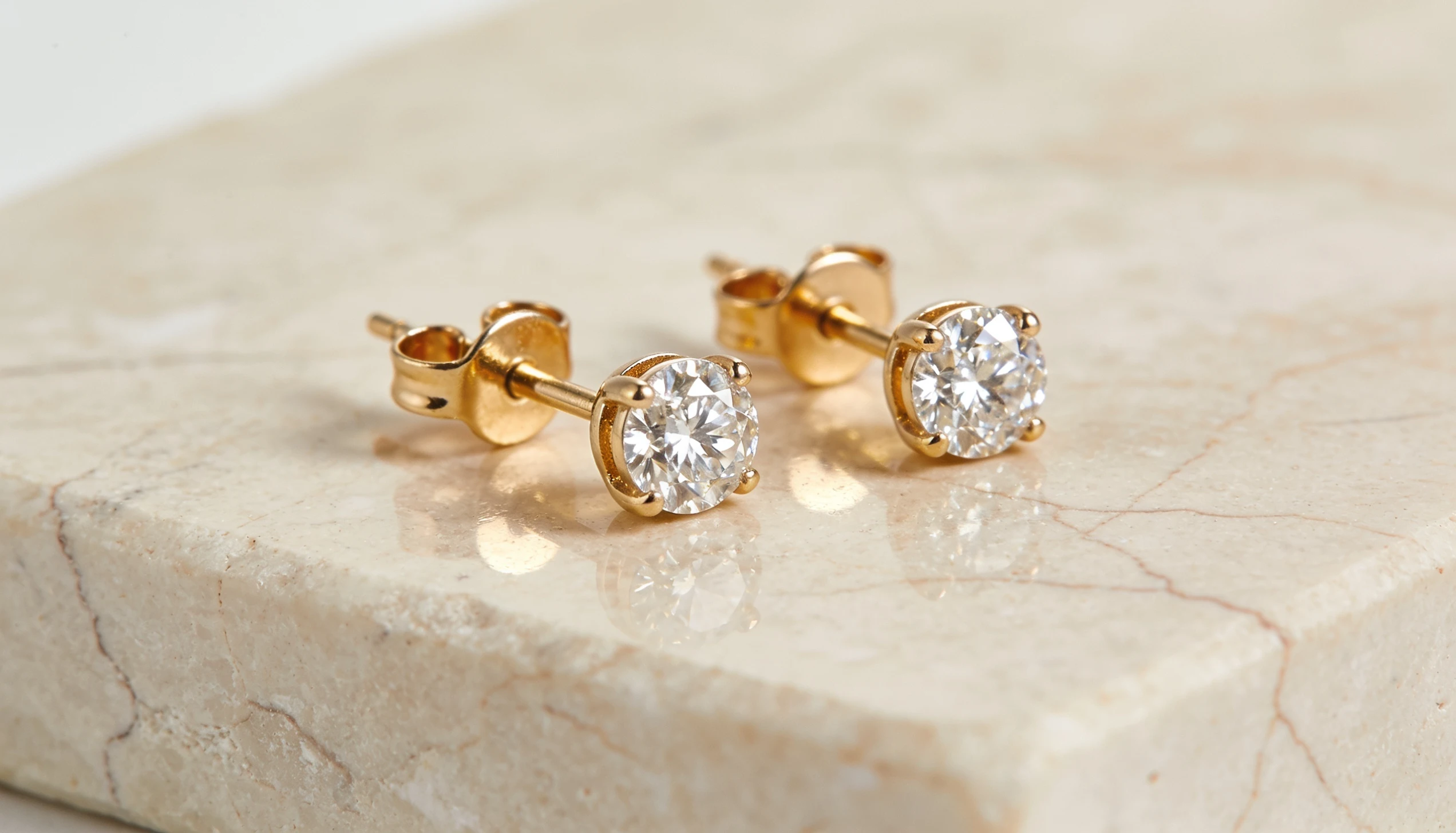
Stud earrings sit flat against the earlobe, with no drop or dangle. They rarely catch on hair or clothing, which makes them easy to wear all day.
Plain metal dots, gemstone centers, tiny hearts, or tiny stars all fall under this style.
Pairs well with: Button-downs, blazers, and simple tees for work or casual days out.
2. Hoop Earrings
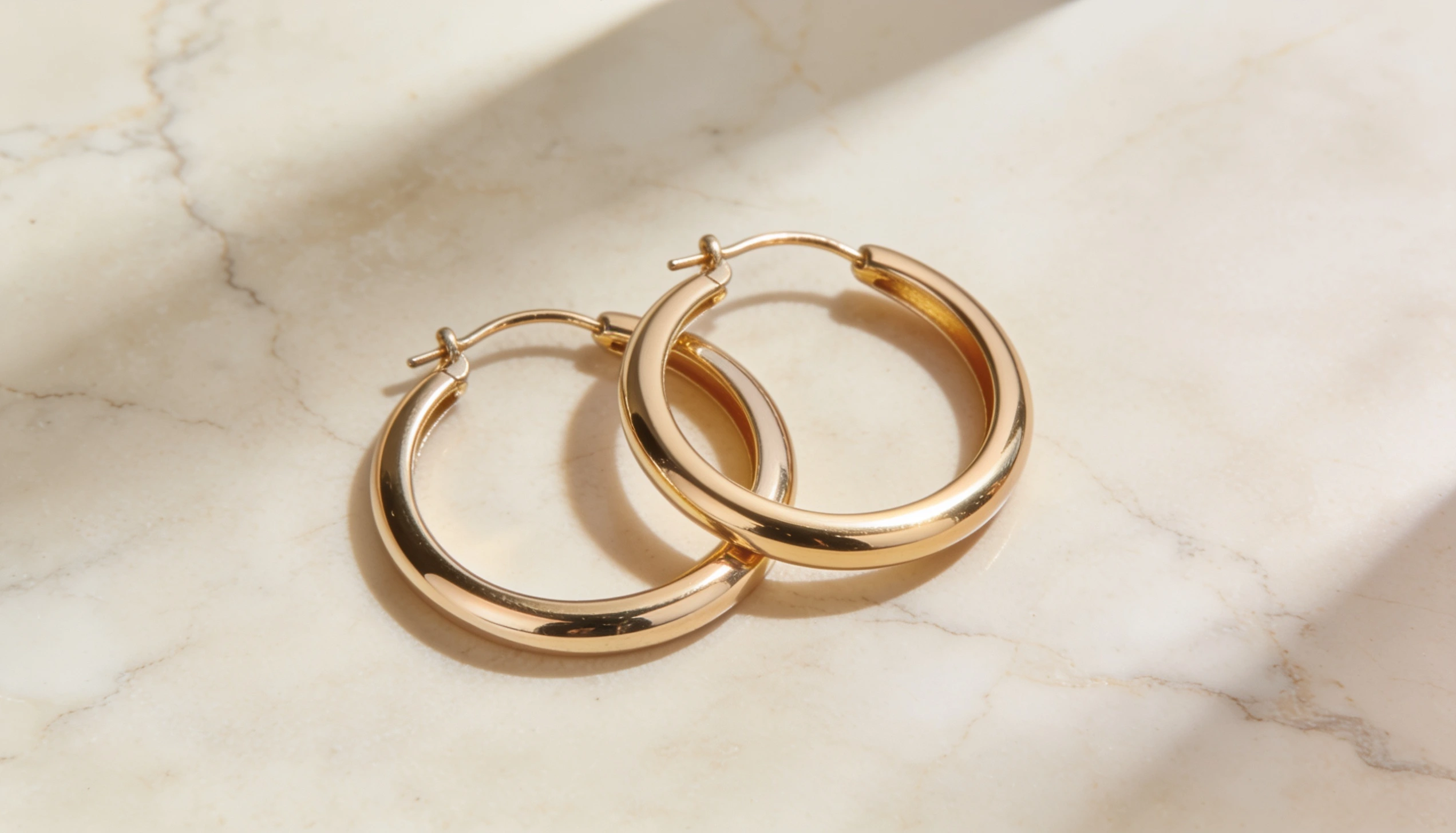
Hoop earrings are circular or semi-circular loops that pass through the earlobe. Sizes range from small huggies to large statement pieces that catch the eye.
Larger hoops add a bold touch to an otherwise casual look.
Pairs well with: Denim, graphic tees, and off-shoulder tops for an easy, put-together look.
3. Huggie Earrings
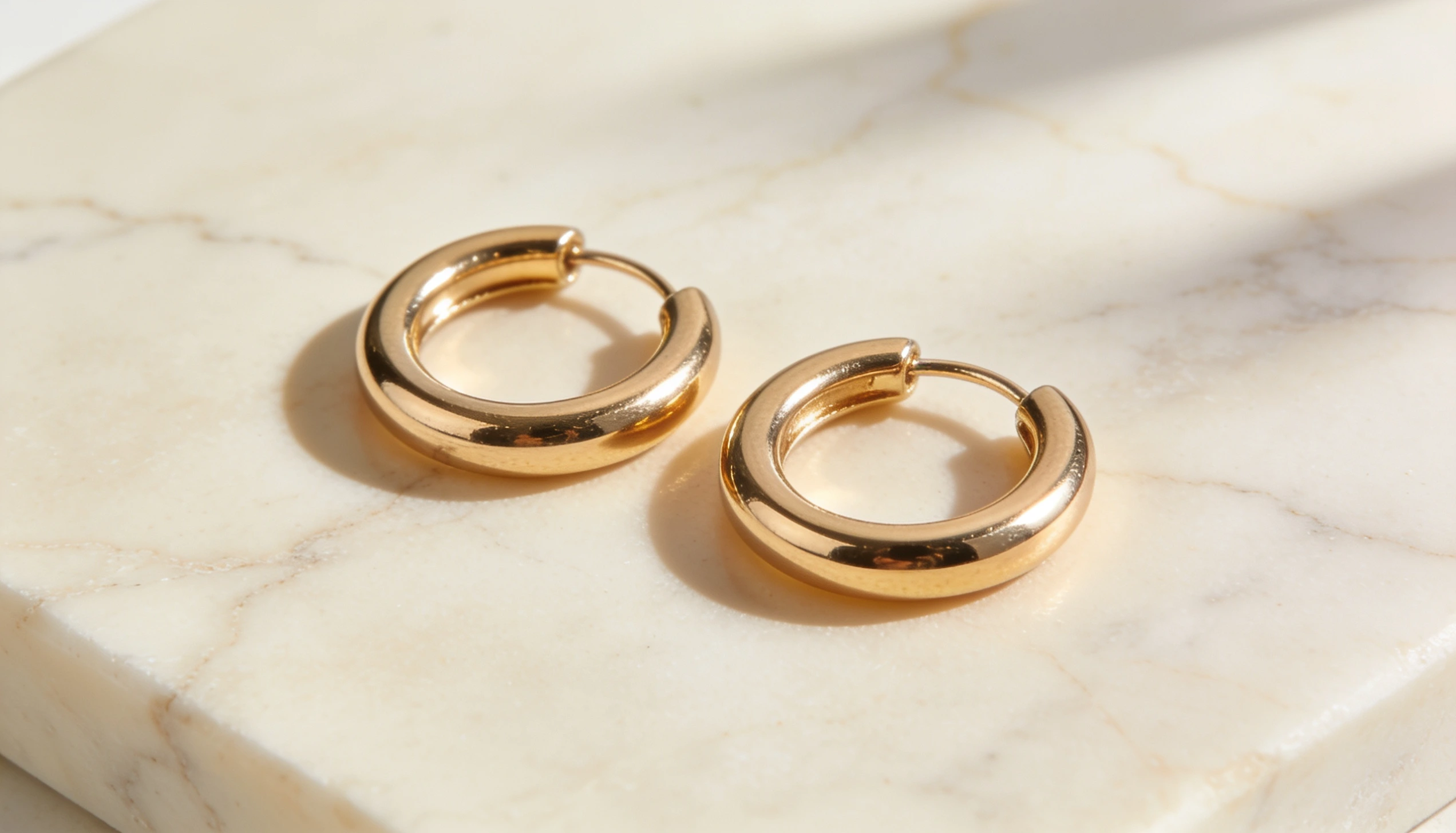
Huggies are a smaller, closer-fitting version of the classic hoop style. They hug the earlobe tightly rather than swing with every movement.
This tight fit makes Huggies comfortable for all-day wear without added weight and easy to layer with other earrings.
Suits well on: Fitted tops, turtlenecks, and sleek ponytail hairstyles.
4. Drop Earrings
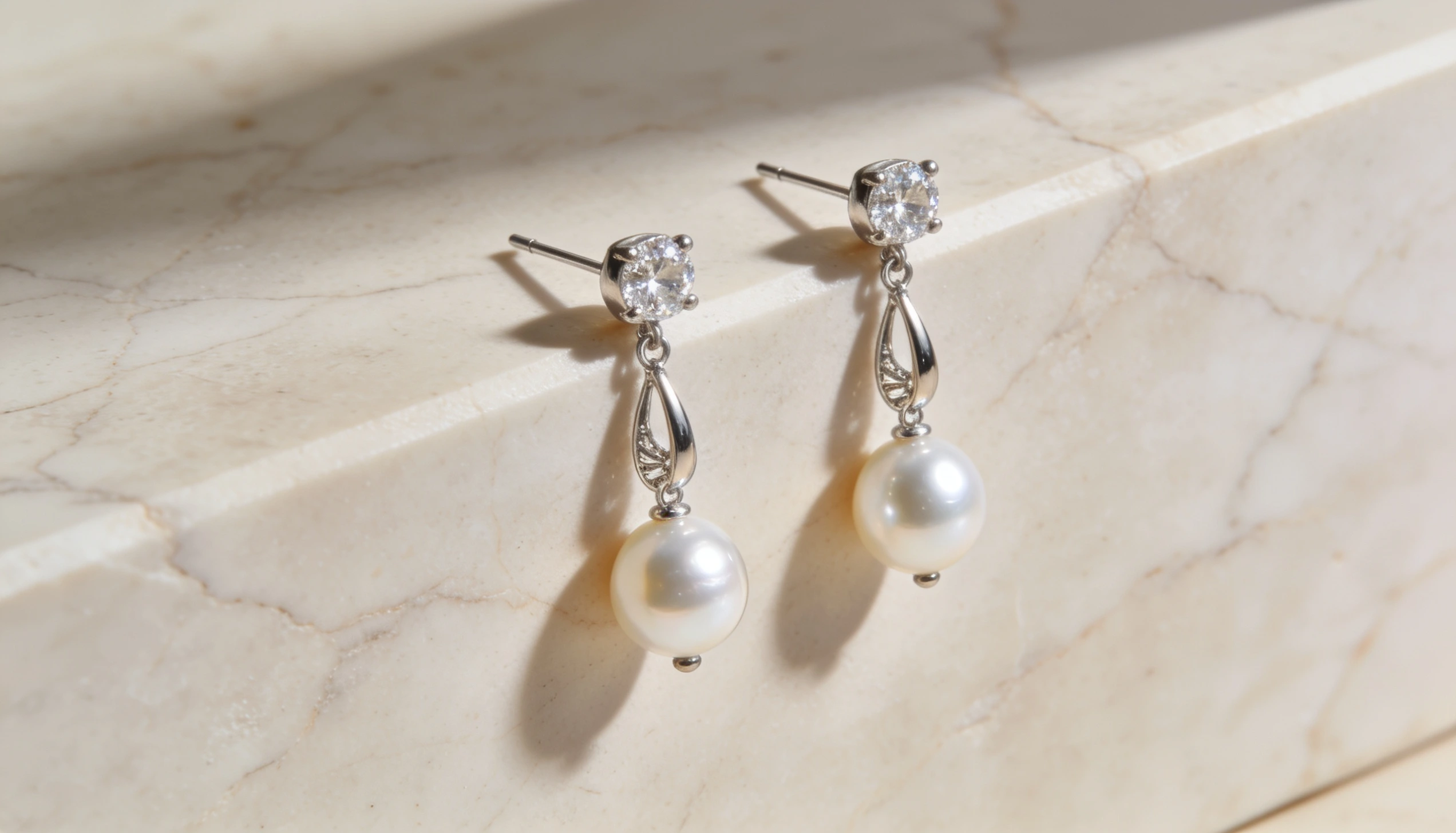
Drop earrings extend slightly below the earlobe, usually 1 to 3 centimeters, and move little.
A fixed decorative piece hangs just below the ear, striking a balance between simple studs and free-swinging dangles.
Pairs well with: Collared shirts, blazers, and wrap dresses for a polished daytime look.
5. Dangle Earrings
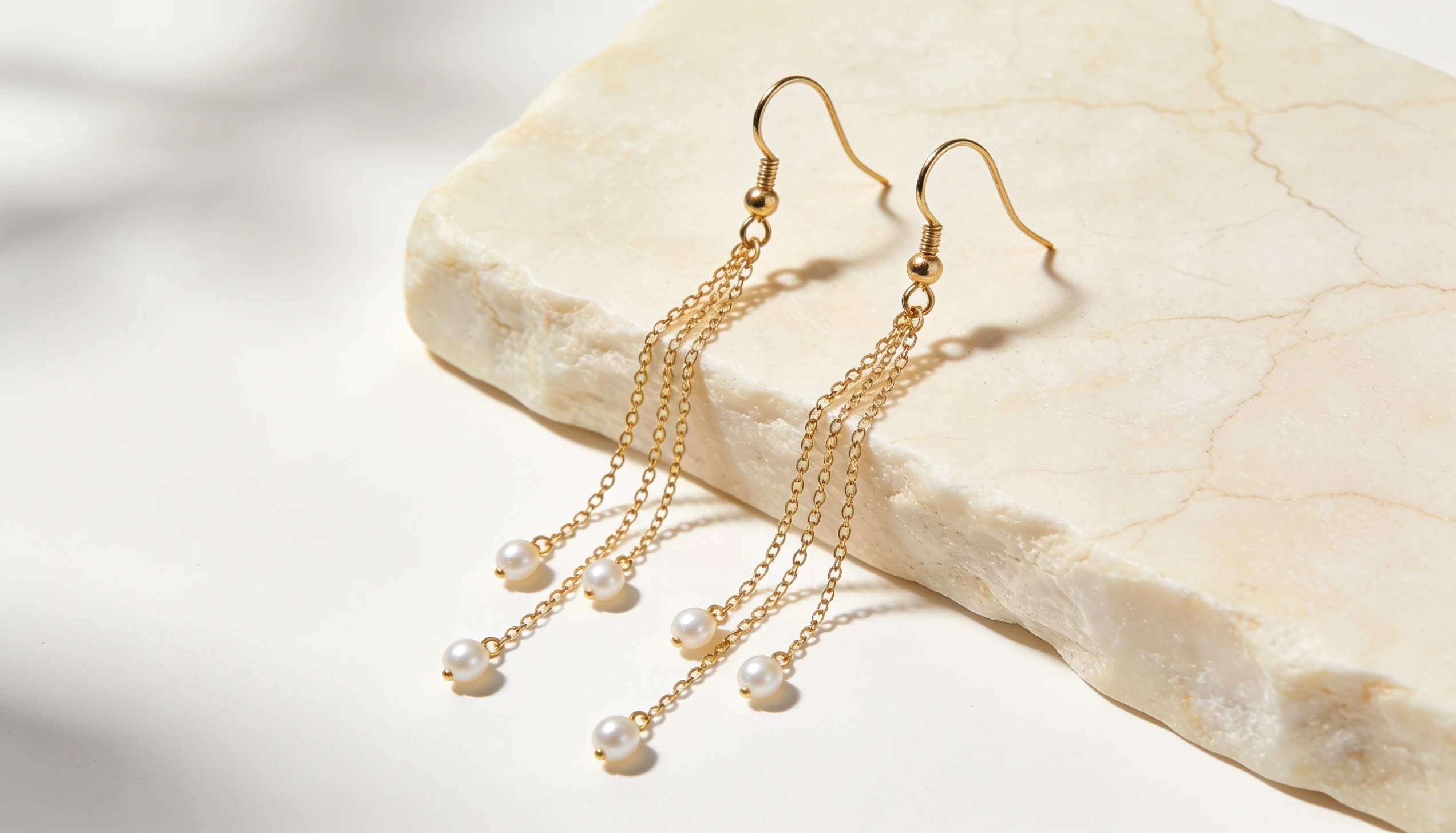
Dangle earrings move freely below the earlobe, swaying with every turn of the head. Chains, beads, or gemstones often combine to create a cascading effect.
This movement draws more attention than studs or drops, making dangles a strong choice for evenings out.
Pairs well with: Cocktail dresses, off-shoulder tops, and evening wear with simple necklines.
6. Chandelier Earrings
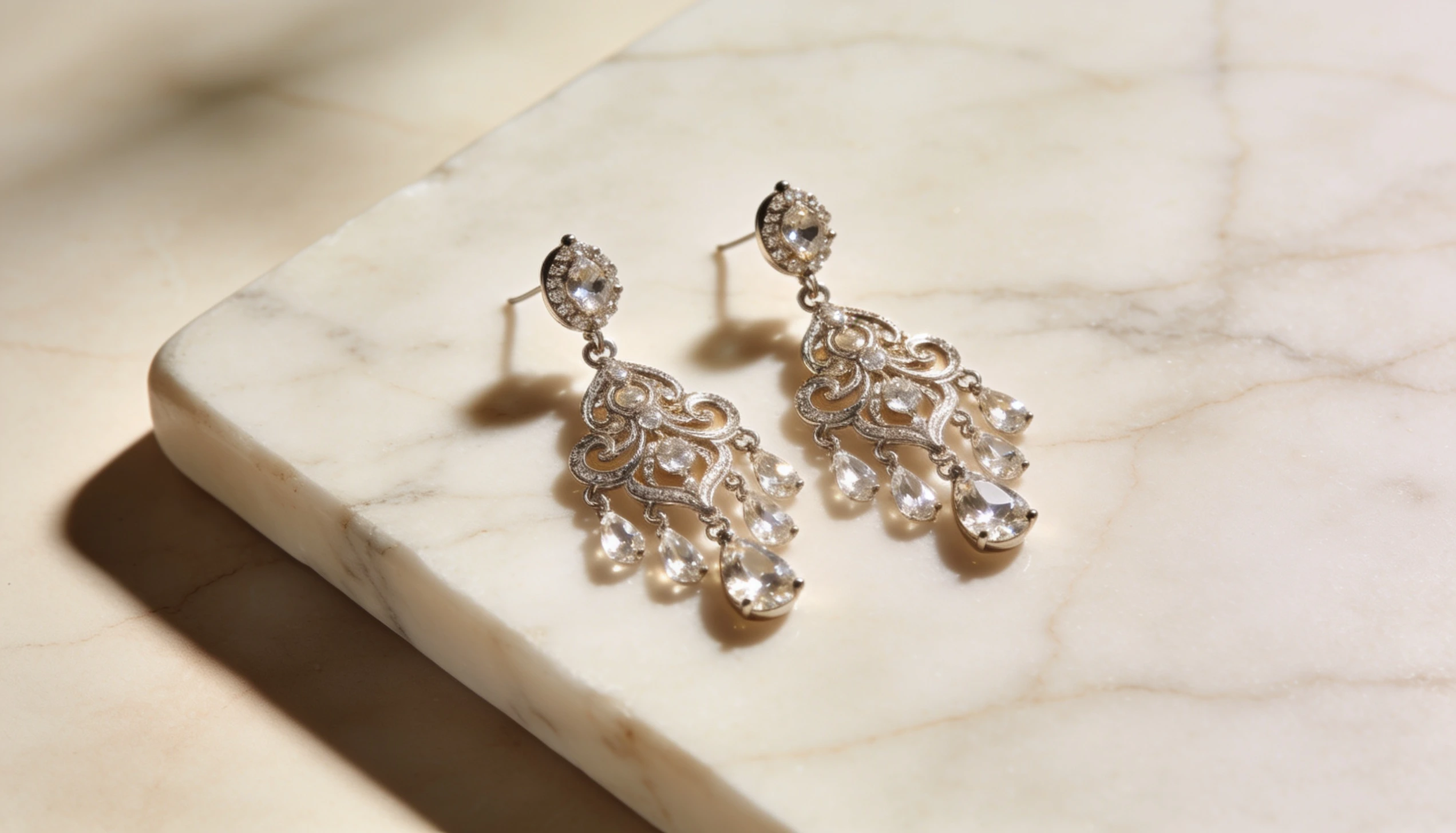
Chandelier earrings feature a branched design with multiple tiers hanging from a single point, resembling the light fixture they take their name from.
This dramatic style suits formal events, weddings, and other occasions calling for bold jewelry.
Pairs well with: Gowns, formal suits, and updos that keep the neckline clear.
7. Ear Cuffs
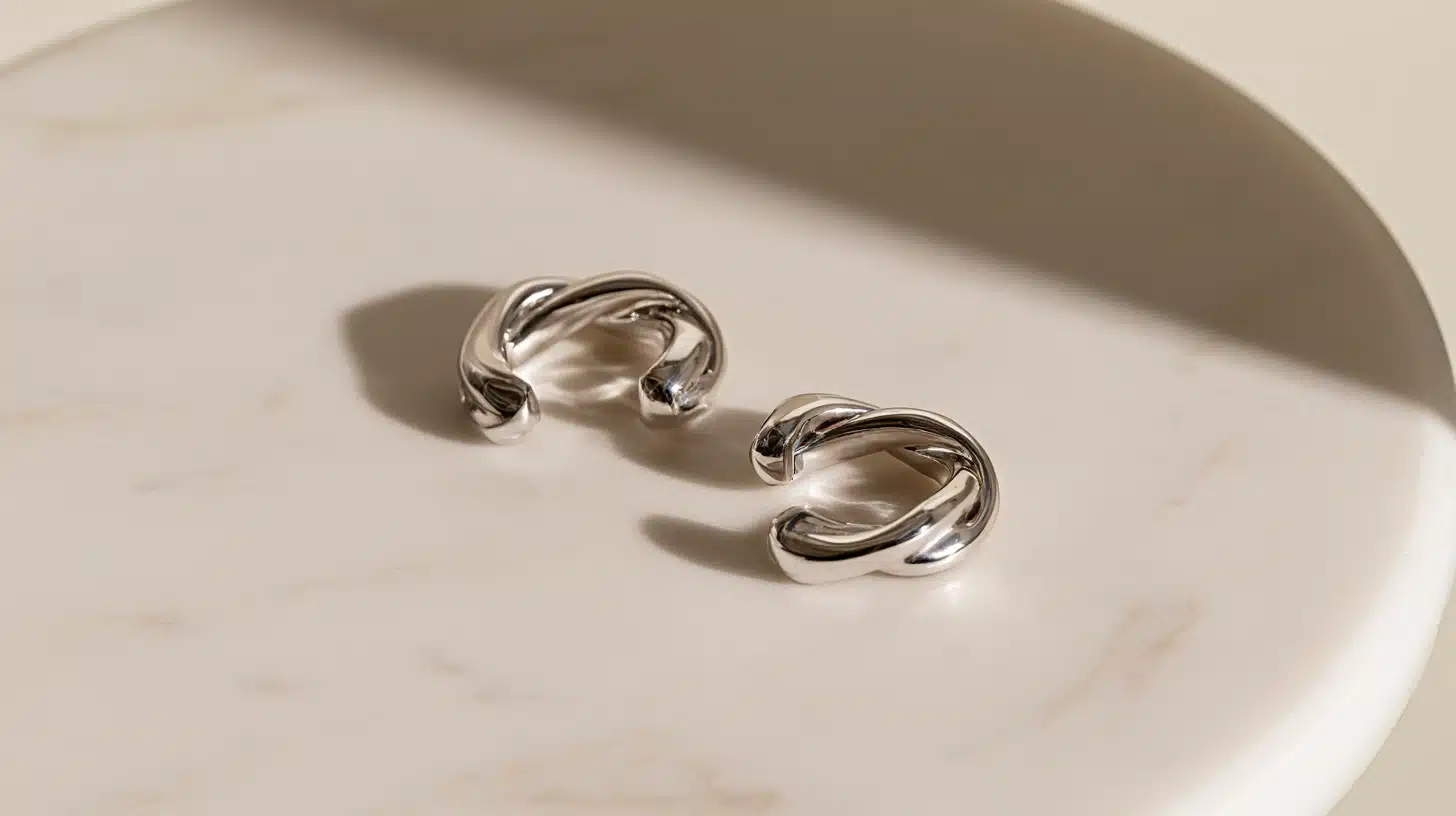
Ear cuffs wrap around the outer edge of the ear without needing a piercing at all. They stay in place through gentle pressure rather than a post or hook.
This makes them a flexible option for layering, adding shape to the ear without committing to a new piercing.
Pairs well with: Edgy streetwear, leather jackets, and asymmetric or slicked-back hairstyles.
8. Threader Earrings
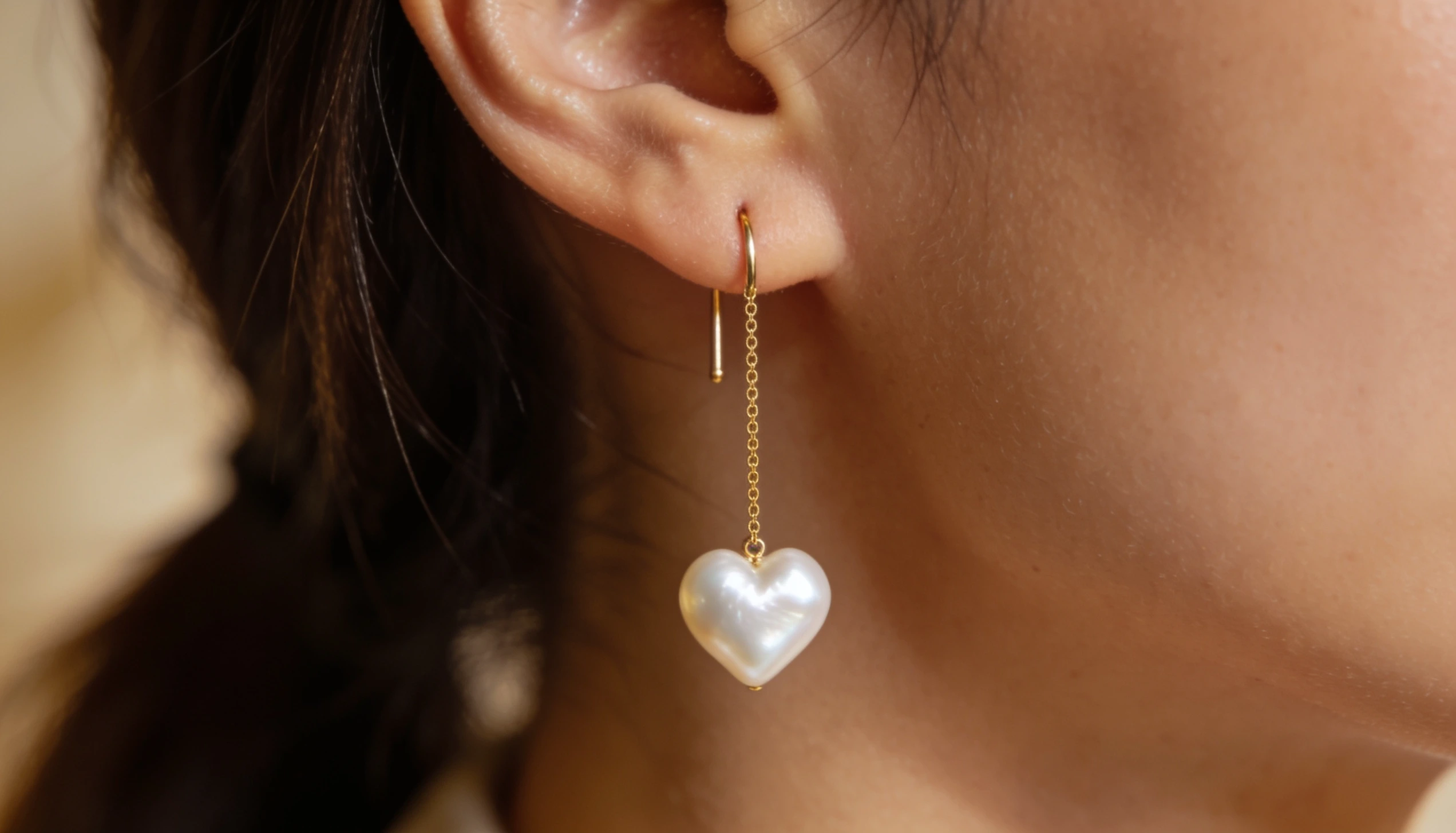
Threader earrings use a thin chain or wire that passes through the piercing and rests on both sides of the earlobe.
This creates a minimal, modern look that differs from earrings sitting only at the front. Threaders often appeal to those with multiple piercings who want a subtle, layered appearance.
Pairs well with: Minimalist outfits, slip dresses, and low-key everyday looks.
9. Jacket Earrings
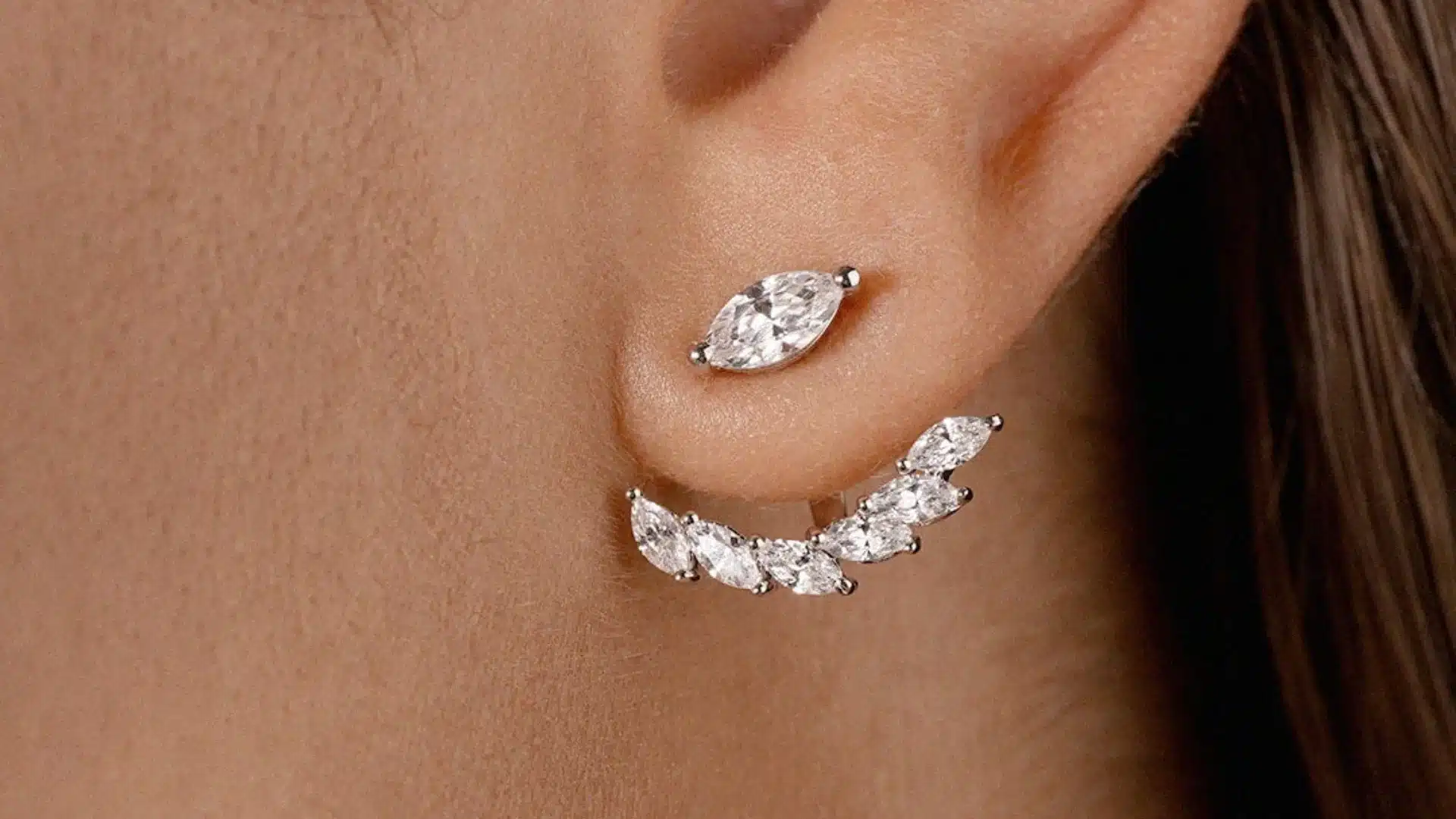
Jacket earrings combine two pieces: a stud that passes through the piercing and a decorative jacket that sits behind the lobe. From the front, this creates the illusion of a larger, more detailed earring.
One stud can pair with multiple jackets, offering variety without needing several separate pairs.
Pairs well with: Office wear during the day, switched to statement jackets for evening plans.
10. Climber Earrings
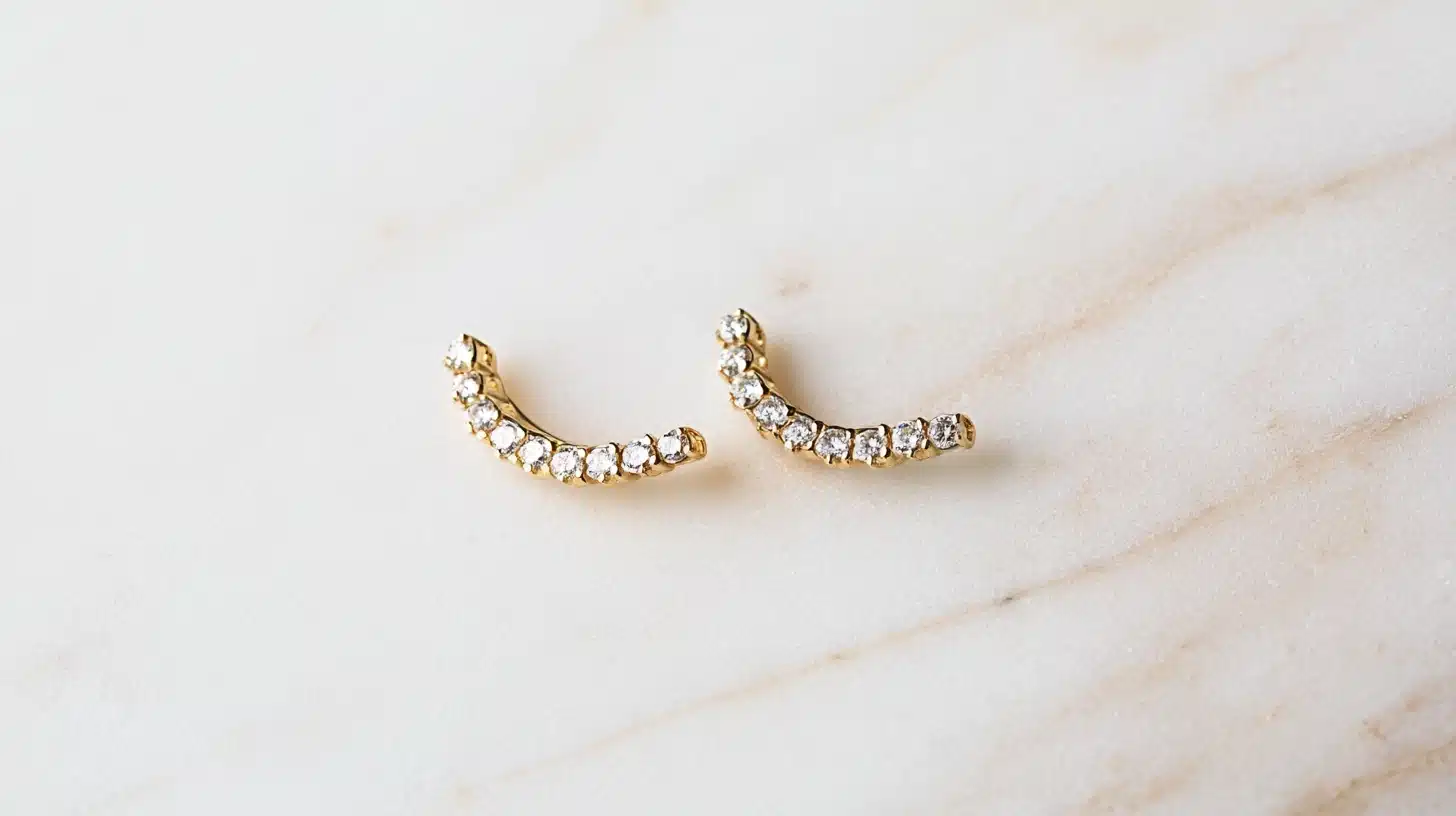
Climber earrings, sometimes called ear crawlers, follow the curve of the ear upward from the lobe instead of hanging downward.
The design extends along the ear’s edge, creating the look of multiple piercings using just one earring.
Suits well on: Sleek updos, slicked-back hair, and modern, structured outfits.
11. Tassel Earrings
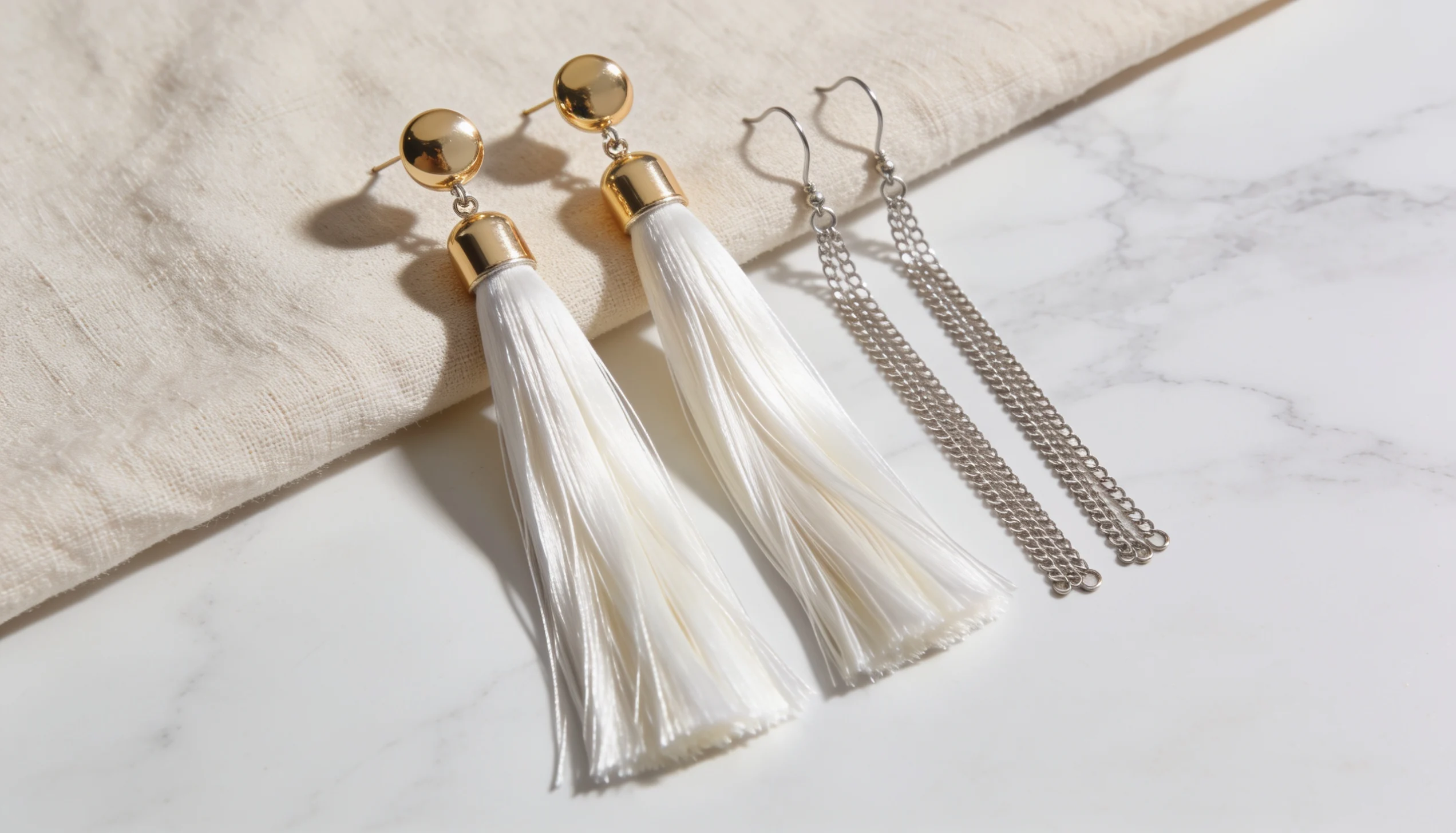
Tassel earrings feature strands of thread, beads, or metal that hang loosely from a base, creating movement and texture.
This style suits: Festival looks, boho outfits, or any occasion calling for a playful accessory.
The Different Earring Hook Types
The hook or back holding an earring in place matters just as much as the front design. Some prioritize security, while others focus on comfort or ease of use.
Butterfly (Push) Backs
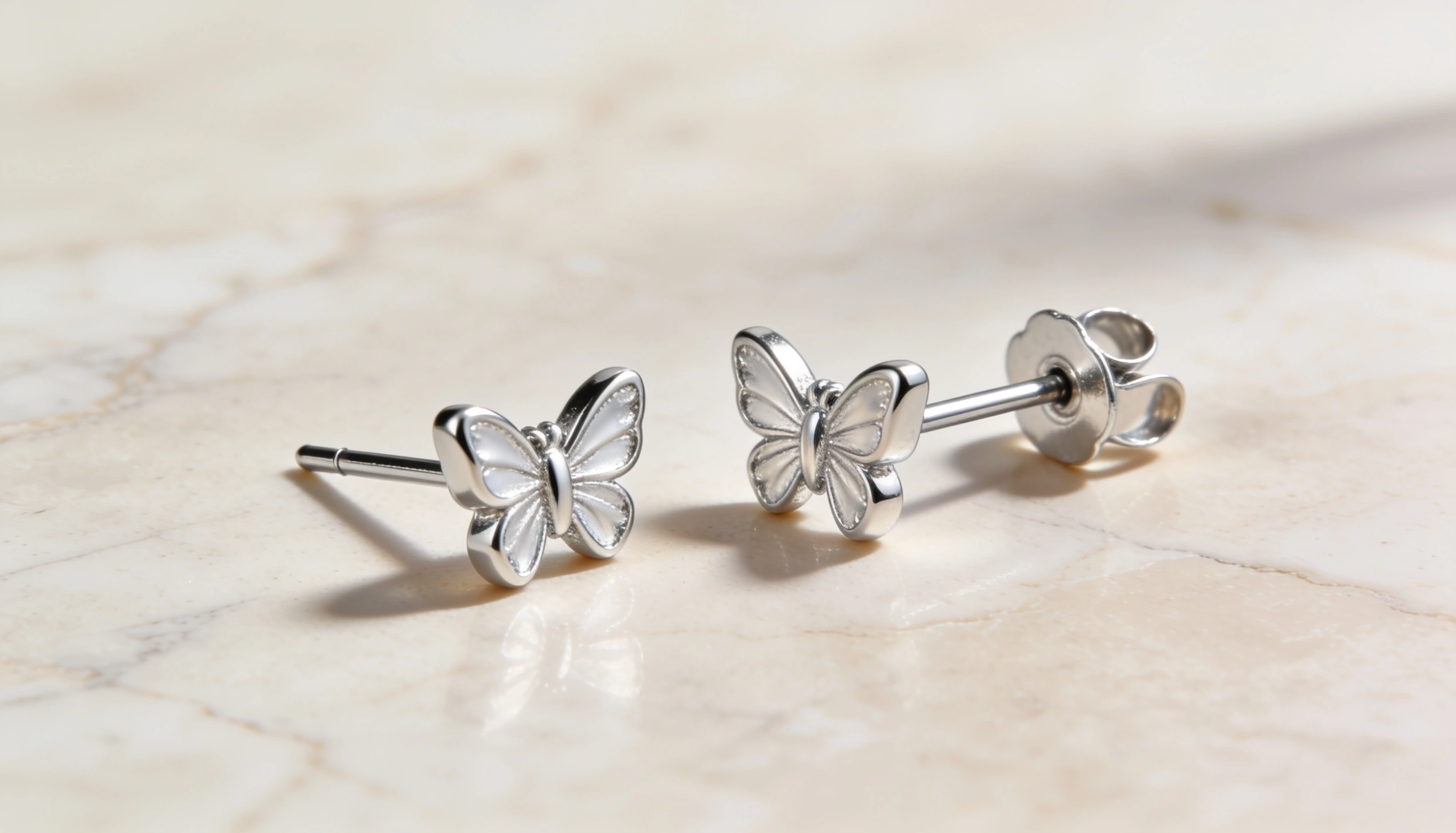
Butterfly backs slide onto a straight post and stay in place through simple friction. This design suits studs and lightweight earrings well, since it allows quick removal without extra steps.
Screw Backs
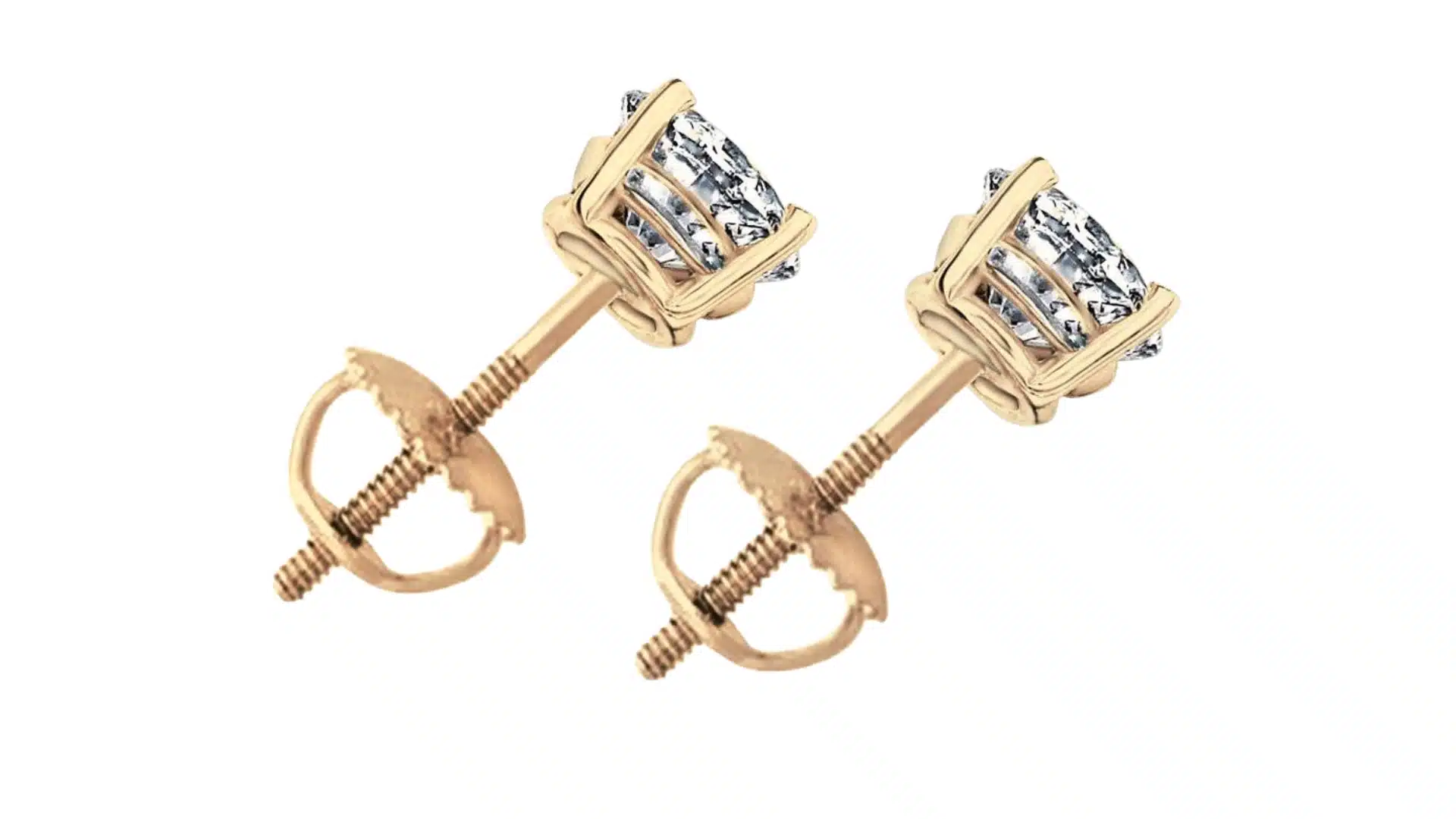
Screw backs use a threaded post paired with a backing that twists on securely. This mechanism offers a strong hold, making it a common choice for fine jewelry or heavier studs.
Lever Backs
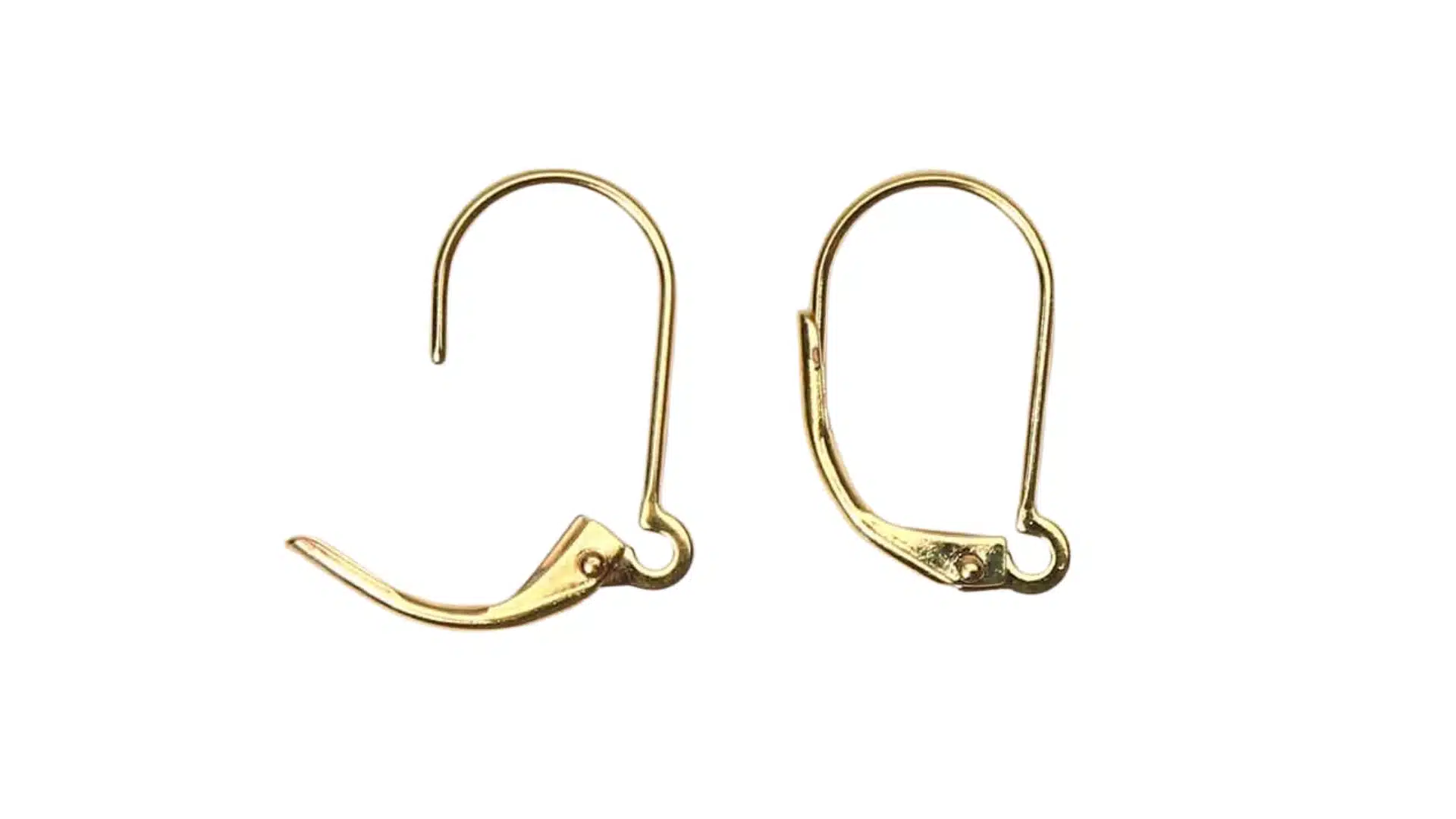
Lever backs feature a hinged wire that snaps shut behind the earlobe, forming a closed loop. This design securely holds drop and dangle earrings, preventing them from coming loose during movement.
Hinged (Latch) Backs
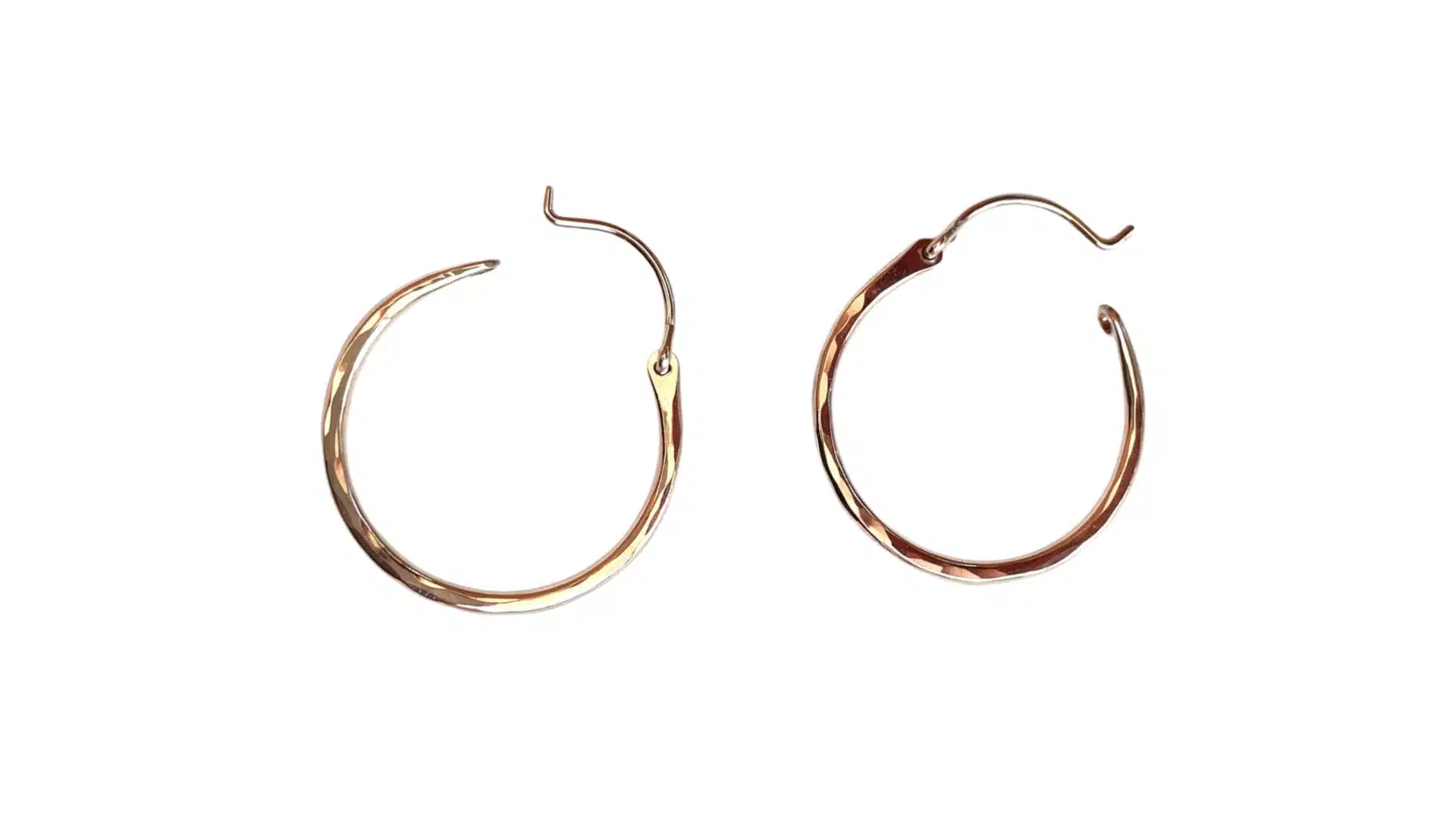
Hinged backs work with a small latch that clicks into place and are commonly found on hoops and huggies.
The closed-loop design keeps earrings secure through daily activities without needing a separate backing piece.
French Hook
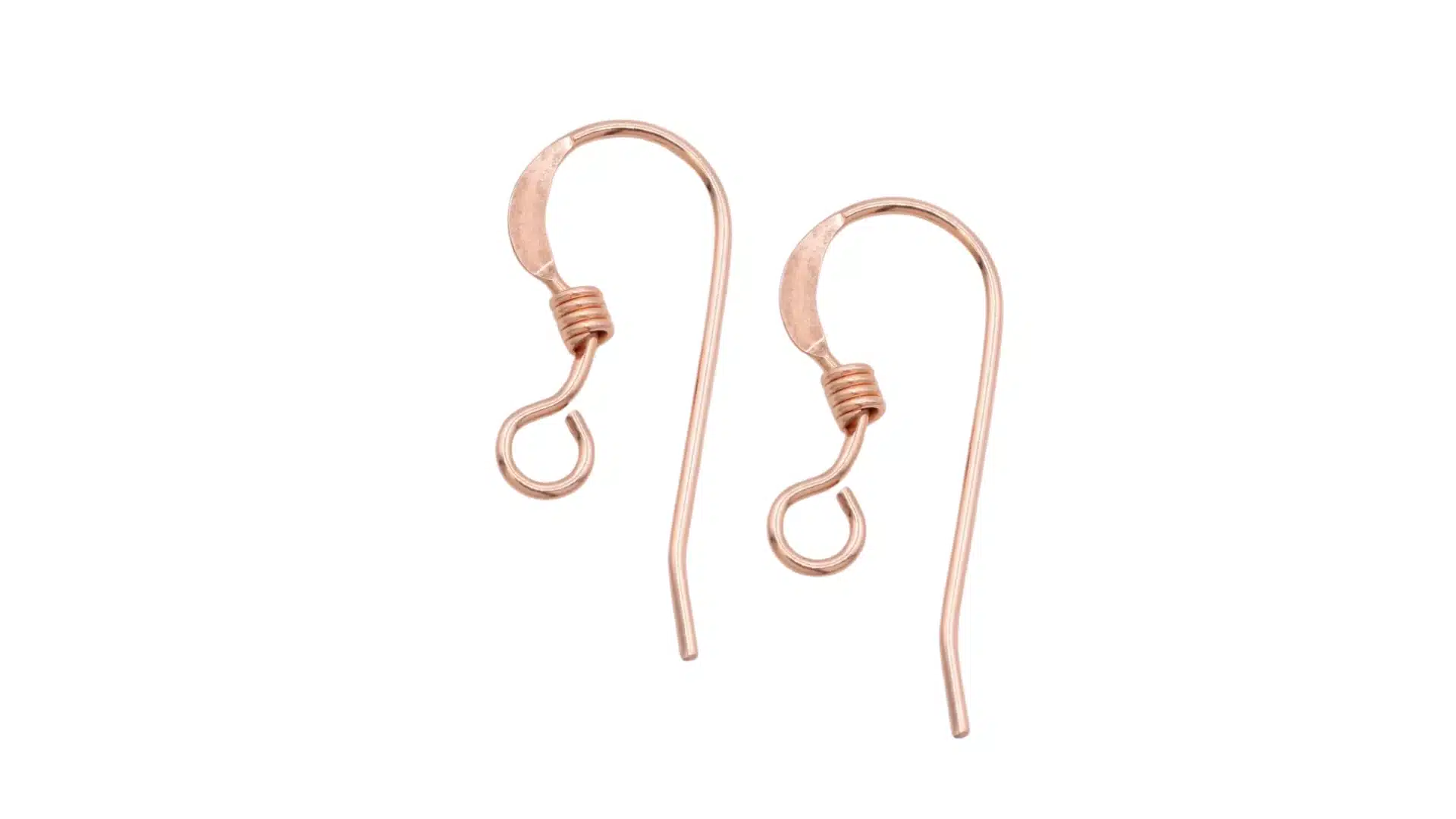
French hooks consist of a simple curved wire that passes through the piercing and hangs freely. This lightweight design suits dangle and threader earrings.
Since the hook stays open rather than locking shut, it can occasionally slip out with certain hairstyles or scarves.
Earrings According to Face Shape
Face shape offers a helpful starting point for choosing earrings, though it works best as a general guide rather than a strict rule.
- Round Face: Long drop or dangle styles with straight lines help create the appearance of a more defined jaw. Geometric shapes, like rectangles or elongated triangles, work especially well.
- Oval Face: Nearly every earring style suits this shape, thanks to balanced proportions. Studs highlight the eyes, while longer dangles draw attention toward the jawline.
- Diamond Face: Earrings with detail near the top, like studs or huggies, add width where the face narrows at the forehead and chin.
- Long Face: Hoops, chunky studs, and shorter dangles add width and help balance vertical proportions. Long, thin styles tend to stretch the face further.
Face shape is only a starting point; the best earrings are the ones that feel comfortable and match personal style.
Wrapping Up
Choosing between different types of earrings becomes much easier once style, hooks, backs, and face shape are considered together
Each style carries its own look, while the back or clutch decides how secure it feels throughout the day.
Findings, the small parts holding everything together, explain why some pairs feel effortless, and others need adjusting.
A pair that once felt uncomfortable often just needed the right combination of these details. Picking earrings for daily wear or special occasions now becomes a simpler decision.
Frequently Asked Questions (FAQs)
1. How Many Earrings Can One Ear Hole Safely Support?
One earring per hole is ideal; adding heavier styles increases strain and raises the risk of tearing.
2. Do Earring Backs Wear Out and Need Replacing?
Yes, especially push and screw types, which loosen over time and should be replaced periodically.
3. What Metal Works Best for Sensitive or Reactive Skin?
Titanium, surgical steel, and high-karat gold cause fewer reactions than nickel-based metals.
4. Is It Safe to Wear Earrings While Sleeping?
Flat-backed studs or small huggies are safest; dangling styles should be removed before bed.