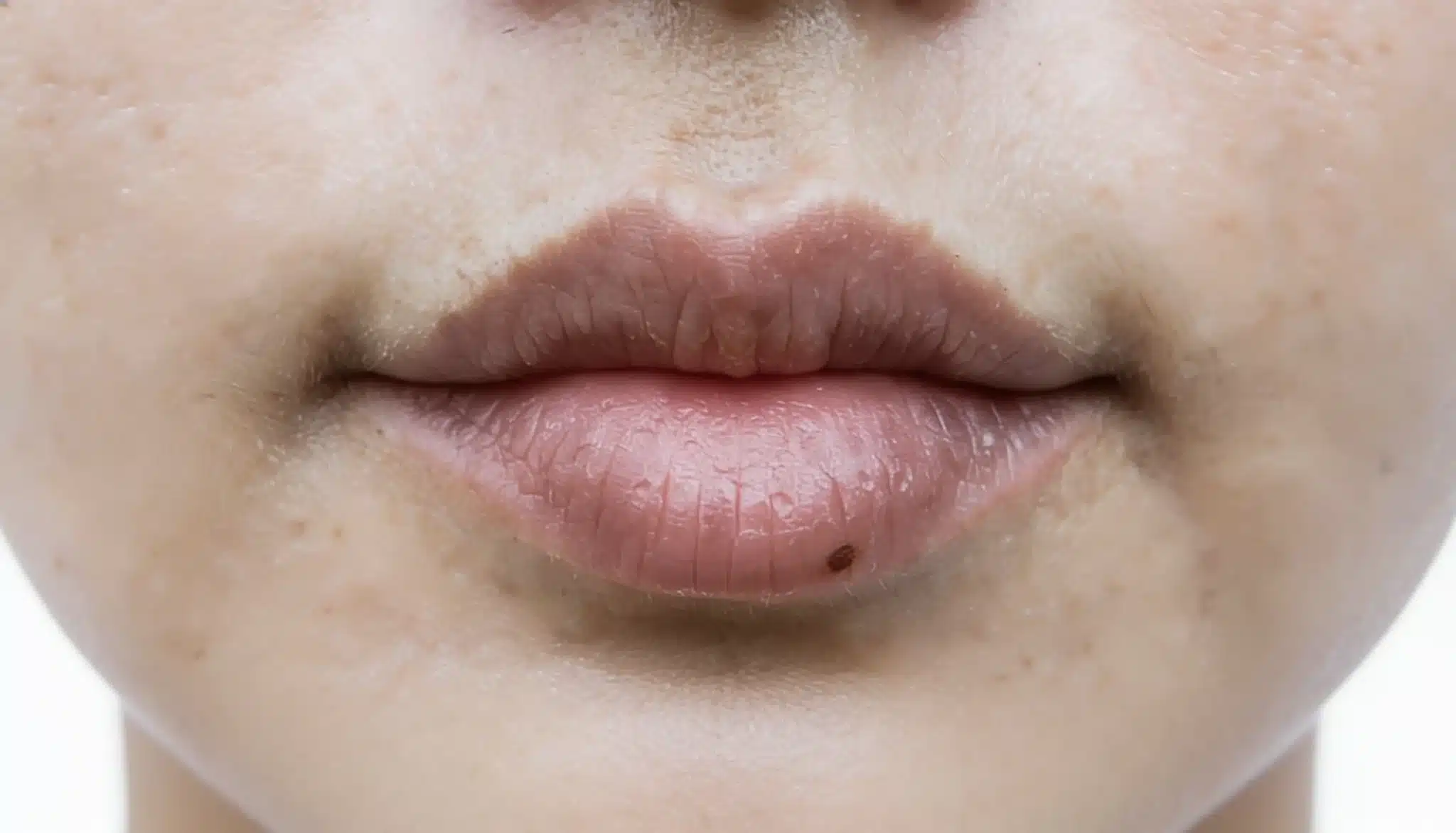
Lips can darken all of a sudden and can make you feel insecure.
Concealer only hides so much, and some products make the spots worse instead of better. Many people try random remedies with no real results.
But most dark spots have clear, identifiable causes, and most of them can be treated.
This blog explains why lips darken, what actually helps, and how to keep new spots from forming in the first place.
Signs and Symptoms of Dark Spots on Lips
Dark spots usually show up as small, flat marks in shades of brown, gray, or black.
They can appear as a single spot or a few scattered ones, most often on the lower lip since it gets more sun exposure than the upper lip.
Common features include:
- Texture: Some spots feel completely smooth, while others form after a bit of swelling, dryness, or irritation
- Edges: Clear and well defined, though a few spots may look slightly blotchy
- Size and Color: Depend on the cause, but most spots stay small
- Behavior: Do not spread to nearby skin and cause no pain or discomfort
What Causes Dark Spots on Lips?
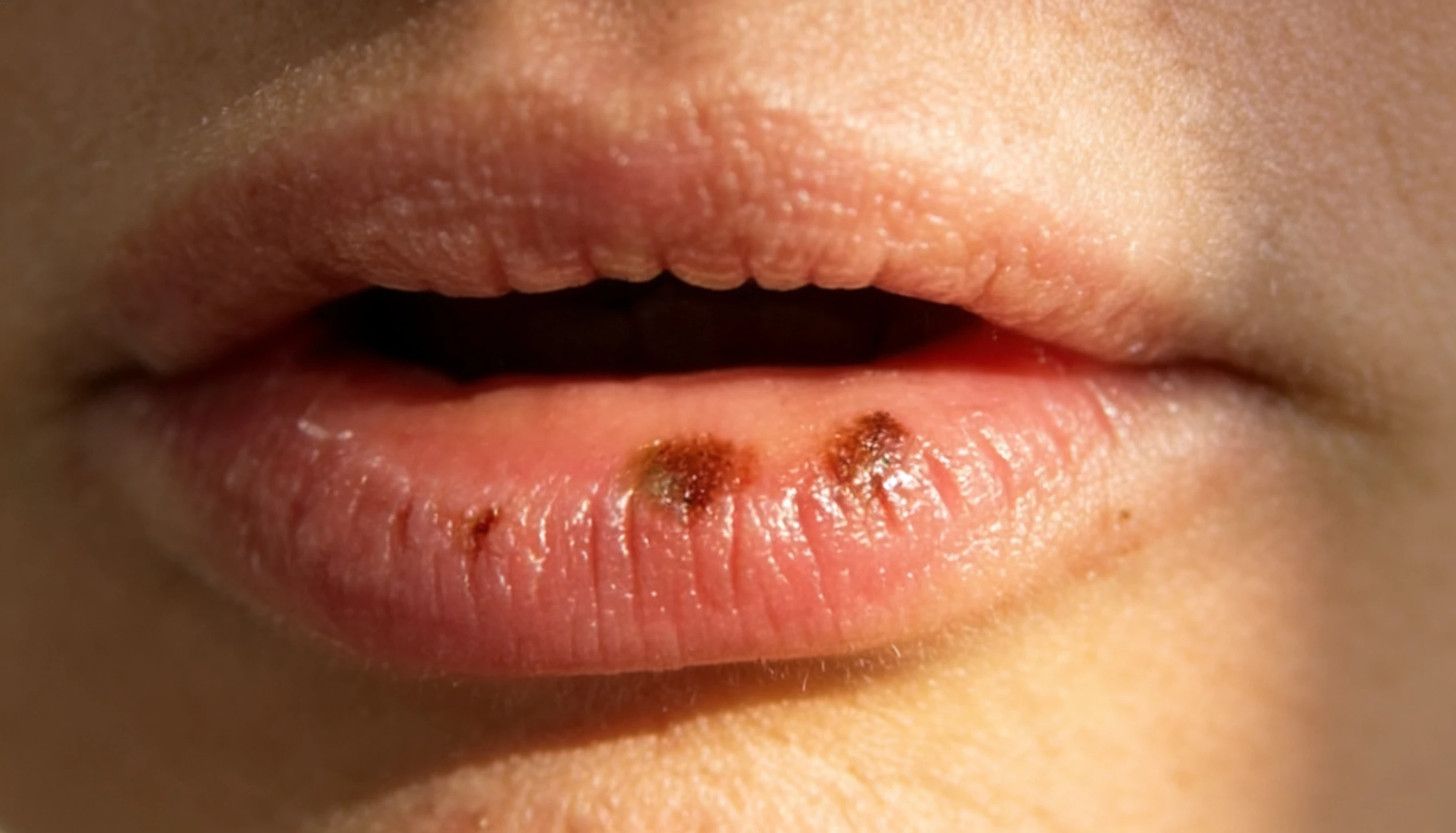
A few common triggers cause most of these spots, ranging from everyday habits like sun exposure to less common medical causes.
Some spots build up slowly over the years, while others appear suddenly after an injury or a reaction to a product.
Knowing the specific cause can help you pick the right treatment and figure out if a spot needs medical attention.
1. Sun Exposure
Lips have thin skin with very little melanin to protect them. Years of sun exposure can trigger extra pigment production, leaving small dark or brown spots along the lip line.
This works the same way sunspots form on other areas of skin.
People who spend a lot of time outdoors without lip protection often see spots form faster and darker than those who apply SPF regularly.
2. Smoking
The heat and chemicals in cigarettes irritate lip tissue and can darken the lower lip over time.
This darkening, sometimes called smoker’s melanosis, tends to build up gradually with long-term use.
It often affects the lower lip more than the upper lip, since that’s where the cigarette makes the most contact.
3. Injury, Irritation, and Allergies
Lips are sensitive and react quickly to injury. Biting your lip, picking at dry skin, or healing from a cut can leave a dark mark behind called post-inflammatory hyperpigmentation.
Certain products cause the same reaction.
- Flavored lip balms with fragrance or dye
- Toothpaste with strong whitening agents
- Allergic reactions to lipstick or gloss
Once the irritation clears, the dark mark usually fades on its own within a few months.
4. Melanotic Macules and Other Pigmentation
A melanotic macule is a flat, harmless spot caused by a small buildup of melanin in one area of the lip.
It usually appears as a single dark spot with clear edges and does not grow or change much over time. Melanotic macules are common and not associated with cancer.
Some people are simply born with more pigment cells in certain spots, which can also explain small dark patches that have been there since childhood.
5. Medications and Hormonal Changes
Some medicines list dark spots as a side effect. These include certain antibiotics, chemotherapy drugs, and hormone treatments like birth control pills.
- Tetracycline antibiotics
- Antimalarial drugs
- Hormone-based birth control
Hormonal shifts during pregnancy can also slightly darken the lips, though this is less common than the facial pigmentation seen with melasma.
6. Genetics and Skin Type
People with naturally darker skin tones produce more melanin, which can make dark spots on the lips more common or more noticeable.
Some rare inherited conditions, such as Peutz-Jeghers syndrome, cause small dark spots around the lips and mouth from birth or early childhood.
These cases are uncommon but worth mentioning to a doctor if spots appear very early in life and there is no other clear cause.
Peutz-Jeghers syndrome is linked to intestinal polyps and increased cancer risk, not just cosmetic pigmentation.
How to Get Rid of Dark Spots on Lips
Most of these spots respond well to simple care, though stubborn ones may need extra help.
Lip Care and SPF
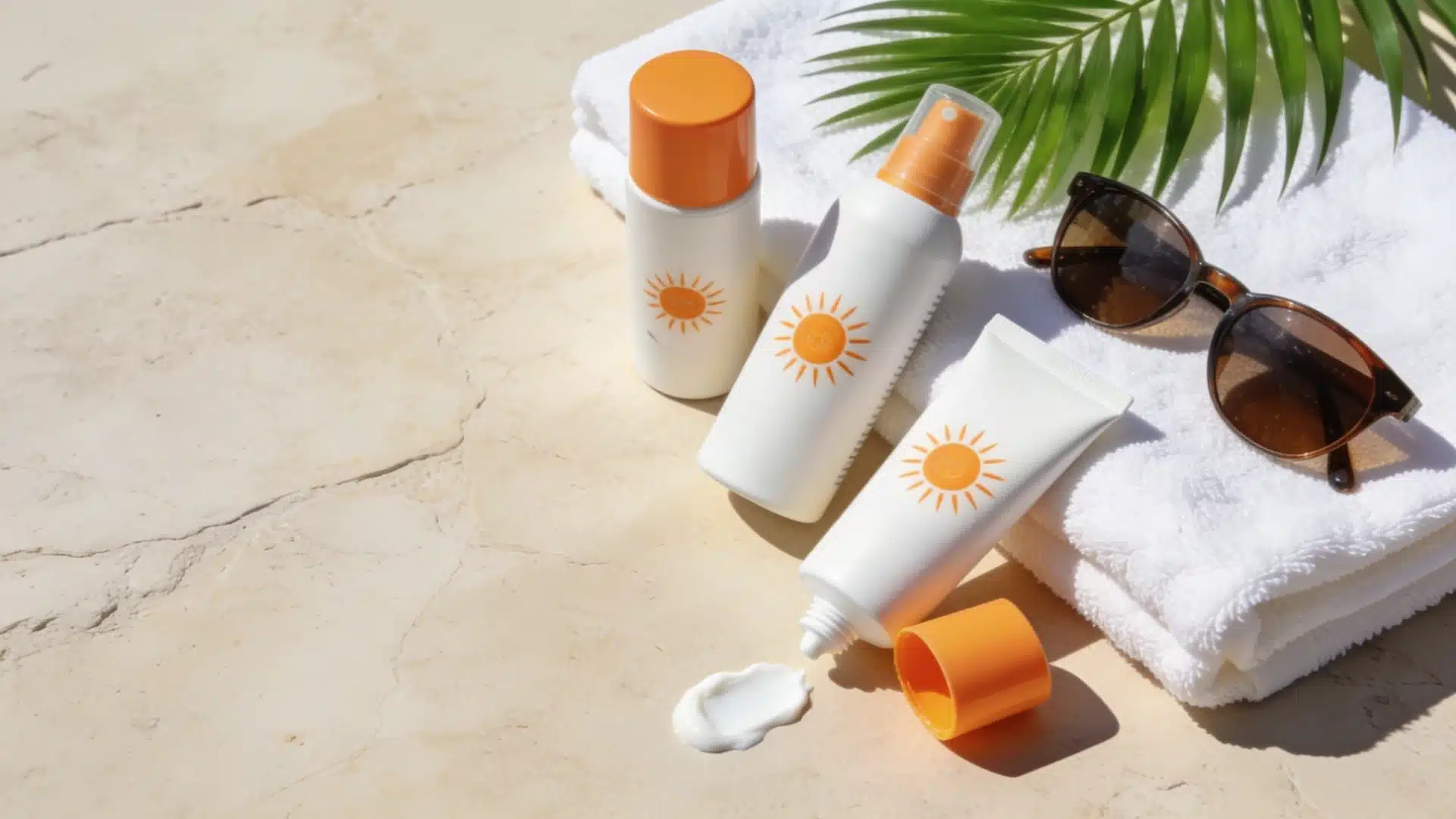
Daily sun protection is the single best step for fading and preventing them. Use a lip balm with SPF 30 or higher, and reapply every two hours when outdoors.
Keep lips moisturized with a fragrance-free balm to support healing. Avoid licking your lips, since this dries out the skin and can make the spots more noticeable.
Gentle exfoliation once or twice a week removes dead skin and helps lighter skin come through faster.
Ingredients that Help Fade Pigmentation
Certain ingredients are known to fade this pigmentation over time when used consistently.
Vitamin C helps brighten, niacinamide helps even out tone, alpha arbutin offers gentle fading, and licorice root extract helps calm pigmentation.
Introduce one new ingredient at a time, layer products correctly, and always follow with SPF the next morning.
Home Remedies
Some home remedies can support lip care, though they work slowly and are not a fix for deep pigmentation.
- Aloe vera gel soothes irritated skin and may help lips heal faster after injury or sunburn
- A honey and sugar scrub can gently remove dead skin and leave lips feeling softer
- Coconut oil keeps lips soft and hydrated while they recover from irritation
- Cucumber slices placed on the lips for a few minutes can help calm redness and mild darkening
Home remedies work best alongside sun protection, not as a replacement for it.
Professional Treatments
When home care is not enough, a dermatologist has stronger options.
- Prescription creams with hydroquinone or tretinoin
- Chemical peels to remove pigmented surface skin
- Laser therapy for deeper or stubborn spots
Professional treatments work faster than home care but need a specialist to avoid scarring or uneven results.
When to See a Doctor
Most spots like these are harmless, but a few warning signs mean it is time for a checkup. Pay attention to any spot that changes over time, since a shift in size, color, or texture is often more telling than the spot itself.
Watch for spots that grow larger or change shape, turn darker or develop an uneven color, bleed, itch, or feel painful, or appear suddenly with no clear cause.
Spots with uneven or blurry edges instead of a clear, smooth border, or ones that feel hard or thick compared to the skin around them, are also worth checking.
Catching these signs early makes diagnosis simpler and rules out rare but more serious causes sooner.
Dark Spots on Lips vs Melasma Upper Lip
These two conditions often get mixed up, but they are not the same thing.
Key Differences
| Feature | Dark spots on lips | Melasma on the upper lip |
|---|---|---|
| Location | Directly on the lip tissue | Skin just above the lip, not on the lip line |
| Appearance | Small, defined marks | Larger, blotchy brown patches |
| Main cause | Sun exposure, injury, or natural pigmentation | Hormones and sun exposure together |
| Common triggers | Smoking, allergies, medications | Pregnancy, birth control use |
Can They Happen Together?
Yes, a person can have both at the same time.
Someone with melasma on the upper lip may also develop separate dark spots on the lip itself due to sun exposure or a prior injury.
A dermatologist can tell the two apart by checking where each patch sits, noting if patches appeared during pregnancy or hormone changes, and tracking whether spots are flat or slightly raised.
How to Prevent Future Spots
Prevention is easier than treatment and lowers the chance of new spots forming.
- Protect lips from the sun by wearing an SPF lip balm daily, even on cloudy days, and by choosing a wide-brimmed hat for extended time outdoors.
- Avoid smoking and irritating lip products, including balms with strong fragrance, menthol, or dye, which can trigger dark marks over time.
- Keep lips moisturized with a gentle, fragrance-free balm to prevent dryness and cracking that can lead to irritation and pigment changes.
Final Thoughts
Dark spots on lips are usually a harmless result of sun exposure, smoking, irritation, or natural pigment buildup, and most fade with simple lip care or targeted treatment.
Melasma of the upper lip is a distinct condition, related to hormones and sun exposure, that affects the skin above the lip rather than the lip itself.
Knowing the difference helps you pick the right treatment and know when a spot is worth a doctor’s visit.
Frequently Asked Questions (FAQs)
1. Can Lipstick or Lip Liner Cause Dark Spots?
Certain pigments, dyes, and preservatives in lip products can irritate sensitive lip skin and lead to dark marks over time.
2. Can Diet or Vitamin Deficiency Affect Lip Pigmentation?
A lack of vitamin B12 or iron can sometimes cause darkening around the mouth and lips.
3. Is It Safe to Use SPF Lip Balm Every Day Long Term?
Yes, daily SPF lip balm is safe for everyday, long-term use. It is one of the most effective ways to prevent new spots and protect against further sun damage.